
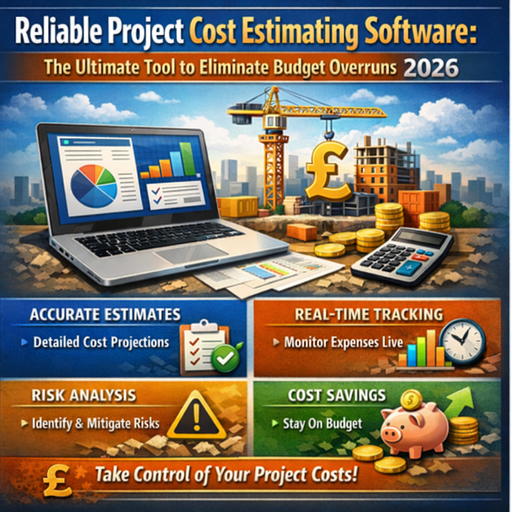
Accurate cost planning has always been one of the most difficult challenges in residential construction. Even experienced builders and contractors struggle to keep projects within budget when estimates rely on outdated spreadsheets, manual calculations, or assumptions based on past experience alone. Rising material prices, labour shortages, and complex compliance requirements have made cost control more demanding than ever before.
This is where reliable project cost estimating software has become a critical asset rather than a luxury. Instead of guessing, builders can now base decisions on structured data, real-time pricing, and repeatable estimating processes. The result is fewer budget overruns, stronger profit margins, and greater confidence when pricing residential projects.
In this article, we explore why reliable project cost estimating software is now essential for residential construction professionals, how it works, what features matter most, and how it helps eliminate the most common causes of budget overruns.
The Real Cost of Inaccurate Estimating in Residential Construction
Budget overruns rarely happen because of a single mistake. They are usually the result of small inaccuracies that compound throughout the project lifecycle. A missed item in the takeoff, an underestimated labour allowance, or a supplier price increase can quickly erode profitability.
In residential projects, margins are often tight. Home extensions, refurbishments, and new-build houses depend on precise pricing to remain viable. When estimates are unreliable, builders may win the job but lose money during delivery. In worse cases, disputes with clients arise when variations become frequent and unexpected.
Reliable project cost estimating software addresses these risks by replacing informal methods with structured, data-driven estimating. Every component of the project is captured, costed, and tracked from the earliest planning stage.
In residential construction, inaccurate estimating creates hidden risks that often surface once work is already underway. Small mistakes in quantities, labour allowances, or material pricing can quickly lead to budget overruns and reduced profitability. Without a structured system in place, builders rely on assumptions rather than data, increasing the likelihood of costly errors during project delivery.
The lack of Reliable Project Cost Estimating Software makes it difficult to maintain consistency across residential projects. Manual methods and spreadsheets struggle to keep up with changing material prices and complex project scopes, resulting in estimates that fail to reflect real construction conditions. This often leads to frequent variations, strained client relationships, and weakened cash flow.
By using Reliable Project Cost Estimating Software, residential builders gain greater accuracy and control from the earliest planning stages. Detailed cost breakdowns, standardised pricing, and realistic allowances help eliminate guesswork and support informed decision-making. As a result, projects are more likely to stay on budget, protecting both profit margins and professional credibility
What Makes Project Cost Estimating Software “Reliable”?
Not all estimating tools deliver the same level of accuracy or trustworthiness. Reliability in estimating software is defined by consistency, transparency, and adaptability.
A reliable system produces similar results when used by different team members. It applies the same pricing logic across projects and maintains a clear audit trail for every cost decision. This consistency is essential for businesses that want to scale or standardise their estimating processes.
Equally important is adaptability. Residential construction projects vary widely in size, specification, and complexity. Reliable project cost estimating software allows builders to customise rates, templates, and assemblies while maintaining control over cost logic.
Why Residential Builders Are Moving Away from Spreadsheets
Spreadsheets have long been the default tool for estimating. While flexible, they are highly vulnerable to human error. A single incorrect formula or copied cell can distort an entire estimate without being immediately visible.
As projects become more complex, spreadsheets struggle to manage large quantities of data. Version control becomes an issue, especially when multiple people are involved in pricing. Tracking changes over time is difficult, and historical data is often poorly organised.
Reliable project cost estimating software eliminates these weaknesses by centralising data in a controlled environment. Calculations are automated, pricing updates are traceable, and estimates can be revised without compromising accuracy.
How Reliable Project Cost Estimating Software Reduces Budget Overruns
Budget overruns typically occur when estimated costs diverge from actual costs during construction. This gap is often caused by missing scope items, incorrect allowances, or unrealistic assumptions.
Reliable project cost estimating software reduces these risks by enforcing completeness. Structured cost libraries ensure that no major trade or component is overlooked. Labour, materials, plant, preliminaries, and overheads are all accounted for systematically.
The software also improves forecasting accuracy. By analysing previous residential projects, builders can benchmark costs and identify patterns that influence final spend. This data-driven approach leads to more realistic budgets and fewer surprises during delivery.
Standardisation Without Losing Flexibility
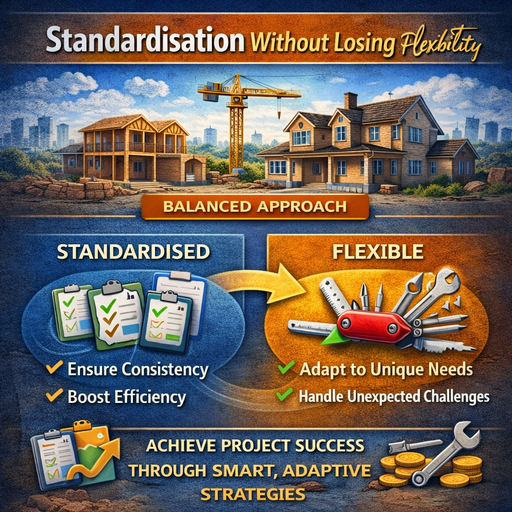
One concern builders often have is that software will force them into rigid estimating processes. In reality, reliable project cost estimating software balances standardisation with flexibility.
Standard templates ensure that every estimate includes essential cost categories. This consistency is vital for comparing projects and monitoring performance. At the same time, builders can adapt templates to suit specific project types, such as loft conversions, kitchen extensions, or full refurbishments.
This balance allows residential contractors to work efficiently without sacrificing accuracy or professional judgement.
Improving Tender Accuracy and Client Confidence
Clients are becoming more cost-aware and expect transparency in pricing. Vague lump sums and unclear allowances are increasingly questioned, especially in higher-value residential projects.
Reliable project cost estimating software enables builders to present detailed, professional estimates that clearly explain where money is being spent. Itemised breakdowns build trust and reduce the likelihood of disputes later in the project.
When clients understand the logic behind a price, they are more likely to accept it and less likely to challenge variations that arise from genuine scope changes.
Managing Material Price Volatility
Material price fluctuations have become one of the biggest challenges in residential construction. Timber, steel, insulation, and finishes can change significantly in price within short periods.
Reliable project cost estimating software allows builders to update material rates centrally and apply changes consistently across all estimates. This ensures that new projects reflect current market conditions, rather than outdated assumptions.
Some systems also allow sensitivity testing, helping builders understand how price changes may affect overall project viability before committing to a contract.
Labour Cost Accuracy and Resource Planning
Labour costs are often underestimated, particularly in residential projects where productivity can vary due to site constraints and weather conditions.
Reliable project cost estimating software supports accurate labour forecasting by linking tasks to realistic productivity rates. Builders can adjust labour assumptions based on project complexity, access limitations, or programme duration.
This level of detail improves not only estimating accuracy but also project planning and cash flow forecasting.
Integration With Project Management Processes
Estimating does not stop once a project begins. The most effective businesses treat estimating as a continuous process that informs project control.
Reliable project cost estimating software integrates naturally with cost tracking and project management workflows. Original estimates can be compared against actual costs, highlighting variances early enough to take corrective action.
This feedback loop strengthens future estimates, creating a cycle of continuous improvement across residential projects.
Inaccurate estimating in residential construction often leads to financial instability long before problems become visible on site. When initial budgets fail to reflect real material, labour, and programme requirements, builders are forced to absorb unexpected costs as the project progresses. Without Reliable Project Cost Estimating Software, these early miscalculations remain embedded in the project, increasing the risk of budget overruns and reduced profitability.
Residential projects are particularly vulnerable to estimating errors due to design changes, site constraints, and fluctuating supplier prices. Relying on manual calculations or past assumptions makes it difficult to respond accurately to these variables. Reliable Project Cost Estimating Software provides structured cost data and consistent pricing logic, helping builders maintain control even as project conditions evolve.
By adopting Reliable Project Cost Estimating Software, residential contractors can replace guesswork with clarity and precision. Detailed cost breakdowns allow risks to be identified early, budgets to be set realistically, and decisions to be made with confidence. This level of accuracy not only protects profit margins but also strengthens trust with clients throughout the construction process.
Reducing Risk Through Scenario Planning
Every residential project carries risk. Unexpected ground conditions, design changes, or planning delays can all impact costs.
Reliable project cost estimating software allows builders to model different scenarios and understand their financial implications before work begins. Contingencies can be applied strategically rather than arbitrarily.
This proactive approach to risk management reduces the likelihood of severe budget overruns and protects both builder and client interests.
Reducing financial risk in residential construction requires more than a single fixed estimate. Unexpected changes in scope, material price increases, or programme delays can all impact final costs. Without Reliable Project Cost Estimating Software, builders often rely on rough contingencies rather than structured planning. Scenario planning allows contractors to model different outcomes and understand how specific risks may affect overall project budgets from the earliest stages.
https://builderexpert.uk/about-building-estimating/
Scenario planning becomes far more effective when supported by Reliable Project Cost Estimating Software that uses accurate cost data and flexible estimating structures. Builders can test alternative material options, labour rates, or construction methods and instantly see the financial impact of each decision. This approach helps residential contractors prepare for uncertainty rather than reacting to problems once construction is already underway.
https://builderexpert.uk/construction-estimating/
By using Reliable Project Cost Estimating Software as part of a wider estimating and planning strategy, builders gain greater control over risk and profitability. Multiple cost scenarios provide clearer insight into potential budget pressures and allow informed decisions on contingencies and pricing strategies. As a result, residential projects are more resilient, better planned, and far less likely to suffer from unexpected cost overruns.
https://builderexpert.uk/construction-estimating-software/
Supporting Business Growth and Scalability
As residential construction businesses grow, estimating becomes harder to control. More projects, more staff, and tighter deadlines increase the risk of inconsistency.
Reliable project cost estimating software supports scalability by providing a shared framework for estimating. New team members can follow established processes, reducing reliance on individual knowledge.
This consistency makes it easier to delegate estimating tasks without compromising quality, allowing business owners to focus on strategy and growth.
Data-Driven Decision Making in Residential Construction
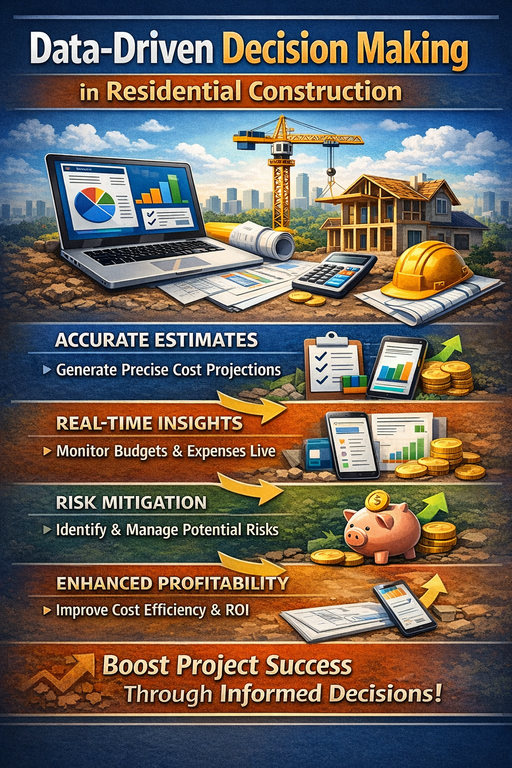
One of the greatest advantages of reliable project cost estimating software is the data it generates over time. Historical estimates and final costs provide valuable insights into business performance.
Builders can analyse which project types are most profitable, where cost overruns typically occur, and how pricing strategies affect win rates. These insights inform smarter decisions and long-term planning.
Without software, this level of analysis is almost impossible to achieve consistently.
Case Study: UK Residential Extension Project
A fictional residential contractor based in the South East of England undertook a two-storey home extension valued at £280,000. Previous projects of similar scope had suffered average budget overruns of 8–10%, largely due to underestimated labour and incomplete scope allowances.
By adopting reliable project cost estimating software, the contractor rebuilt their estimating process from the ground up. All trades were itemised, labour rates were standardised, and material costs were updated using current supplier data.
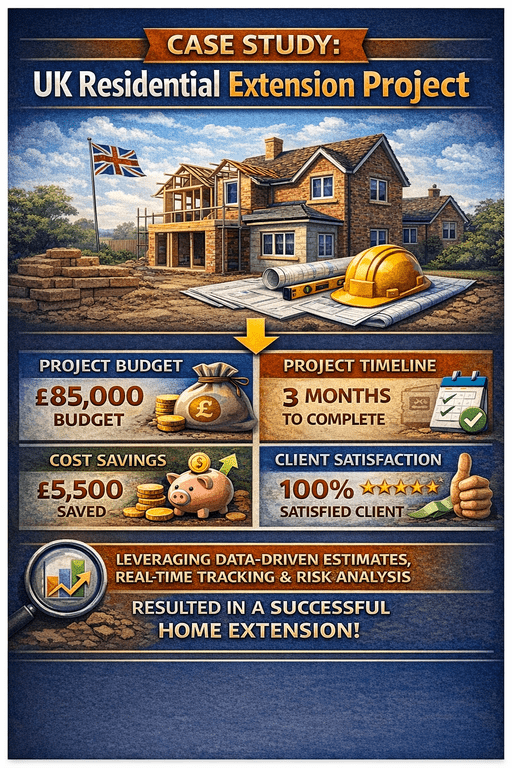
The project was delivered over a 26-week programme and completed within 1.5% of the original estimate. Final profit exceeded initial projections by £14,000 due to reduced variations and tighter cost control.
- Comprehensive scope breakdown at estimating stage
- Accurate labour productivity assumptions
- Real-time material pricing updates
- Clear communication of costs with the client
- Continuous comparison of estimated vs actual costs
Choosing the Right Estimating Software for Residential Projects
Not all estimating tools are suitable for residential construction. Builders should look for software that reflects the realities of domestic projects rather than large commercial developments.
Key considerations include ease of use, residential-specific cost libraries, flexibility in pricing structures, and clear reporting. The software should support the way builders actually work, not force them into unfamiliar processes.
Most importantly, it should deliver consistent, repeatable accuracy across projects.
Choosing the right estimating tool is a critical decision for residential builders who want long-term accuracy and financial control. Not all platforms are designed to handle the complexity of domestic construction, where project scopes, client expectations, and site conditions can vary significantly. Selecting Reliable Project Cost Estimating Software ensures that estimates are built on consistent logic, realistic assumptions, and accurate cost data tailored to residential projects.
Ease of use is a key factor when evaluating estimating software for residential teams. Complex systems that require excessive manual input often lead to shortcuts and errors over time. Reliable Project Cost Estimating Software should simplify the estimating process through structured cost breakdowns, clear workflows, and the ability to customise templates without compromising accuracy.
Residential builders should also consider how well the software supports growth and continuous improvement. Reliable Project Cost Estimating Software enables businesses to analyse past estimates, compare projected and actual costs, and refine pricing strategies over time. This data-driven approach helps contractors make smarter decisions, improve profitability, and maintain competitiveness in an increasingly demanding construction market
Common Mistakes When Implementing Estimating Software
Even reliable project cost estimating software can fail if implemented poorly. One common mistake is rushing setup without properly structuring cost libraries and templates.
Another issue is failing to train staff adequately. Software is only as reliable as the data entered into it. Clear procedures and accountability are essential.
Builders who invest time in proper implementation see far greater returns in accuracy and efficiency.
One of the most common mistakes residential builders make is adopting estimating software without first defining clear cost structures and estimating processes. Simply installing a tool does not guarantee accuracy if pricing libraries, labour rates, and cost categories are poorly organised. Without a structured setup, even Reliable Project Cost Estimating Software can produce inconsistent estimates that fail to reflect real project conditions.
https://builderexpert.uk/about-building-estimating/
Another frequent error is underestimating the importance of training and consistency across the team. When different users apply their own assumptions or shortcuts, estimates quickly lose reliability. Reliable Project Cost Estimating Software is most effective when standardised workflows are followed and all team members understand how costs should be built and reviewed.
https://builderexpert.uk/building-estimating-software-uk-industry-guide/
A further mistake is treating estimating as a one-time task rather than an ongoing process. Builders who fail to compare estimated costs with actual project outcomes miss valuable opportunities to improve future accuracy. By fully integrating Reliable Project Cost Estimating Software into project review and cost control practices, residential contractors can reduce errors, strengthen pricing strategies, and achieve long-term improvements in profitability.
https://builderexpert.uk/construction-estimating/
The Future of Cost Estimating in Residential Construction
As residential construction continues to modernise, estimating will become increasingly data-driven. Manual methods will struggle to keep pace with regulatory changes, market volatility, and client expectations.
Reliable project cost estimating software is not just a tool for today, but a foundation for future-ready construction businesses. Those who adopt it early gain a competitive advantage in pricing accuracy, professionalism, and profitability.
Conclusion
Budget overruns are not inevitable in residential construction. They are often the result of outdated estimating methods, incomplete information, and inconsistent processes.
By adopting reliable project cost estimating software, residential builders can transform the way they price projects, control costs, and protect profit margins. Accurate estimates lead to better planning, stronger client relationships, and more sustainable business growth.
For builders who want to eliminate guesswork and build with confidence, reliable project cost estimating software has become an essential part of modern residential construction.
BCIS – Building Cost Information Service
https://www.bcis.co.uk/
The Construction Playbook (UK Government)
https://www.gov.uk/government/publications/the-construction-playbook
Construction Leadership Council (CLC)
https://www.constructionleadershipcouncil.co.uk/
“If you would like to get in touch with us and our team, please click here.”