
Introduction
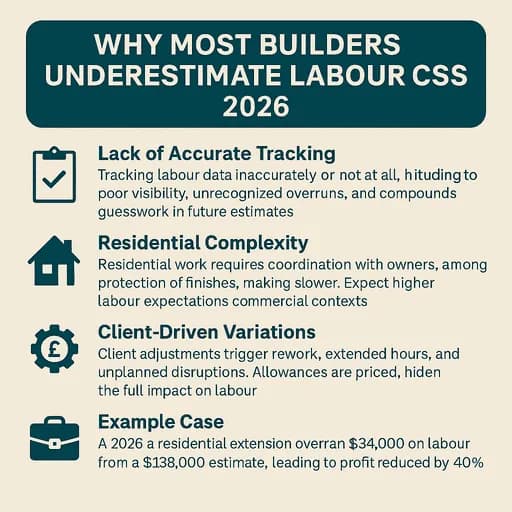
Labour costs are one of the biggest expenses in residential construction, yet they are also one of the most misunderstood. Many builders focus heavily on material prices, supplier quotes, and design changes, but give far less attention to how labour actually behaves on site. In 2026, this mistake is becoming even more expensive due to skills shortages, rising wages, and tighter project timelines.
The truth is that Builders Underestimate Labour Costs not because they are careless, but because labour is difficult to predict. Productivity varies, delays happen, and small inefficiencies quickly add up. Understanding why this underestimation happens is the first step toward protecting profit, improving accuracy, and delivering projects on budget.
Labour Costs Are More Than Hourly Wages
Many builders still calculate labour costs by multiplying hourly rates by estimated hours. While this approach seems logical, it only captures part of the real picture and explains why Builders Underestimate Labour Costs on residential projects. Labour includes paid time that does not directly produce visible work, such as setup, clean-up, supervision, and coordination between trades.
In residential construction, especially extensions and refurbishments, labour efficiency can change from day to day. Restricted access, working around occupied homes, and unforeseen structural issues slow teams down. These site realities are rarely reflected in early estimates, which is another reason Builders Underestimate Labour Costs at tender stage.
Another commonly overlooked factor is indirect labour. Site managers, foremen, and supervisors may not be physically carrying out tasks, but their time must still be paid. When this time is not allocated correctly, labour costs appear lower on paper than they are in reality.
Builders who underestimate labour often rely on “best-case productivity” assumptions. In 2026, best-case scenarios are increasingly rare. Weather disruption, material delays, and compliance requirements all reduce productive hours without reducing wages, widening the gap between estimated and actual labour costs.
Productivity Assumptions Are Often Unrealistic
Productivity rates are commonly copied from past projects or industry averages. While benchmarks are useful, they become risky when applied without context, which is one of the main reasons Builders Underestimate Labour Costs on residential projects. Every home build has unique constraints that directly affect output on site.
For example, a new-build house on an open plot will achieve very different labour productivity compared to a tight urban loft conversion. Access restrictions, neighbour considerations, and working within existing structures all slow progress. Yet many estimates still apply similar productivity rates to both scenarios, leading directly to underpriced labour.
Fatigue is another critical factor. Long working days, weekend shifts, and compressed programmes reduce efficiency over time. Workers may spend more hours on site, but actual output per hour declines. This gradual loss of productivity is rarely measured accurately, which further explains why Builders Underestimate Labour Costs year after year.
In 2026, health and safety standards are stricter, and rightly so. However, compliance requires time. Tool checks, site inductions, and safe working procedures reduce productive hours while wages remain unchanged, increasing real labour costs beyond what many estimates allow for.
Skills Shortages Are Driving Labour Costs Up
The UK construction industry continues to face a skilled labour shortage in 2026. Experienced tradespeople remain in high demand, which directly affects pricing and availability. This market pressure is a key reason Builders Underestimate Labour Costs when relying on outdated labour rates that no longer reflect current conditions.
Subcontractors have also become more selective. They prioritise projects with clearly defined scopes, realistic programmes, and dependable payment terms. When labour is underestimated at pricing stage, builders often struggle to secure quality trades at the assumed rates, reinforcing why Builders Underestimate Labour Costs in competitive residential markets.
As a result, builders are forced to either pay more than expected or rely on less experienced labour. Both outcomes increase overall project costs, whether through higher day rates or reduced productivity and increased rework.
Programme Delays Multiply Labour Costs
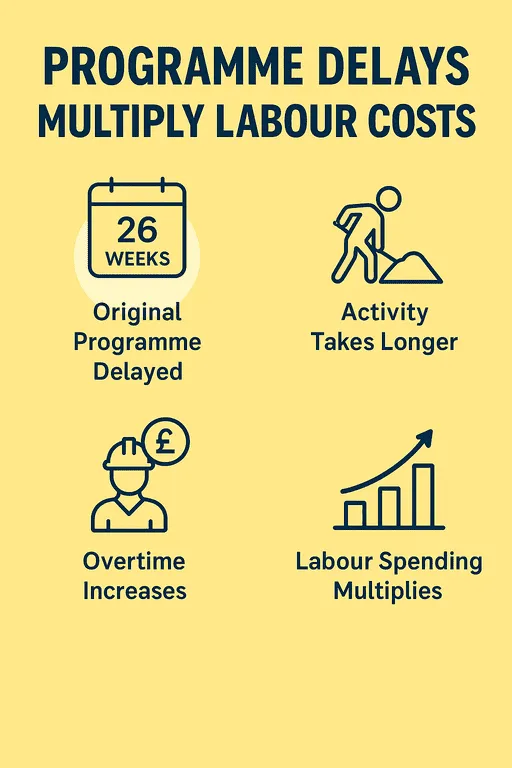
Time and labour are directly linked. When a project runs longer than planned, labour costs increase even if wage rates remain unchanged. Extended site durations mean more supervision, more coordination, and more idle time between tasks, which helps explain why Builders Underestimate Labour Costs on residential projects.
Many builders underestimate how small delays quickly compound, which is why Builders Underestimate Labour Costs impacts overall programme performance. A one-week delay early in the programme can push multiple trades out of sequence. Workers may need to return later, remobilise, and repeat setup tasks, all of which add paid labour time without adding progress.
Weather remains a major risk factor in residential construction. External works, groundworks, and roofing are particularly exposed. In 2026, extreme weather events are more frequent, increasing the likelihood of lost labour hours that are rarely allowed for at tender stage.
Without proper contingency planning, these delays translate directly into profit loss. Builders who underestimate labour often underestimate time as well, creating a double financial impact that erodes margins over the life of the project.
Beyond delays and weather impacts, planning discipline plays a critical role in controlling labour spend. When daily tasks are not clearly defined, workers spend valuable time waiting for instructions, materials, or access. These small inefficiencies rarely appear in progress reports, yet they steadily increase labour hours across the project.
Residential construction is especially vulnerable to this issue. Unlike large commercial sites, space is limited and sequencing must be precise. If materials arrive late or trades overlap incorrectly, productivity drops immediately. Time is lost reorganising work areas, resolving clashes, and adjusting short-term plans on the fly.
Communication gaps further increase labour exposure. When site teams are unclear about priorities or design details, mistakes occur. Correcting these errors requires additional labour that was never included in the original allowance. Over time, this pattern reinforces why Builders Underestimate Labour Costs on repeat residential work.
Another often overlooked issue is stop-start working. Frequent interruptions from inspections, client queries, or design approvals break momentum, reducing output while paid hours continue, which is another reason Builders Underestimate Labour Costs.
In 2026, successful builders prioritise proactive labour management over reactive problem-solving. Clear daily planning, reliable material scheduling, and early decision-making help limit wasted time and control labour drift. Ultimately, labour costs are best managed by recognising that lost time is rarely recovered and treating labour as a dynamic resource rather than a fixed cost.
Variations and Design Changes Increase Labour Exposure
Residential clients often change their minds. Layout adjustments, upgraded finishes, and additional features are common. While material changes are relatively easy to price, labour changes are frequently overlooked, which is one of the main reasons Builders Underestimate Labour Costs on residential projects.
Small design changes often trigger rework, additional trade coordination, and extended working hours. When labour is not accurately remeasured at variation stage, builders absorb extra costs without fully recognising their impact, which is another reason Builders Underestimate Labour Costs.
Many builders price variations using rough allowances rather than detailed labour analysis. Over time, these repeated underestimations accumulate into significant losses that erode project margins. In 2026, clear variation management and accurate labour tracking are essential, as residential clients increasingly expect transparency and detailed cost justifications for every change.
Poor Labour Tracking Hides the Real Problem
One of the main reasons Builders Underestimate Labour Costs is the lack of accurate labour tracking. When working hours are not recorded properly, decisions are based on assumptions instead of real data, creating a distorted view of true project performance.
Without real-time visibility, labour overruns often remain hidden until the final stages of a project, when it is too late to recover additional costs and profit margins have already suffered. This lack of insight is a key reason Builders Underestimate Labour Costs.
In 2026, effective construction management requires labour to be tracked by task, trade, and project phase, allowing estimated hours to be compared against actual performance. Builders who fail to measure labour accurately rely on guesswork, which becomes embedded in estimating practices and leads to consistent underpricing and long-term margin erosion across residential projects.
Residential Projects Have Hidden Labour Complexity
.Residential construction is often seen as simpler than commercial work, but this assumption is misleading and explains why Builders Underestimate Labour Costs on housing projects. Working in occupied homes, coordinating closely with homeowners, and managing tight access conditions all increase labour intensity beyond standard expectations.
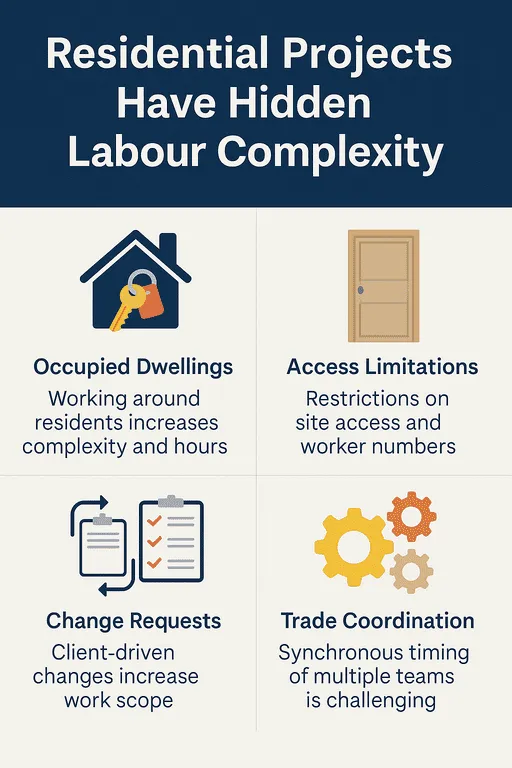
Tasks take longer when workers must protect existing finishes, minimise disruption, and work around daily household routines. These constraints rarely exist in new-build commercial environments, yet they have a significant impact on productivity in residential settings.
In 2026, client expectations in residential construction are higher than ever. Homeowners demand clean sites, clear communication, and respectful working practices, all of which require additional planning, supervision, and on-site care, increasing labour time and cost. Builders who fail to recognise this added complexity often underprice residential labour, which is a key reason Builders Underestimate Labour Costs and experience ongoing overruns and reduced profitability on residential projects.
Case Study: UK Residential Extension Project
A mid-sized builder took on a £420,000 residential extension project in the South East of England in early 2026. The original programme was set at 26 weeks, with labour costed at £138,000, based on standard productivity assumptions that later proved optimistic.
During construction, several challenges emerged that are typical of residential work and help explain why Builders Underestimate Labour Costs. Restricted access slowed material handling, client-requested layout changes increased rework, and prolonged wet weather delayed external works and disrupted trade sequencing.
By project completion, actual labour costs had risen to £172,000, resulting in a £34,000 overrun. Although the extension was delivered to a high standard and the client was satisfied, the increased labour spend reduced overall profit by nearly 40%.
Key success factors that helped limit further damage included:
- Accurate recording of actual labour hours
- Early identification of productivity loss
- Clear communication with the client on variations
- Improved sequencing of trades mid-project
- Better short-term scheduling adjustments
“We didn’t lose money, but we learned that labour is where profit quietly disappears if you don’t control it,” said Mark.
How Builders Can Improve Labour Cost Accuracy in 2026
The first step is accepting that labour is variable rather than fixed, a reality often overlooked when Builders Underestimate Labour Costs during early project planning. Estimates must account for realistic productivity rates, on-site inefficiencies, and contingency for disruption, which directly explains why builders underestimate labour costs on residential projects.
Breaking labour down by task instead of by trade provides far greater visibility. This approach makes it easier to adjust allowances when changes occur and to clearly identify where overruns originate during construction.
Using historical data from comparable residential projects further improves accuracy. Not generic averages, but actual outcomes from completed jobs. Builders should regularly review performance data and update labour assumptions to reflect real site conditions, particularly in cases where Builders Underestimate Labour Costs due to outdated benchmarks.
Clear communication with subcontractors is equally critical. Clearly defined scopes of work, realistic programmes, and transparent pricing expectations reduce the risk of disputes, delays, and unplanned labour cost escalation throughout the project lifecycle.
The Hidden Impact of Rework on Labour Budgets
Rework is one of the most underestimated drivers of labour overspend in residential construction. When work has to be redone, labour is paid twice without adding progress, often with little visibility, which is why Builders Underestimate Labour linked to rework on so many projects.
In 2026, rework is rarely caused by workmanship alone. It more commonly results from unclear drawings, late client changes, or poor trade coordination. Residential projects are especially vulnerable, as small design changes can affect multiple trades, increasing labour hours beyond the original estimate. Builders who want to control costs must realistically allow for rework, recognising it as an unavoidable part of residential construction where Builders Underestimate Labour most frequently.
Subcontractor Pricing Masks Real Labour Risk
Many builders rely heavily on subcontractor quotes to control labour exposure. While this can reduce risk on paper, it often creates a false sense of security. Fixed-price quotes do not eliminate labour risk; they simply transfer it temporarily.
In practice, subcontractors who underprice labour recover costs elsewhere. This may come through variation claims, reduced quality, slower progress, or pressure for early payments. This is another reason Builders Underestimate Labour Costs, even when subcontractors are involved.
In 2026, good subcontractors protect themselves by pricing risk into their work. If a builder’s programme is unrealistic or the scope is unclear, labour costs increase from day one. Poor communication leads to disputes, delays, and unplanned labour time for supervision and problem-solving.
Labour Overruns Erode Profit Faster Than Materials
Material overruns are visible and easy to track. An invoice arrives, the cost is clear, and the issue is identified immediately. Labour overruns, by contrast, creep in gradually. This is why Builders Underestimate Labour Costs more often than material costs.
Extra hours here and there often feel manageable. A longer day, an extra visit, or a delayed handover does not trigger alarm bells on its own. However, over weeks and months, these hours accumulate into thousands of pounds, which is why Builders Underestimate Labour Costs so frequently.
In residential construction, margins are often tight. A small percentage increase in labour cost can wipe out the majority of profit on a project, particularly on extensions and refurbishments where labour represents a high proportion of total cost.
Builders who focus only on headline costs miss the real threat. Labour is not just an expense; it is the most sensitive variable in the entire project budget.
Client Expectations Increase Labour Time
Modern homeowners expect a higher level of service than ever before. Clean sites, minimal disruption, detailed explanations, and frequent updates are now standard expectations. All of this takes time, and time means labour.
In 2026, builders are spending more hours managing clients, coordinating access, and resolving concerns. These hours are rarely included in labour estimates, yet they are essential to project success. This gap is a major reason Builders Underestimate Labour Costs in residential work.
Working in lived-in homes adds complexity. Protecting finishes, managing noise, and adjusting work schedules around occupants reduces efficiency. A task that takes one day on a vacant site may take two in an occupied property.
Builders who fail to account for this reality often find themselves working longer hours for the same return. Over time, this leads to burnout as well as financial pressure.
The Cost of Poor Sequencing
Labour efficiency depends heavily on sequencing. When trades are scheduled out of order, productivity drops and costs rise. Waiting time, remobilisation, and repeated setup all add labour hours without adding value.
Poor sequencing is common in residential projects due to design changes, late deliveries, or subcontractor availability. When this happens, builders absorb the cost, reinforcing the pattern where Builders Underestimate Labour Costs project after project.
In 2026, effective sequencing requires detailed planning and regular updates. Static programmes no longer work. Builders must actively manage labour flow, adjusting schedules based on real site conditions.
Even small improvements in sequencing can deliver significant labour savings. Clear handovers between trades and realistic buffers reduce idle time and improve overall productivity.
Labour Costs Are Affected by Compliance and Regulation
Regulatory requirements continue to expand in the UK residential sector. Building control inspections, documentation, and compliance checks all consume labour time. While necessary, they are often underestimated during pricing.
Builders and supervisors spend increasing hours on paperwork, coordination, and inspections. These tasks do not produce visible progress, yet they are unavoidable. This is another structural reason Builders Underestimate Labour Costs in 2026.
Health and safety compliance also affects productivity. Tool checks, site inductions, and safe access arrangements all reduce working time. Ignoring these factors during estimating leads to consistent underpricing.
Accurate labour forecasting must include compliance-related time as a core component, not an afterthought.
Technology Alone Does Not Solve Labour Underestimation
Many builders believe that software alone will fix labour estimating issues. While digital tools help, they are only effective when paired with realistic assumptions and disciplined management.
Without accurate input data, even the best systems will produce flawed outputs. This is why Builders Underestimate Labour Costs even after investing in technology.
In 2026, the most successful builders use technology to support decision-making, not replace it. They track actual labour performance, compare it against estimates, and continuously refine their assumptions.
Data-driven estimating reduces guesswork, but it requires commitment. Builders must be willing to confront uncomfortable truths about productivity and efficiency.
Building a More Realistic Labour Strategy
Improving labour accuracy starts with honesty. Builders must accept that labour is unpredictable and plan accordingly. Optimistic assumptions may win work, but they destroy profit.
Breaking labour down into smaller, measurable tasks improves visibility. This makes it easier to identify where overruns occur and why Builders Underestimate Labour Costs on specific project types.
Regular post-project reviews are essential. Each completed job provides valuable data that should feed directly into future estimates. Without this feedback loop, mistakes are repeated indefinitely.
Clear communication with clients also plays a role. When labour implications of changes are explained early, expectations are managed and disputes reduced.
Long-Term Consequences of Ignoring Labour Reality
Underestimating labour does not just affect individual projects. Over time, it undermines business stability. Cash flow suffers, stress increases, and growth becomes risky.
Many builders exit the industry not because of lack of work, but because margins are eroded by persistent labour overruns. This long-term pattern exists because Builders Underestimate Labour Costs year after year without addressing root causes.
In 2026, competitive advantage comes from accuracy, not optimism. Builders who understand their true labour costs can price confidently, deliver reliably, and build sustainable businesses.
Those who ignore labour reality may stay busy, but they will struggle to stay profitable.
Final Thoughts on Labour Cost Control
Labour is the most complex and least predictable element of residential construction. Treating it as a simple calculation is no longer viable in 2026.
The core issue remains consistent: Builders Underestimate Labour Costs because they underestimate complexity, variability, and risk. Solving this requires better planning, better data, and more realistic expectations.
Builders who take labour seriously gain control over their projects and their profits. Those who do not will continue to wonder why hard work does not translate into financial success.
Conclusion
Labour has become the most unpredictable cost in residential construction, and in 2026 this reality can no longer be ignored. Rising wage pressure, skills shortages, tighter compliance requirements, and increasing client expectations all contribute to labour behaving in ways that traditional estimating methods fail to capture. When labour is treated as a fixed input instead of a variable risk, projects are exposed to silent cost overruns that steadily erode profit.
The central challenge is not a lack of experience or effort, but a reliance on outdated assumptions. This is why Builders Underestimate Labour Costs when productivity is assumed rather than measured, and when time is planned optimistically instead of realistically. Small inefficiencies, minor delays, and seemingly manageable variations compound over the life of a project, turning what looked like a healthy margin into a narrow or non-existent return.
Residential construction amplifies this issue, particularly when Builders Underestimate Labour Costs across complex site conditions. Working in occupied homes, managing access restrictions, coordinating multiple trades, and responding to client-driven changes all increase labour intensity. Without accurate tracking, disciplined planning, and honest post-project review, these pressures often remain hidden until it is too late to respond effectively.
In 2026, successful builders approach labour with greater discipline and transparency. They break work down into measurable tasks, track actual hours, and continuously refine their estimating practices using real project data. By recognising labour as a dynamic resource rather than a fixed cost, they regain control over both pricing and delivery.
Ultimately, the builders who adapt will protect their margins and reputation. Those who do not will continue to struggle, not because of lack of work, but because Builders Underestimate Labour Costs and underestimate how quickly profit can disappear.
https://www.gov.uk/government/publications/the-construction-playbook
https://www.constructionleadershipcouncil.co.uk/
https://www.ons.gov.uk/businessindustryandtrade/constructionindustry
Contact us for more information. https://builderexpert.uk/contact-builder-expert/