
How Builders and Contractors Improve Efficiency, Accuracy, and Project Planning with Smarter Estimating Systems
Modern construction estimating software has become an essential tool for builders, contractors, and construction companies that need faster and more accurate project pricing. Construction projects are becoming increasingly detailed, while clients expect clear quotations, realistic budgets, and professional communication before work even begins.
Traditional estimating methods often rely on spreadsheets, disconnected calculations, handwritten notes, or outdated pricing systems. While these methods may still work for smaller projects, they frequently create inconsistencies as workloads increase. Builders may struggle to track labour rates, material pricing, supplier costs, and changing project requirements efficiently.
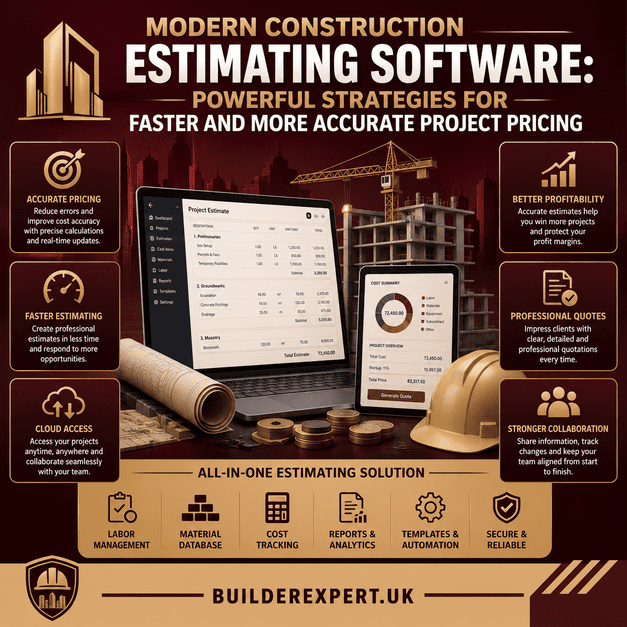
Modern construction estimating software creates a more organised process by centralising project information into one structured environment. Contractors can manage pricing, labour calculations, materials, budgeting, and quotations more effectively while reducing manual work.
Builders also benefit from stronger visibility over project costs. Accurate estimating supports better decision-making because construction professionals can review pricing more clearly before committing to budgets or timelines.
As construction projects become more competitive, estimating accuracy plays a major role in profitability and client trust.
Modern construction estimating software improves workflow efficiency, reduces pricing errors, supports project planning, and helps builders create more professional quotations.
This article explains how digital estimating systems improve construction pricing while helping contractors create faster, more reliable, and more organised estimating processes.
What Is Modern Construction Estimating Software?
Modern construction estimating software is a digital platform designed to help builders calculate project costs more accurately and efficiently. These systems organise labour costs, material pricing, supplier information, timelines, and budgeting data into one connected environment.
Unlike manual spreadsheets, digital estimating systems simplify pricing management and improve consistency across multiple projects.
Construction companies often manage large amounts of information during the estimating process. Labour rates may change, supplier costs fluctuate, and project requirements evolve throughout planning stages.
Modern construction estimating software helps contractors update pricing more efficiently while maintaining organised workflows.
Builders can also standardise quotation formats, create reusable templates, and compare historical project data.
This improves forecasting and reduces the risk of inconsistent pricing.
Modern estimating systems often include features such as:
- Labour cost tracking
- Material pricing libraries
- Quote generation tools
- Cloud-based access
- Project budgeting features
- Cost forecasting
- Template systems
- Real-time updates
These tools improve operational control while reducing administrative complexity.
Builders who adopt structured estimating systems often experience stronger efficiency because less time is spent recreating calculations manually.
Why Accurate Construction Pricing Matters
Construction pricing directly influences project success.
When estimates are inaccurate, builders may underestimate labour, overlook hidden costs, or fail to calculate realistic budgets. These mistakes can create financial pressure and reduce profitability during construction.
Modern construction estimating software improves pricing accuracy by helping contractors organise project costs more effectively.
Accurate pricing creates several advantages:
- Better budget planning
- Reduced financial risk
- Stronger client confidence
- Improved project forecasting
- Greater pricing consistency
Construction businesses that estimate accurately often improve operational stability because they gain stronger control over project finances.
Clients also benefit because they receive clearer expectations before work begins.
Transparent pricing reduces uncertainty and improves trust during the quotation stage.
Builders who consistently provide accurate estimates often strengthen their reputation over time because homeowners and clients value reliability.
Modern construction estimating software supports this process by helping contractors create more structured pricing systems.
How Modern Construction Estimating Software Improves Efficiency
Efficiency is one of the biggest advantages of digital estimating systems.
Manual estimating can become time-consuming, especially when contractors manage multiple projects simultaneously. Builders often waste time recreating spreadsheets, updating calculations manually, or searching for pricing information across disconnected files.
Modern construction estimating software reduces this inefficiency by centralising project data into one platform.
Builders can update pricing more quickly, reuse estimate templates, and standardise project calculations.
This creates faster workflows and reduces repetitive administrative tasks.
Digital estimating systems also improve collaboration between office staff, estimators, and project managers.
Teams can access the same information from multiple devices, making it easier to review project budgets and quotations.
Efficiency improves because:
- Estimates are easier to update
- Project data remains organised
- Labour calculations become faster
- Pricing structures stay consistent
- Quote preparation requires less manual work
Construction companies that improve estimating efficiency often respond to enquiries more quickly.
Faster quotations can improve conversion opportunities because clients frequently compare multiple contractors before making decisions.
Why Faster Estimating Creates a Competitive Advantage
Speed has become increasingly important in the construction industry because clients often request multiple quotations before choosing a contractor.
Builders who respond slowly may lose opportunities even if their pricing is competitive. Faster quotations improve responsiveness and create a stronger first impression.
Modern construction estimating software helps contractors produce estimates more quickly by simplifying calculations and organising project data within one system.
Instead of manually recreating quotes for every project, builders can reuse templates, update pricing efficiently, and generate quotations faster.
This creates operational advantages because contractors spend less time on repetitive estimating tasks.
Faster estimating supports:
- Quicker response times
- Improved client communication
- More organised workflows
- Better project preparation
- Increased quotation capacity
Construction companies that improve estimating speed often improve conversion opportunities because clients appreciate fast and professional communication.
Modern construction estimating software helps builders remain competitive by improving efficiency without sacrificing pricing accuracy.
How Builders Reduce Pricing Errors with Digital Estimating
Pricing errors are one of the most common challenges in construction estimating.
Even small mistakes can affect profitability significantly, especially on larger projects.
Manual calculations increase risk because information may become outdated or inconsistent across different files.
Modern construction estimating software helps reduce pricing mistakes by organising calculations into a structured system.
Builders can update labour costs, supplier pricing, and project templates more efficiently.
This reduces the likelihood of forgotten expenses or duplicated calculations.
Digital estimating also improves consistency because contractors can reuse pricing structures across similar projects.
Instead of relying on memory or rough assumptions, builders work from organised cost frameworks.
Modern construction estimating software supports stronger pricing accuracy by helping contractors:
- Track cost changes
- Standardise estimates
- Improve budgeting consistency
- Reduce duplication
- Create clearer quotations
Builders who reduce pricing errors often improve project profitability while strengthening client confidence.
Why Cloud-Based Estimating Is Becoming More Important
Construction businesses increasingly rely on cloud-based systems because accessibility and flexibility are becoming more important across the industry.
As projects become larger and more detailed, builders need faster access to information and better coordination between teams.
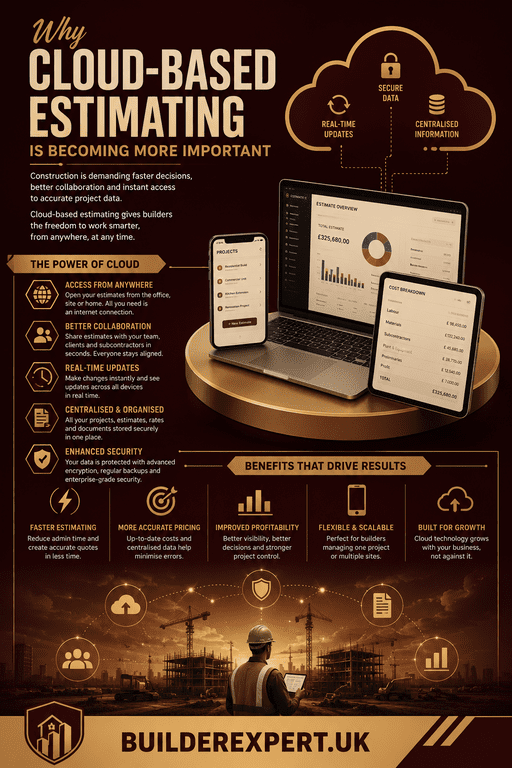
Modern construction estimating software often includes cloud functionality that allows contractors to access project information remotely.
Builders can review quotations, update budgets, adjust material pricing, and manage project data from different devices and locations.
This flexibility becomes especially valuable for contractors managing multiple projects simultaneously. Instead of relying on office-based spreadsheets or disconnected files, construction teams can work within one centralised environment where information remains organised and updated in real time.
Cloud-based estimating systems also improve collaboration between office staff, estimators, project managers, and site teams. Team members can share information more efficiently without manually transferring documents or sending outdated pricing files through email.
Modern construction estimating software helps construction companies reduce delays caused by communication gaps and inconsistent project information.
Builders can also respond to client enquiries more quickly because estimates and pricing frameworks are easier to access and update.
Cloud-based estimating improves workflow efficiency by supporting:
- Faster project updates
- Better team communication
- Improved pricing visibility
- More organised document management
- Easier remote access to estimates
- Reduced administrative delays
Security is another important advantage. Cloud systems often protect project data more effectively than local spreadsheets or manually stored files. Builders can back up estimating information while reducing the risk of losing important project data.
Modern construction estimating software supports stronger operational flexibility because information remains centralised, organised, and easier to manage across multiple construction projects.
Builders who adopt cloud-based estimating systems often improve efficiency, collaboration, and project coordination while creating more reliable estimating workflows for long-term business growth.
How Modern Construction Estimating Software Improves Team Collaboration
Construction projects often involve multiple people working together across different stages of planning and delivery. Builders, estimators, project managers, office staff, and suppliers may all require access to the same pricing information during the estimating process.
When estimating systems are disorganised, communication problems become more common. Teams may work from outdated spreadsheets, incorrect material pricing, or inconsistent labour calculations. This can create delays and confusion during project preparation.
Modern construction estimating software improves collaboration by centralising project information into one connected system. Teams can review estimates, update pricing, and access project data more efficiently from different locations.
Cloud-based estimating systems also improve communication between office teams and site teams because information becomes easier to share and manage.
Modern construction estimating software supports stronger collaboration by helping construction businesses:
- Reduce duplicated work
- Improve communication
- Maintain pricing consistency
- Share updated project information
- Simplify workflow coordination
Builders who improve collaboration often create more efficient estimating processes while reducing administrative errors and delays.
How Estimating Software Improves Client Confidence
Professional estimating plays a major role in client trust.
Homeowners and commercial clients often compare multiple quotations before selecting a contractor. Builders who provide clear and organised pricing usually create a stronger first impression.
Modern construction estimating software helps contractors present quotations in a more professional and transparent format.
Instead of rough estimates or unclear pricing ranges, clients receive structured cost breakdowns that explain how budgets are calculated.
Transparency improves confidence because clients feel more informed before approving projects.
Professional estimating supports:
- Better communication
- Clearer pricing expectations
- Reduced confusion
- Improved trust
- Stronger project transparency
Clients are more likely to move forward when estimates appear realistic and professionally prepared.
Modern construction estimating software helps builders create that confidence by improving how pricing information is presented.
Example of How Digital Estimating Improves Project Accuracy
A residential contractor managing extension and renovation projects struggled with inconsistent quotations. Manual spreadsheets often produced different pricing structures depending on who prepared the estimate.
The business adopted modern construction estimating software to centralise labour rates, materials, supplier pricing, and budgeting templates into one connected system.
Before implementing digital estimating, the contractor frequently experienced delays when preparing quotations because information was spread across multiple files and spreadsheets. Labour calculations were often inconsistent, and pricing adjustments sometimes created confusion between office staff and project managers.
After introducing modern construction estimating software, the company improved organisation significantly. Estimating workflows became faster because templates could be reused and updated more efficiently.
Within several months, the contractor reduced quotation preparation time by nearly 40%.
Pricing consistency also improved because all estimates followed the same structure.
Project forecasting became more reliable, and the business gained stronger visibility over labour and material costs.
Clients responded positively because quotations became clearer, more professional, and easier to understand.
The contractor also experienced fewer pricing disputes because cost breakdowns were presented more transparently during the quotation stage.
This example demonstrates how organised estimating systems improve efficiency, pricing consistency, workflow organisation, and overall project accuracy.
How Historical Project Data Improves Future Estimates
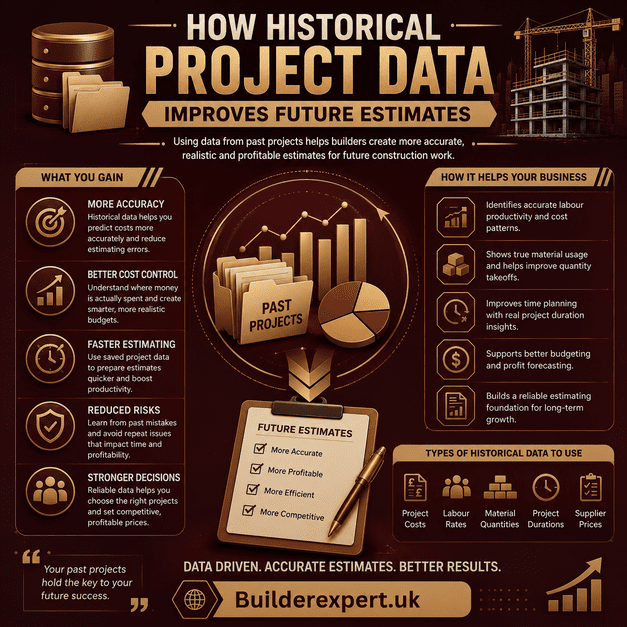
Historical project information is one of the most valuable tools available to contractors.
Builders who track previous project costs gain stronger insight into pricing trends, labour requirements, and budgeting performance.
Modern construction estimating software allows contractors to store and organise historical project data more effectively.
Rather than estimating future projects from scratch, builders can compare pricing against previous work with similar requirements.
This improves forecasting because pricing decisions become supported by real construction data rather than assumptions.
Historical estimating improves:
- Labour forecasting
- Material budgeting
- Timeline planning
- Cost consistency
- Project preparation
Construction businesses that use historical pricing often create more realistic budgets because they understand how previous projects performed financially.
Example of How Professional Estimating Helps Win Projects
A homeowner requested quotations for a £120,000 loft conversion project from several contractors.
Two builders provided basic pricing summaries with limited detail, while one contractor used modern construction estimating software to create a structured quotation that included labour categories, material allowances, project phases, and contingency planning.
The homeowner selected the contractor with the clearer estimate because the pricing appeared more organised and transparent.
The detailed quotation created stronger trust before work began.
This example highlights how professional estimating improves credibility and supports better client confidence during the decision-making stage.
Why Modern Estimating Supports Long-Term Business Growth
Construction businesses that improve estimating systems often create stronger operational foundations.
Better pricing accuracy improves profitability, while faster workflows increase efficiency and responsiveness.
Modern construction estimating software helps contractors reduce administrative pressure while improving project organisation.
Builders who estimate consistently often gain stronger control over project finances because costs become easier to monitor and forecast.
Long-term business growth depends on:
- Reliable budgeting
- Accurate pricing
- Professional communication
- Efficient workflows
- Strong project planning
Construction companies that modernise estimating processes often position themselves more competitively because they can respond faster and manage projects more effectively.
Modern construction estimating software supports sustainable growth by helping contractors create better pricing systems, stronger operational control, and more professional project management processes.
Conclusion
Construction estimating has become far more important than simply producing quotations.
Accurate pricing now plays a major role in profitability, project planning, workflow efficiency, and client trust.
Builders who continue relying on outdated estimating methods often face unnecessary administrative complexity and pricing inconsistency.
Modern construction estimating software provides a more structured way to manage labour costs, materials, project budgets, and quotations within one connected system.
This improves efficiency while reducing manual calculations and financial uncertainty.
As construction projects become increasingly competitive, contractors benefit from systems that improve organisation and support better decision-making.
Professional estimating creates stronger communication with clients because pricing becomes clearer and easier to understand.
Modern construction estimating software also improves operational flexibility by helping construction businesses manage multiple projects more effectively.
Builders who invest in stronger estimating systems often create better workflows, more accurate budgets, and greater project confidence.
Reliable estimating is not only about numbers—it is about reducing risk, improving trust, and creating a stronger foundation for long-term construction business growth.
📞 If you would like to contact us for estimating support, please click here
FAQ
- What is modern construction estimating software?
Modern estimating software is a digital system designed to help builders calculate project costs more accurately and efficiently. - Why is accurate estimating important in construction?
Accurate estimating improves budgeting, reduces financial risk, and helps contractors maintain profitability. - Can digital estimating tools improve workflow efficiency?
Yes. Digital systems reduce manual calculations and help contractors organise project data more effectively. - How does estimating software improve client communication?
Professional quotations improve transparency and help clients understand project pricing more clearly. - Can estimating software reduce pricing errors?
Yes. Structured estimating systems reduce duplication and improve pricing consistency. - Why are builders moving toward cloud-based estimating systems?
Cloud-based systems improve accessibility, collaboration, and project flexibility. - Do estimating systems help residential builders?
Yes. Residential contractors often benefit because digital estimating improves budgeting and quotation management. - Can historical project data improve future estimates?
Yes. Historical pricing helps builders create more realistic budgets and stronger forecasting. - How does professional estimating help builders win projects?
Detailed quotations improve trust and create stronger confidence during the client decision-making process. - What are the biggest advantages of digital estimating?
Improved efficiency, pricing accuracy, workflow organisation, and stronger project planning are among the biggest advantages.
🔗 https://www.bcis.co.uk/
🔗 https://www.rics.org/uk/
🔗 https://www.constructionleadershipcouncil.co.uk/
🔗 https://www.planningportal.co.uk/
🔗 https://www.designingbuildings.co.uk/wiki/Home