
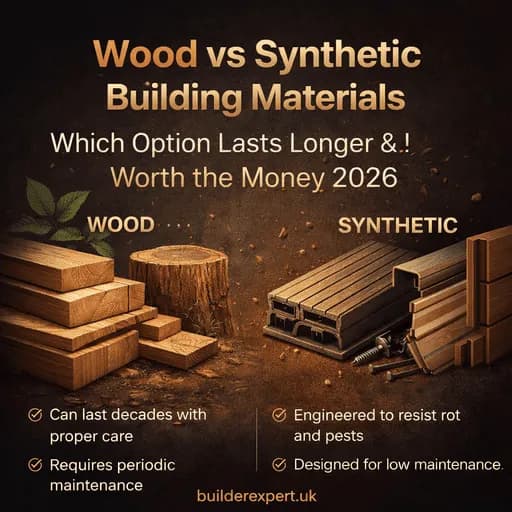
Choosing the right materials is one of the most important decisions in any residential construction or renovation project. Homeowners today are more informed than ever, comparing durability, cost, maintenance, and long-term value before committing to a solution. Rising material prices, stricter building standards, and increased awareness around sustainability have made material selection a strategic decision rather than a purely aesthetic one. As a result, one of the most common and highly searched comparisons remains Wood vs Synthetic Building Materials, especially as modern alternatives continue to evolve in 2026.
For residential projects, the choice of materials directly affects not only the appearance of a home, but also its performance over time, maintenance requirements, and overall resale value. Builders and homeowners alike are increasingly looking for solutions that balance quality with cost certainty. This is where accurate planning and early-stage cost analysis become essential, particularly when using professional tools such as construction estimating software to model material options and long-term expenses.
This article explores the real differences between Wood vs Synthetic Building Materials, focusing on lifespan, performance, cost-efficiency, and suitability for UK residential projects. Rather than relying on marketing claims or manufacturer promises, the goal is to provide a practical foundation based on real-world application and common construction scenarios. Understanding how different materials behave in typical UK conditions allows for smarter decisions early in the planning phase.
By breaking down the advantages and limitations of Wood vs Synthetic Building Materials, homeowners and builders can better align material choices with project goals, budget constraints, and maintenance expectations. When combined with clear estimating processes and structured project planning, such as those outlined in professional building estimating guidance, material decisions become less risky and far more predictable. Ultimately, informed choices lead to better outcomes, fewer surprises, and stronger long-term value for residential construction projects.
Understanding the Core Differences
At its core, the debate around Wood vs Synthetic Building Materials comes down to natural versus engineered solutions. Wood has been used in residential construction for centuries, valued for its structural reliability, warmth, and aesthetic appeal. From traditional timber framing to interior finishes and joinery, wood has consistently proven its ability to adapt to changing architectural styles and construction methods. Synthetic materials, on the other hand, are designed to replicate or outperform natural materials using composites, plastics, and advanced manufacturing techniques developed to improve consistency and durability.
In modern residential construction, this comparison is no longer about tradition versus innovation alone. Instead, it reflects a broader shift toward performance-based decision-making. Homeowners and builders are increasingly focused on how materials respond to real-world conditions such as moisture exposure, temperature changes, and daily wear. Factors like ease of installation, predictability of results, and compatibility with other building systems now play a central role in material selection.
The discussion outlined in Wood vs Synthetic Building Materials: Which Is Worth It? highlights that both options can perform exceptionally well when used in the right context. Wood often excels in interior applications and protected areas where environmental stress is limited, while synthetic materials are frequently chosen for external or high-exposure elements due to their engineered resistance to decay and deformation. The key difference lies not in which material is “better” overall, but in how effectively each one meets the specific demands of a residential project.
As building regulations tighten and homeowners expect longer-lasting results, understanding the practical implications of Wood vs Synthetic Building Materials becomes essential. Making informed choices early in the design and planning stages helps reduce long-term maintenance risks, avoids costly material mismatches, and supports more predictable construction outcomes.
Durability and Lifespan in Real Conditions
Durability is often the first concern when comparing Wood vs Synthetic Building Materials, especially in residential projects where homeowners expect long-term performance with minimal disruption. High-quality timber, when properly treated, detailed, and installed, can last for decades and, in some historic cases, even centuries. Traditional timber structures across the UK demonstrate that wood can perform exceptionally well when moisture is controlled and maintenance is consistent. However, untreated or poorly protected wood remains vulnerable to moisture ingress, insect attack, and gradual deterioration caused by temperature fluctuations.
Synthetic materials are engineered specifically to address many of these weaknesses. By design, they resist rot, warping, and pests, making them particularly attractive for external applications or areas exposed to constant moisture. In the UK climate, where damp conditions, rainfall, and humidity are common, many homeowners view synthetic solutions as a lower-risk option, especially for cladding, decking, and structural components near ground level.
Despite these differences, durability in residential construction is rarely determined by material choice alone. Correct specification plays a critical role in how both natural and synthetic materials perform over time. Factors such as ventilation gaps, drainage detailing, fixing methods, and compatibility with surrounding materials all influence long-term outcomes. Without proper planning and detailing, even the most advanced synthetic products can fail prematurely, just as untreated timber can deteriorate quickly if installed incorrectly.
This is why accurate planning and material scheduling are essential early in the project lifecycle. Using structured estimating and planning processes, such as those supported by professional construction estimating tools, helps ensure that materials are selected and installed according to their intended performance criteria. Clear task breakdowns and sequencing, like those outlined in construction estimate task planning guidance, also reduce the risk of errors that compromise durability.
Ultimately, when assessing Wood vs Synthetic Building Materials, durability should be viewed as a system-level outcome rather than a single-material attribute. Installation quality, environmental exposure, and long-term maintenance strategies all play decisive roles. Understanding these variables allows homeowners and builders to make informed decisions that protect performance, reduce lifecycle costs, and avoid costly repairs. When durability is approached holistically, both wood and synthetic materials can deliver reliable, long-lasting results in UK residential construction.
Maintenance Requirements Over Time
Maintenance is another major factor in the Wood vs Synthetic Building Materials decision, particularly for homeowners who are planning to stay in their property long term. Natural wood requires periodic sealing, painting, or staining to maintain both its appearance and structural performance. These maintenance cycles are not optional; without them, wood can degrade faster due to moisture penetration, UV exposure, and biological threats. Over time, this ongoing care contributes significantly to the total cost of ownership, even if the initial installation cost is relatively competitive.
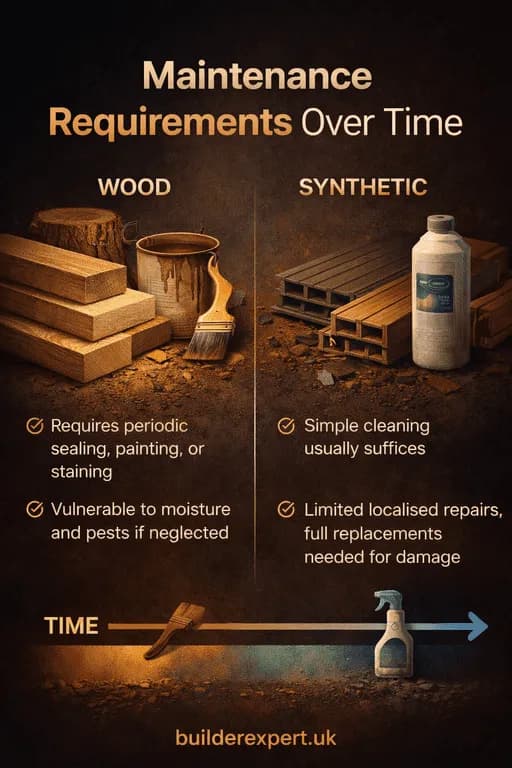
Synthetic materials, by contrast, are generally designed to reduce routine maintenance. Many products are marketed as “fit and forget” solutions, appealing to homeowners who prioritise convenience and predictable upkeep costs. In most cases, synthetic materials only require basic cleaning rather than protective treatments. However, this advantage comes with an important trade-off. When damage does occur, repairs can be more complex and costly, often requiring full component replacement rather than simple, localised fixes that are possible with timber.
The comparison highlighted in Wood vs Synthetic Building Materials: Which Is Worth It? shows that maintenance considerations should not be assessed in isolation. Access to materials, availability of replacement parts, and compatibility with existing construction systems all influence long-term maintenance outcomes. For example, sourcing matching synthetic components years later can be challenging if manufacturers discontinue specific product lines.
Understanding these trade-offs early is essential for accurate long-term planning, particularly when estimating lifecycle costs. Using professional construction estimating platforms allows homeowners and builders to model maintenance scenarios alongside installation costs, rather than relying on assumptions. Clear lifecycle forecasting, supported by structured estimating processes such as those discussed in professional building estimating guidance, helps avoid unexpected expenses later in the project.
From an industry perspective, organisations like the Building Research Establishment emphasise that maintenance performance is closely linked to correct specification and installation. Ultimately, when evaluating Wood vs Synthetic Building Materials, a realistic view of maintenance effort and repair flexibility is just as important as durability or initial cost.
Upfront Cost vs Hidden Costs
The initial cost comparison in Wood vs Synthetic Building Materials is not always straightforward. Wood can be more affordable upfront, particularly for internal residential applications such as flooring, joinery, and structural framing. Standard timber products are widely available, familiar to most trades, and relatively easy to work with, which often keeps labour costs under control. However, when homeowners opt for premium timber species, engineered wood products, or bespoke finishes, costs can quickly exceed those of many synthetic alternatives.
Synthetic materials typically come with higher upfront prices, reflecting advanced manufacturing processes and engineered performance characteristics. While this initial investment may appear less attractive at first glance, it often includes built-in durability features that reduce future intervention. In the Wood vs Synthetic Building Materials debate, understanding what is included in the initial price is critical, as it can mask long-term savings or future liabilities.
Long-Term Value and Property Perception
Long-term value is where the comparison becomes more nuanced. Wood often adds perceived value to a property due to its natural appearance, tactile quality, and traditional appeal. Many homeowners associate timber elements with craftsmanship and quality, which can positively influence resale value. This perception plays a significant role in residential markets, where visual and emotional factors often affect purchasing decisions.
Synthetic materials may not always deliver the same aesthetic premium, but they can contribute to value in other ways. Reduced maintenance requirements, consistent performance, and resistance to environmental wear can make a property more attractive to buyers who prioritise low upkeep. In practical terms, Wood vs Synthetic Building Materials is as much a lifestyle decision as it is a financial one.
Lifecycle Cost Planning
A critical mistake in material selection is focusing solely on upfront cost. True cost-effectiveness emerges when lifecycle costs are considered. Maintenance cycles, repair complexity, and replacement timelines all contribute to total expenditure over the lifespan of a material. This is why accurate budgeting and forecasting are essential when comparing Wood vs Synthetic Building Materials in residential construction.
Professional estimating frameworks help translate material choices into long-term financial projections. Understanding how materials affect overall project cost is explored in depth through professional estimating guidance such as , where budgeting decisions are aligned with real construction outcomes rather than assumptions.
Making Cost Decisions with Confidence
Ultimately, cost comparisons should support informed decision-making rather than drive short-term savings. Whether choosing wood for its character or synthetic materials for their predictability, the key is aligning material selection with project goals, homeowner expectations, and long-term financial planning. When cost, value, and performance are evaluated together, Wood vs Synthetic Building Materials becomes a strategic choice rather than a compromise.
Sustainability and Environmental Impact
Sustainability is increasingly influencing decisions around Wood vs Synthetic Building Materials. Responsibly sourced timber is renewable and has a lower embodied carbon footprint than many synthetic products. Certifications and supply chain transparency play a key role in ensuring sustainability claims are valid.
Synthetic materials, while durable, often rely on petrochemical processes. However, newer products are incorporating recycled content and improved manufacturing efficiency. The environmental impact therefore depends heavily on the specific product and supplier.
Government guidance and industry frameworks, such as those published by the UK Construction Leadership Council , provide useful benchmarks when assessing sustainable material choices.
Performance in Residential Applications
In residential projects, performance requirements vary significantly between internal and external applications. The Wood vs Synthetic Building Materials debate looks very different when comparing structural framing, cladding, decking, or interior finishes, because each application is exposed to different stresses and performance demands. Materials that perform exceptionally well indoors may struggle when exposed to moisture, UV radiation, or temperature changes, making correct placement critical to long-term success.
Wood excels in interior environments where conditions are relatively controlled. Internal timber framing, flooring, staircases, and joinery benefit from stable temperatures and limited moisture exposure, allowing wood to retain its strength and visual appeal for many years. In these settings, wood’s natural flexibility and ease of modification also provide practical advantages during construction and future refurbishments. This is why many designers continue to favour timber for internal residential elements despite the availability of modern alternatives.
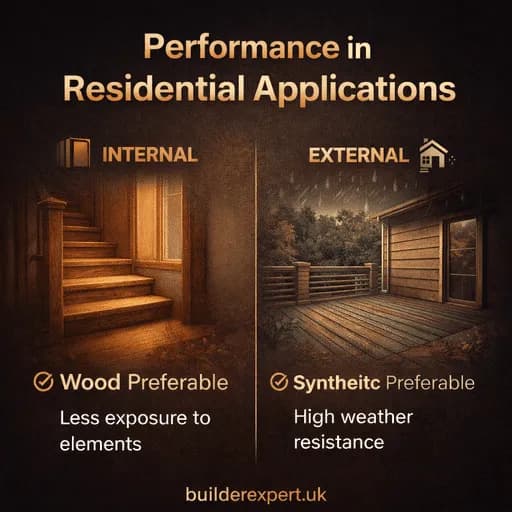
External applications tell a different story. Synthetic materials perform strongly in environments where weather resistance is critical, such as external cladding, decking, and façade elements. Their engineered resistance to moisture absorption, rot, and dimensional movement makes them particularly suitable for the UK’s damp and variable climate. When comparing Wood vs Synthetic Building Materials for exterior use, predictability and reduced risk often outweigh aesthetic considerations.
Many modern homes now rely on hybrid solutions that combine both materials strategically. Timber may be used internally to enhance warmth and character, while synthetic materials protect the building envelope externally. The approach outlined in Wood vs Synthetic Building Materials: Which Is Worth It? reflects a growing trend toward performance-led design rather than single-material loyalty.
Clear project planning and detailed material breakdowns are essential to making these hybrid strategies work effectively. Structured task sequencing and material allocation, such as those described in, help ensure that each material is used where it performs best. Aligning material choices with recognised residential standards, such as guidance from the National House Building Council (https://www.nhbc.co.uk/), further reduces performance risks and compliance issues.
Ultimately, evaluating Wood vs Synthetic Building Materials through the lens of application-specific performance allows homeowners and builders to maximise durability, efficiency, and value. When materials are selected based on where and how they are used, residential projects achieve more reliable outcomes and fewer long-term compromises.
Installation and Construction Practicalities
Ease of installation is often overlooked in the Wood vs Synthetic Building Materials comparison, yet it plays a crucial role in residential project efficiency. Wood is familiar to most trades, allowing for flexibility on site and easier adjustments when conditions change. Carpenters can cut, shape, and modify timber with standard tools, which helps resolve unexpected issues without delaying progress. This adaptability often reduces downtime and keeps labour costs predictable, particularly on refurbishment projects where existing conditions are not always known in advance.
Synthetic materials, while consistent in quality, may require specialised fixings, tools, or manufacturer-approved installers to maintain warranties and performance standards. This can introduce additional planning requirements and limit flexibility on site. In the Wood vs Synthetic Building Materials debate, these constraints can influence installation speed, especially when access to trained installers or specific components is limited.
Installation speed, waste levels, and error tolerance all directly affect overall project timelines and profitability. Materials that allow for on-site corrections reduce the risk of delays caused by ordering replacements or redesigning details. These factors should be fully considered during the planning stage, particularly for residential projects with tight schedules, where efficient installation can make the difference between staying on budget or exceeding it.
Market Trends Heading into 2026
As we move further into 2026, the Wood vs Synthetic Building Materials discussion continues to evolve alongside changes in technology, regulation, and homeowner expectations. Advancements in engineered timber products are closing long-standing performance gaps, offering improved dimensional stability, fire resistance, and moisture control compared to traditional solid wood. These developments are allowing timber to be specified more confidently in applications that were previously considered unsuitable for natural materials.
At the same time, synthetic materials are becoming more visually convincing and environmentally conscious. Modern composites are designed to better replicate the texture and appearance of natural wood while offering consistent performance and reduced maintenance. In the broader context of Wood vs Synthetic Building Materials, this convergence means that material choice is less about limitations and more about strategic alignment with project goals.
Industry cost data from organisations such as BCIS (https://www.bcis.co.uk/) confirms that material selection increasingly influences overall project viability, not just aesthetics. Material-led decisions now affect construction timelines, maintenance forecasting, and long-term operating costs. As budgets remain under pressure and homeowners demand greater value for money, the ability to evaluate materials based on performance data rather than assumptions has become essential.
Looking ahead, regulatory pressure around sustainability and whole-life cost assessment is expected to intensify. This will further elevate the importance of informed comparisons between wood and synthetic options, reinforcing the need for early-stage planning and accurate cost modelling when assessing Wood vs Synthetic Building Materials in residential construction.
Conclusion: Which Option Is Worth the Money?
There is no universal winner in the Wood vs Synthetic Building Materials debate. The right choice depends on application, budget, maintenance expectations, and long-term goals. Wood offers natural beauty and proven performance, while synthetic materials provide consistency and reduced upkeep.
Understanding these differences early allows homeowners and builders to make informed decisions that protect both project quality and financial outcomes. Accurate estimating, clear material specifications, and professional planning remain essential when evaluating Wood vs Synthetic Building Materials for residential construction in 2026.
For professionals looking to estimate accurately, track costs, and manage residential projects with confidence, tools like those available at provide a practical foundation for smarter decision-making
.FAQ – Wood vs Synthetic Building Materials
- What is the main difference between wood vs synthetic building materials?
The main difference between wood vs synthetic building materials is that wood is a natural product with traditional structural and aesthetic value, while synthetic building materials are engineered to provide consistency, resistance to moisture, and reduced maintenance in residential construction.
- Which lasts longer, wood vs synthetic building materials?
When comparing wood vs synthetic building materials, synthetic options usually last longer in exposed outdoor conditions because they are less affected by moisture, insects, and temperature changes. High-quality timber, however, can also perform very well over time if correctly treated and maintained.
- Are wood vs synthetic building materials cost-effective over time?
The long-term cost-effectiveness of wood vs synthetic building materials depends on maintenance and replacement cycles. Wood may have a lower initial cost and add more visual value, while synthetic materials often reduce future maintenance expenses.
- Which is better for UK residential projects, wood vs synthetic building materials?
For UK residential projects, the choice between wood vs synthetic building materials depends largely on exposure. Wood is often ideal for interiors and sheltered areas, whereas synthetic materials perform better in external applications affected by damp weather conditions.
- Is wood more sustainable than synthetic building materials?
In the comparison of wood vs synthetic building materials, sustainability depends on sourcing and production methods. Responsibly sourced timber is renewable and environmentally efficient, while some synthetic materials now use recycled content and improved manufacturing processes.
🔗 https://www.gov.uk/government/publications/the-construction-playbook
🔗https://www.constructionleadershipcouncil.co.uk/
📞 Contact Ushttps://builderexpert.uk/contact-builder-expert/