
Introduction to Labour Optimization in Residential Construction
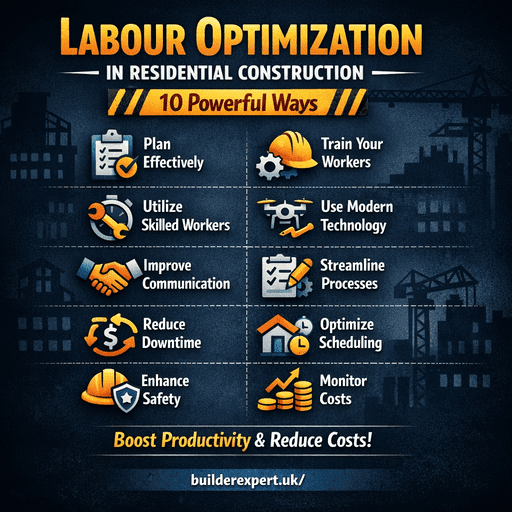
Labour optimization in residential construction plays a critical role in improving project efficiency and reducing wasted labour hours. Labour remains the driving force behind every residential construction project. While materials, equipment, and design are essential contributors, it is ultimately the workforce that turns plans into completed homes. Every hour spent on site directly affects project cost, schedule, quality, and overall client satisfaction. Despite this importance, labour is frequently the least optimised element of construction management. Many companies invest heavily in tools and materials, yet overlook the systems and processes that determine how effectively workers utilise their time.
Labour inefficiency is one of the most persistent causes of budget overruns in residential construction. Whether through poor planning, unclear communication, missing materials, or poorly sequenced tasks, lost labour hours accumulate silently but rapidly. A single hour of wasted time per worker per day can translate into hundreds of lost hours by the end of a medium-sized renovation. Over multiple projects, these inefficiencies can significantly impact profitability and operational stability.
Labour optimization is not about pushing teams harder or imposing unrealistic expectations. It is about creating conditions where work flows smoothly, interruptions are minimized, and every trade has what it needs to operate efficiently. This involves planning, communication, training, coordination, digital tools, and continuous improvement. When implemented effectively, labour optimization reduces downtime, prevents rework, and establishes a predictable rhythm of execution that benefits clients, workers, and the business.
This article provides a detailed and practical framework for construction companies seeking to save hundreds of labour hours on residential projects. The strategies presented here apply to all types of domestic construction — extensions, refurbishments, kitchens, bathrooms, loft conversions, and full-property renovations. By adopting the following methods, companies can significantly enhance productivity while maintaining high standards of quality and safety.
1. Why Labour Optimization Matters in Residential Construction
Labour optimization is fundamental to successful project delivery, especially in environments where multiple trades operate in close proximity. Residential projects often involve plumbers, electricians, plasterers, painters, joiners, tilers, roofers, HVAC specialists, and general labourers working on a tight schedule. If one trade falls behind, the delay ripples through every subsequent operation.
1.1 Increased Productivity Through Reduced Downtime
When work is properly planned and organized, teams can perform tasks without frequent interruptions. Workers spend less time waiting for instructions, looking for tools, or evaluating unclear plans. Coordination becomes smoother, and the entire workflow gains momentum.
1.2 Lower Operational Costs
Lost labour hours translate directly into financial waste. Even small inefficiencies — such as 30 minutes of daily downtime per worker — add up to substantial costs over the duration of a project. Optimized labour ensures that every paid hour contributes to measurable progress.
1.3 Enhanced Customer Satisfaction
Homeowners expect projects to finish on time, on budget, and with minimal disruption. Efficient labour management reduces delays and increases overall professionalism on site. The result is better client communication, smoother inspections, and stronger trust in the construction company.
1.4 Improved Safety on Site
A structured and well-coordinated site reduces the likelihood of accidents. Clear communication, organised work zones, and defined responsibilities create an environment where workers can operate safely and confidently.
Improved safety on site is one of the most significant benefits of labour optimization in residential construction, because organised teams and structured workflows reduce unnecessary risks. When tasks are properly scheduled and each trade understands its responsibilities, workers operate in safer, less crowded environments. Clear instructions, streamlined communication, and predictable sequencing help minimise accidents caused by confusion or rushed activities. As a result, labour optimization in residential construction not only increases productivity but also creates a controlled site environment where hazards are identified early and managed effectively.
Digital tools also strengthen on-site protection by supporting labour optimization in residential construction through real-time updates, digital checklists, and automated safety reminders. These systems ensure that workers follow correct procedures, use proper equipment, and report potential dangers immediately. When safety practices are integrated into daily planning, labour optimization in residential construction becomes a proactive approach that reduces downtime, prevents costly incidents, and improves overall workflow stability. A well-organised, safety-driven site not only protects workers but also boosts efficiency and long-term project reliability.
2. Strategic Planning and Scheduling: The Backbone of Labour Efficiency
Effective labour optimization in residential construction ensures smoother workflows and fewer delays across all trades.
Effective labour optimization in residential construction ensures smoother workflows and fewer delays across all trades. Within the context of Labour Optimization in Residential Construction, strong planning and clearly defined scheduling practices allow every team on site to understand exactly what needs to be done, when it should be completed, and which requirements must be met before the next phase can begin. This level of clarity removes uncertainty from daily operations and significantly reduces the idle time that commonly accumulates between tasks.
A structured schedule also improves cross-trade coordination. In residential construction, electricians, plumbers, carpenters, plasterers, and finishers frequently overlap in the same physical spaces. Without precise sequencing, these overlaps create congestion, miscommunication, and rework. By contrast, a planned workflow ensures each trade enters the site at the right moment, with enough time to complete its tasks before the next team arrives. This coordination directly contributes to higher productivity and fewer costly disruptions.
Another key benefit of strategic planning is the ability to anticipate obstacles before they occur, a core principle of Labour Optimization in Residential Construction. Effective planning integrates buffer times, contingency measures, and alternative work sequences to maintain progress. This flexibility enables projects to move forward even when material deliveries are delayed, weather conditions shift, or unforeseen structural challenges emerge. Rather than waiting for further instruction, workers can transition immediately to pre-planned alternative tasks, ensuring that productivity is maintained and the project continues to advance efficiently.
Finally, proper planning strengthens communication across all levels — from project managers to subcontractors and on-site teams. Daily briefings become faster and more targeted because the schedule already outlines the priorities of each day. Workers feel more confident and organised, which boosts overall morale and reduces frustration.
In essence, strategic planning and scheduling act as the backbone of labour optimization in residential construction. When executed correctly, they create a predictable, steady rhythm of work that maximises productivity, reduces waste, and leads to higher-quality results for both the construction team and the client.
2.1 Comprehensive Project Scheduling
A well-structured project schedule outlines:
- the sequence of tasks
- estimated durations
- dependencies between trades
- inspection requirements
- material delivery timelines
For example, electricians must complete first-fix tasks before plastering can begin. Similarly, plastering must dry fully before painters can proceed. A clear timeline prevents trades from clashing or working in unsuitable conditions.
2.2 Daily Operational Planning
Daily planning meetings — often referred to as toolbox talks — ensure alignment before work begins. These short sessions should outline:
- daily tasks
- priorities
- risks
- material needs
- expected deliveries
- changes from the original plan
Daily alignment saves hours that would otherwise be lost to confusion or misinterpretation.
2.3 Anticipating Delays and Building Flexibility
Residential construction is highly susceptible to disruptions caused by weather, material shortages, or uncovered structural issues. Effective planning includes:
- buffer times
- contingency workflows
- backup material suppliers
- alternative tasks to keep workers productive
A flexible plan prevents small problems from halting progress.
2.4 Coordinating Suppliers and Subcontractors
Timely delivery of materials and accurate scheduling of subcontractors ensure that labour resources are never left idle. Within Labour Optimization in Residential Construction, clear and consistent communication helps reduce trade clashes and maintains a steady, uninterrupted flow of work across the site. Effective coordination between suppliers and subcontractors is a critical driver of productivity and directly supports labour optimization in residential construction. When materials arrive as planned and subcontractors are scheduled with precision, site teams remain fully utilised and avoid unnecessary downtime.
Strong communication between project managers, suppliers, and trade teams prevents costly clashes, eliminates scheduling conflicts, and reduces delays that can ripple through the entire project. By establishing clear expectations, confirming delivery timelines, and verifying availability in advance, construction companies significantly improve operational efficiency. This structured approach ensures smoother task sequencing and supports long-term labour optimization in residential construction.
Digital tracking tools and automated scheduling systems further enhance transparency, enabling all parties to monitor progress in real time and resolve issues before they affect on-site activities. Consistent coordination strengthens relationships with suppliers and subcontractors, leading to more reliable service and higher-quality outcomes. Ultimately, effective supplier and subcontractor management keeps projects predictable, on schedule, and supported by a steady, uninterrupted workflow from start to finish.
3. Communication: The Glue That Holds Labour Efficiency Together
Communication failures are among the most expensive issues in construction. They lead to rework, duplicated tasks, delays, and safety hazards.
Poor communication does not simply slow down a residential construction project—it disrupts the entire workflow. In the context of Labour Optimization in Residential Construction, unclear or incomplete instructions force workers to make assumptions, often leading to errors, inefficiencies, and costly rework. Effective communication ensures that every team member clearly understands daily priorities, task sequencing, safety requirements, and material needs before work begins. Clear messaging also eliminates duplicated effort, as each trade knows precisely what has been completed and what is expected in the next phase.
Strong communication channels, whether verbal, written, or digital, help identify issues early, allowing managers to resolve problems before they escalate into delays. Implementing consistent morning briefings, real-time messaging apps, and documented task lists creates a reliable information flow across the site. This greatly improves coordination and reduces downtime caused by misunderstandings.
Furthermore, open communication encourages workers to report risks, ask questions, and flag missing materials — all of which support safer, more productive job sites. Ultimately, high-quality communication forms the backbone of labour efficiency, ensuring that teams remain aligned, informed, and able to perform their tasks without interruption.
3.1 Structured Communication Systems
Morning briefings establish expectations and ensure everyone understands the plan. They should contain:
- scope of work
- safety alerts
- coordination points
- changes from the previous day
A five-minute briefing can prevent hours of wasted time.
3.2 Written and Digital Instructions
Verbal instructions can easily be forgotten or misunderstood, particularly on busy construction sites. Within Labour Optimization in Residential Construction, providing written guidelines, drawings, checklists, and reference photos ensures a higher level of clarity and consistency. Workers can revisit instructions at any time, significantly reducing the risk of mistakes. Clear written and digital documentation remains essential for effective labour optimization in residential construction, as it allows teams to work with greater accuracy and confidence. When workers have access to detailed guidelines and well-annotated drawings, tasks are far more likely to be completed correctly the first time.
Digital checklists and documentation tools further reduce delays and prevent rework. Supervisors can update instructions instantly, ensuring everyone on site receives consistent and accurate information. This level of clarity improves workflow efficiency and strengthens communication between trades, which is critical in residential projects where timing and coordination directly affect productivity.
By standardising written instructions and making them easily accessible on mobile devices, construction companies minimise confusion, improve task sequencing, and support smoother day-to-day operations. Ultimately, clear documentation enhances overall labour efficiency, maintains quality, and ensures teams remain aligned throughout every stage of the construction process.
3.3 Encouraging Worker Feedback
Encouraging worker feedback is a powerful strategy that directly supports labour optimization in residential construction. When workers are invited to share challenges, ideas, and on-site observations, managers gain valuable insights into workflow inefficiencies and potential safety issues. This open communication helps identify delays, missing materials, and unclear instructions faster than top-down supervision alone. By integrating worker suggestions into daily planning, labour optimization in residential construction becomes more accurate, more responsive, and more aligned with the actual conditions on site.
A culture that values worker input significantly enhances labour optimization in residential construction, because those closest to the work often recognise problems before they escalate. Digital reporting tools, quick feedback surveys, and structured site meetings allow teams to express concerns and propose improvements in real time. This continuous feedback loop improves coordination between trades, strengthens communication, and helps eliminate waste. As workers feel more involved and respected, labour optimization in residential construction becomes more effective, leading to smoother operations, higher morale, and better overall project performance.
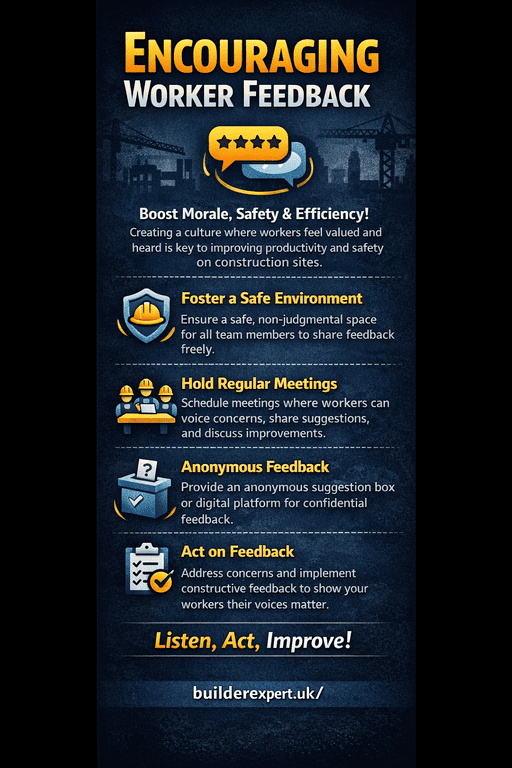
Workers often identify inefficiencies long before management does. Creating an open communication culture helps uncover:
- redundant processes
- unsafe practices
- missing materials
- bottlenecks
Feedback from the field is invaluable for continuous improvement.
3.4 Cross-Trade Coordination
Residential projects involve constant interaction between trades. Clear communication between these groups prevents conflicts, ensures sequencing accuracy, and maintains workflow continuity.
Residential projects require constant interaction between multiple trades, making effective cross-trade coordination essential for maintaining project momentum. Within Labour Optimization in Residential Construction, clear coordination between electricians, plumbers, carpenters, and finishers is critical, especially when teams work in overlapping areas. Without proper communication, even minor misunderstandings can lead to delays, rework, or safety risks. Clear and structured communication between trades helps prevent conflicts, ensures accurate sequencing of tasks, and supports uninterrupted workflow continuity across the site.
A well-coordinated schedule allows each trade to enter the site at the correct stage, avoiding congestion and eliminating downtime caused by waiting for previous tasks to be completed. Regular coordination meetings, shared digital schedules, and real-time updates give all teams visibility into what has been done and what is coming next. This improves accountability and reduces the chance of teams interfering with one another’s work.
Additionally, strong cross-trade coordination builds trust and collaboration. When trades understand each other’s needs, limitations, and timelines, they can proactively adjust their work to support the next stage. This creates a more efficient working environment, improves overall labour performance, and reduces the likelihood of disputes or productivity losses. Ultimately, successful cross-trade coordination is a key driver of consistent progress and high-quality results in residential construction.
4. Organising Teams for High Productivity
Organising teams effectively is a cornerstone of labour optimization in residential construction, because productivity depends on how well workers are assigned, coordinated, and supported. When roles are clearly defined and tasks are matched to individual skill levels, teams operate with greater confidence and speed. Structured team organisation also reduces errors, duplication, and unnecessary downtime. By ensuring that each trade understands its responsibilities and how their work connects to the broader schedule, labour optimization in residential construction becomes far more efficient and predictable, allowing projects to progress smoothly from one phase to the next.
Team organisation also strengthens communication and collaboration, which are essential for effective labour optimization in residential construction. When site leaders implement strategic crew rotations, balanced workloads, and transparent reporting systems, workers remain focused and accountable. Regular briefings, digital task lists, and performance feedback create a unified team environment where issues are addressed quickly and workflows stay aligned. This structured approach ensures that every worker contributes meaningfully to overall productivity. As coordination improves, labour optimization in residential construction delivers measurable gains in efficiency, quality, and on-site consistency.
Team structure directly affects labour efficiency. Clear roles, well-managed responsibilities, and balanced workloads create an environment where workers can perform at their best.
4.1 Clear Definition of Roles and Responsibilities
When roles are ambiguous, tasks may be duplicated or ignored. Each worker should know:
- their scope of work
- decision-making authority
- reporting structure
- daily responsibilities
Role clarity ensures accountability and efficiency.
4.2 Aligning Skills With Tasks
Placing workers in roles that match their skills prevents rework, improves quality, and increases speed. Skilled workers should not be assigned unskilled tasks, and inexperienced workers should not be left to handle complex duties without support.
4.3 Optimal Team Size
Too many workers lead to congestion and inefficiency. Too few workers create workload pressure and delays. The ideal team size depends on:
- the project phase
- site constraints
- task complexity
- safety considerations
A well-balanced team maximises productivity.
4.4 Coordination Between Trades
Each trade should understand when and where they need to work. A coordinated schedule reduces overlap and prevents workers from interrupting one another.
4.5 Maintaining a Clean and Organised Site
A tidy site is a productive site. Regular housekeeping reduces the time spent searching for tools and prevents safety incidents that cause downtime.
5. Using Digital Tools to Boost Labour Efficiency
Technology has modernised residential construction, making it easier to plan, track, and monitor labour productivity.
5.1 Project Management Software
Platforms such as Buildertrend, Procore, and Monday.com allow teams to:
- assign tasks
- manage schedules
- track progress
- store drawings
- log variations and RFIs
- document inspections
Digital visibility reduces miscommunication and aligns the entire team.
5.2 Digital Checklists
Standardised digital checklists ensure consistent execution of tasks such as:
- pre-work inspections
- safety checks
- finishing details
- quality checks
Checklists reduce the likelihood of missing steps and prevent costly rework.
5.3 Time-Tracking Systems
Accurate time data helps identify inefficiencies, refine schedules, and forecast labour needs. It also provides transparency to both management and workers.
5.4 Mobile Communication Tools
Instant messaging apps designed for construction allow:
- on-site photo updates
- quick approvals
- real-time issue reporting
- streamlined coordination
They eliminate the delays caused by long phone calls or waiting for in-person discussions.
6. Material Management: Eliminating One of the Biggest Sources of Wasted Labour
Material shortages and disorganisation are among the leading causes of downtime. Workers should never have to wait for materials that should have been available at the start of the day.
6.1 Accurate Pre-Planning of Materials
Before each project stage begins, managers must verify that all required materials are:
- ordered
- available
- inspected
- staged correctly
A single missing component can halt progress across multiple trades.
6.2 Efficient Storage and Labelling
Materials should be stored logically and labelled clearly. Efficient storage reduces:
- time spent searching
- accidental damage
- confusion between similar items
Workers should always know where to find what they need.
6.3 Regular Inventory Monitoring
Weekly stock checks prevent unexpected shortages. Teams should track:
- consumption rates
- remaining quantities
- lead times
This ensures continuous material flow.
6.4 Strong Supplier Relationships
Reliable suppliers reduce the risk of late or incorrect deliveries. Open communication ensures that materials arrive exactly when needed.
7. Tools and Equipment: Investing in Productivity
Tools directly affect the speed and quality of construction tasks. Outdated or poorly maintained tools cause delays and increase physical strain on workers.
7.1 Precision Tools
Tools like laser levels, digital measurers, and alignment systems improve accuracy and reduce the need for rework.
7.2 High-Performance Power Tools
Modern drills, saws, nail guns, and sanders significantly increase speed and efficiency. Investing in quality tools pays back quickly in saved labour hours.
7.3 Equipment Maintenance
A simple maintenance schedule ensures:
- tools last longer
- performance stays optimal
- breakdowns do not interrupt work
Reliable tools contribute to predictable workflows.
8. Training and Development: The Human Factor in Labour Optimization
A skilled workforce is more productive, safer, and more adaptable.Continuous development is essential.
8.1 Technical Skills Training
Workers should receive training on:
- new tools
- updated building regulations
- advanced construction techniques
- energy-efficient methods
Better skills mean fewer mistakes and faster execution.
8.2 Digital Skills Training
As digital tools become standard, workers must be comfortable using:
- mobile apps
- project management systems
- digital checklists
- communication platforms
Tech-skilled workers operate more independently and efficiently.
8.3 Mentorship and On-the-Job Learning
Experienced workers can transfer knowledge to newer employees, building competence organically within the team.
Mentorship and on-the-job learning play a vital role in achieving labour optimization in residential construction, because they help workers develop practical skills directly in the environment where they will be applied. Experienced team members can guide newer workers through complex tasks, share best practices, and demonstrate efficient methods that reduce wasted time. This real-time knowledge transfer improves confidence, accuracy, and workflow consistency, all of which contribute to higher productivity on site.
Structured mentorship programs also support labour optimization in residential construction by ensuring that essential skills are passed down systematically rather than through trial and error. When workers understand how to perform tasks correctly from the beginning, the likelihood of rework, delays, and safety incidents is significantly reduced. On-the-job learning further strengthens communication between team members and promotes a culture of collaboration and continuous improvement.
By combining mentorship with hands-on experience, companies create a workforce that is adaptable, skilled, and aligned with project goals. This approach directly enhances labour optimization in residential construction, as workers become more efficient, more autonomous, and better prepared to meet daily demands. Ultimately, strong mentorship and active learning contribute to long-term workforce development and more reliable project outcomes.
9. Standardising Processes to Create Predictability
Standardisation removes guesswork and introduces consistency.
9.1 Standard Work Sequences
Clear sequences help workers know exactly what order tasks must follow.
9.2 Checklists and Protocols
Standardised checklists ensure:
- consistent quality
- reduced errors
- easier supervision
9.3 Reporting Systems
Structured reporting helps identify issues early and maintain productivity.
10. Continuous Improvement: The Path to Long-Term Labour Efficiency
Labour optimisation is an ongoing effort. Every project provides lessons that can improve future performance.
Continuous Improvement is one of the most effective strategies for achieving long-term labour optimization in residential construction, because it focuses on analysing daily performance and identifying opportunities for improvement. When companies review project outcomes, track workflow issues, and refine their processes, they create a cycle of learning that directly strengthens labour optimization in residential construction. Regular evaluations help highlight skill gaps, communication challenges, and scheduling inefficiencies that impact productivity. By consistently adjusting methods and updating best practices, teams develop smarter, faster, and safer ways of working. This ongoing refinement ensures that labour optimization in residential construction remains stable and continually improves over time.
Data-driven decision making plays a crucial role in reinforcing labour optimization in residential construction, as it gives managers accurate insights into task durations, delays, and areas where productivity is lost. Continuous Improvement relies on monitoring KPIs, reviewing worker feedback, and comparing planned workflows with actual results to refine processes. When data and on-site observations are combined, companies gain a clearer understanding of how to enhance labour optimization in residential construction across every trade. This structured approach ensures that improvements are not accidental but intentional, measurable, and aligned with long-term project goals. Consistent reflection and refinement strengthen labour optimization in residential construction year after year.
For Continuous Improvement to fully support labour optimization in residential construction, it must become part of the company culture rather than a one-time initiative. When teams are encouraged to share ideas, question outdated practices, and propose innovative methods, the entire organisation benefits. This proactive mindset leads to safer worksites, more accurate task execution, and smoother coordination between trades — all vital elements of labour optimization in residential construction. By promoting open communication and rewarding positive change, companies create motivated teams who actively contribute to higher efficiency. Over time, this culture-driven approach ensures consistent progress and long-term success in labour optimization in residential construction.
10.1 Project Reviews
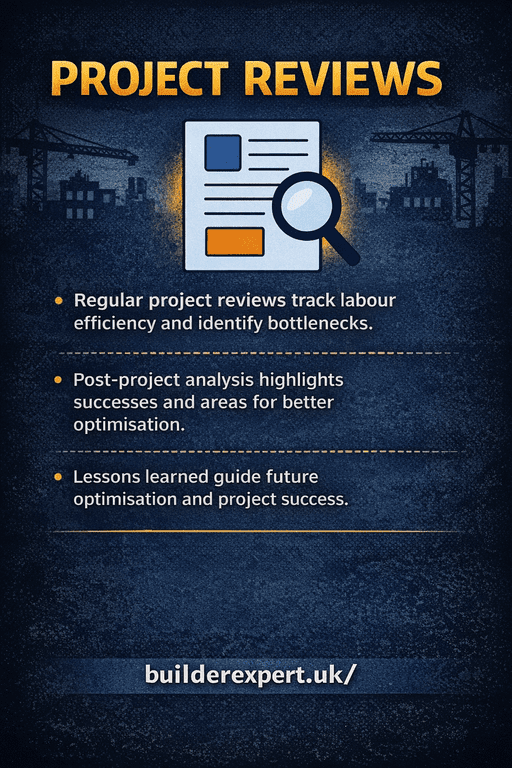
Labour optimization in residential construction is a critical factor for efficient project execution and quality assurance. Within the framework of Labour Optimization in Residential Construction, systematic monitoring of productivity, proper workforce allocation, and accurate task scheduling help reduce delays and cost overruns. At the same time, encouraging worker feedback and conducting regular project reviews allow teams to identify operational issues and labour bottlenecks at an early stage. Post-project analysis plays a key role in evaluating performance, highlighting inefficiencies, and implementing targeted improvements. By applying data-driven insights and continuously refining processes, construction teams can achieve higher productivity, improved safety standards, and more sustainable project outcomes.
Conclusion
Labour optimisation is one of the most powerful ways to improve residential construction performance. Through structured planning, clear communication, skilled teams, modern tools, strong material management, and continuous improvement, companies can significantly reduce labour waste and maximise efficiency. The result is faster project completion, lower costs, higher quality, better safety, and stronger client satisfaction.
By adopting these strategies, construction companies create a more predictable, organised, and productive work environment — one that saves hundreds of labour hours on each project and establishes a foundation for long-term success.
📌 http://www.constructiondive.com/news/how-construction-teams-can-build-a-feedback-culture/603620/
📌https://www.constructionexec.com/article/improving-labor-productivity-in-construction
📌https://www.levelset.com/blog/labor-productivity-in-construction/
📌https://www.leanconstruction.org/why-lean/
If you would like to contact our team, click here