

Renovations can be exciting at the beginning. You imagine a fresh new space, better comfort, more value for your home, and a result that feels modern and upgraded. But as most homeowners quickly realise, renovating a property often includes costs that were never part of the original plan. These are the hidden expenses of renovations, and they can easily turn a simple project into a stressful and expensive experience.
The positive news is that these hidden expenses of renovations can be managed. With the right preparation, clear communication, and a more detailed understanding of where hidden costs usually come from, homeowners and builders can avoid most surprises. In this article, we will look closely at the most common hidden expenses, why they appear, and what you can do to stay ahead of them at every stage of your renovation.
Why Renovations Often Cost More Than Expected
Many people start a renovation with a basic idea of what they want to achieve and a general budget. They imagine the visible tasks: installing new tiles, painting walls, adding insulation, or updating a kitchen. However, the hidden expenses of renovations usually appear in areas that are not visible at the start. These include older electrical systems, worn-out plumbing, structural weaknesses, or materials that are more damaged than they seemed.
When a builder begins removing walls, floors, or fittings, new issues often appear. These issues add to the time, labour, and materials required. For example, a room that looked simple to update may suddenly reveal damp patches, rotten timber, or old wiring that needs replacement to meet standards. All these situations increase the hidden expenses of renovations and make the original budget unrealistic.
Clear estimating is one of the strongest tools to prevent unexpected costs. Detailed planning, proper measurements, and accurate cost breakdowns reduce the chances of being surprised later. Homeowners who understand this early can make better decisions and feel more in control of the process.
The Most Common Hidden Expenses of Renovations
Hidden expenses come from many different areas, and each renovation project can reveal something unexpected. Still, there are certain areas where hidden expenses appear more often:
- Fixing damp, mould, or water damage
- Structural corrections or strengthening
- Disposal costs for waste and debris
- Upgraded insulation requirements
- Fluctuating material prices
- Updates to old plumbing and electrical systems
- Extra labour for difficult access points
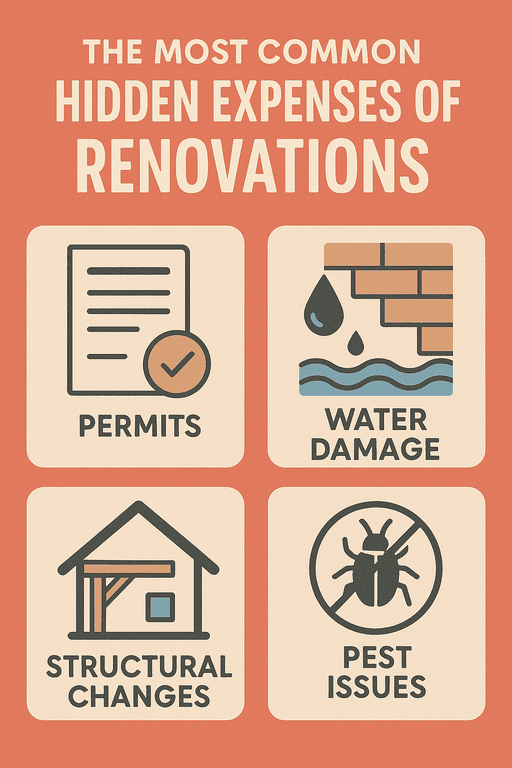
These items may not seem significant on their own, but together they can dramatically increase the total cost. When a homeowner is not prepared for these hidden expenses of renovations, the project becomes stressful and the relationship between builder and client can suffer.
Renovations that involve older houses tend to reveal more issues. Homes built in different periods often follow outdated standards, which means builders must bring them up to current regulations. For example, updating a bathroom may require replacing not just the tiles and fittings, but also the pipework, ventilation, and waterproofing systems. All of this adds to the hidden expenses of renovations.
Structural Issues That Lead to Extra Costs
Structural surprises are one of the biggest contributors to unexpected costs. These issues usually stay hidden until demolition work begins. A homeowner may believe their property is in good condition, but once the builder removes internal finishes, problems often reveal themselves.
Some common structural surprises include:
• Rotten joists under old floors
• Weakened load-bearing walls
• Damaged brickwork behind plaster
• Incorrectly installed beams from previous renovations
• Sagging roof structures
Each of these issues can significantly increase the hidden expenses of renovations. Structural problems are not optional; they must be fixed before any new work continues. This is why structural repairs often become the largest unexpected cost in residential renovation projects.
When structural work is required, the project timeline also extends. Engineers may need to update drawings, Building Control may require another inspection, and labour teams must spend more hours on reinforcement before moving ahead. All of this creates delays and increases labour costs.
Material Price Changes and Supply Challenges
Material prices have been highly unpredictable in recent years. Timber, plasterboard, steel components, insulation, and many other essentials have seen price changes more than once in the same year. When a project takes several months to complete, builders may find that materials cost more by the time they need to purchase them.
These changes play a major role in the hidden expenses of renovations. Even a small price increase, when multiplied across materials, can add hundreds or thousands of pounds to the project. Additional costs may also come from:
• Delivery fees for restricted-access houses
• Long lead times that cause delays
• Minimum quantity orders
• Wastage that was underestimated in the original plan
A detailed estimating and ordering process helps reduce these issues. It ensures that projects are costed accurately and that changes in material prices can be tracked sooner rather than later. But even with careful planning, material fluctuations remain one of the biggest hidden expenses of renovations.
Compliance, Regulations, and Certification Costs
The UK has strict building regulations to ensure that all renovation work is safe, durable, and energy efficient. While this protects homeowners, it also adds additional costs that many people do not expect at the start.
For example, a renovation may require:
• Updated ventilation to meet new standards
• Fire safety improvements
• Insulation upgrades
• Electrical certification
• Structural engineer calculations
• Building Control inspections
Each of these steps adds to the hidden expenses of renovations. They are necessary, but they are often forgotten during initial budgeting. Many homeowners assume that passing regulations is automatic. However, if a property does not meet current requirements, additional work may be required before certification can be given.
Local authorities also charge for inspections, completion certificates, and plan submissions. These fees vary by region but should always be included in the early estimate to avoid unexpected costs later.
Labour Issues and Schedule Delays
Labour is one of the biggest components of any renovation budget. When labour costs increase unexpectedly, they become part of the hidden expenses of renovations and can quickly destabilise the project.
Some typical situations that increase labour costs include:
• Additional hours needed for unexpected repairs
• Difficult or restricted access to parts of the property
• Work stopping because materials are delayed
• Specialist trades required at short notice
• Rework due to design changes
Delays are especially expensive in renovation projects. If one trade cannot complete their work, the next trade cannot begin. This creates a chain reaction of lost time and increased labour fees. Homeowners often underestimate how much delays can add to the hidden expenses of renovations.
Builders who plan schedules carefully, coordinate teams effectively, and communicate delays early can reduce the impact of these unexpected costs.
How Poor Estimating Leads to Budget Problems
Estimating is the foundation of every renovation project. If the estimate is unclear, rushed, or incomplete, hidden costs appear later and affect the whole project. When estimates lack detail, homeowners often misunderstand what is included and what is not. This leads to disagreements, budget stress, and sometimes unfinished projects.
Here are common estimating problems that lead to hidden expenses of renovations:
• Not including contingency allowances
• Rough guessing instead of precise measurement
• Missing labour tasks
• Forgetting disposal and waste management costs
• Underestimating material quantities
• Not accounting for Building Control fees
Builders who use modern estimating tools can avoid many of these issues. Accurate estimating helps identify risks early and creates a realistic project budget. When the estimate is solid, the hidden expenses of renovations become far easier to control.
How to Stay Ahead of the Hidden Expenses of Renovations
The most effective way to manage unexpected renovation costs is to plan carefully and prepare for potential risks. While no renovation can be completely predictable, there are several ways to stay ahead of the hidden expenses of renovations.
1. Conduct a Detailed Inspection
Before any renovation begins, it is essential to carry out a complete and detailed inspection of the home. Many of the hidden expenses of renovations come from problems that are not visible at first glance, so the more you discover early, the more control you will have over your budget and your plans.
A proper inspection should include checking for damp patches around walls and floors, testing for old wiring that may no longer meet safety standards, and looking for signs of plumbing leaks that could create bigger issues once work starts. It is also important to examine structural areas such as joists, beams, load-bearing walls, and roof spaces, because any weakness in these areas can lead to unexpected repairs that increase both cost and time.
Even small signs, like uneven floors or cracks around door frames, can indicate movement or hidden damage behind the surface. If the property is older, you should expect that some parts may not meet current regulations, which means they might need upgrading once exposed. A detailed inspection helps uncover these conditions early so they do not appear halfway through the project and disrupt your schedule.
Bringing in a builder, surveyor, or structural engineer at this stage can save a large amount of money later, because professionals know exactly where to look and what issues typically lead to hidden renovation expenses. They can also estimate the level of work required if a problem is found, helping you plan better and avoid sudden cost increases. When you understand what lies beneath the surface, you can approach your renovation with confidence, fewer risks, and far more predictable results
2. Use Clear and Detailed Estimates
Using clear and detailed estimates is one of the strongest ways to protect yourself from the hidden expenses of renovations, because a well-prepared estimate shows exactly what is included, what is excluded, and which areas may lead to extra charges. Many unexpected costs appear simply because the original estimate was too general or lacked proper breakdowns. When you ask for a detailed estimate, you should expect to see separate lines for materials, labour, waste disposal, delivery charges, skip hire, fittings, and professional fees.
This clarity helps you understand which items are more likely to change once work begins, making the hidden expenses of renovations easier to predict and budget for. For example, if the estimate explains that electrical or plumbing upgrades may be necessary depending on what is found behind the walls, you enter the project prepared instead of being surprised later. A clear estimate also helps avoid misunderstandings between builders and homeowners, because both sides know exactly what has been priced.
Without this level of detail, even small changes can quickly turn into larger disputes or unexpected bills, adding to the hidden expenses of renovations. A good estimate also includes realistic allowances for materials and explains how price changes could affect the final cost. This matters because material prices often shift, and without clear allowances, even normal price fluctuations can become part of the hidden expenses of renovations.
Many experienced builders offer different versions of the estimate, such as basic, standard, and premium options, to show how choices influence cost and risk. When everything is clearly documented before work begins, you can track spending more easily, make informed decisions, and avoid the stress that comes from discovering hidden expenses of renovations halfway through the project. Clear estimates create transparency, stability, and a more secure financial picture at every stage of the renovation.
3. Add a Contingency Budget
Adding a contingency budget is one of the most reliable ways to stay financially protected during a home renovation, especially when you consider how common the hidden expenses of renovations can be. Most professionals in the UK recommend a contingency of around 10–15%, because renovation work often reveals unexpected issues that cannot be seen during the planning stage.
Problems like damaged pipes, outdated wiring, structural weaknesses, or damp hidden behind walls can appear suddenly once work begins, and without a proper contingency, these situations create immediate financial pressure. When homeowners set a clear contingency budget from the start, they are prepared to handle surprises calmly and confidently. This approach also supports better communication between builders and clients, because both sides understand that unforeseen issues are a normal part of renovation work, not a sign of bad planning.
Including a contingency is also aligned with the principles discussed in The Hidden Expenses of Renovations—And How to Stay Ahead of Them, because it acts as a financial buffer that directly reduces the risk of overspending. A well-planned contingency gives homeowners the flexibility to make quick decisions without delaying the project, especially when hidden costs must be addressed immediately to keep the renovation moving forward.
It also prevents the need to compromise on quality or cut corners simply to stay within budget. The hidden expenses of renovations often come from necessary upgrades that improve safety, efficiency, and long-term durability, so having the funds ready ensures these improvements can be carried out properly. Overall, a contingency budget transforms the renovation experience from stressful and unpredictable to manageable and controlled, giving you the confidence to handle any unexpected challenges that may appear along the way.
4. Maintain Active Communication
Maintaining active communication throughout a renovation is one of the most effective ways to avoid confusion, delays, and unnecessary costs, especially when dealing with the hidden expenses of renovations. Problems often appear without warning once work is underway, and if they are not discussed immediately, small issues can grow into larger and more expensive ones.
When homeowners and builders communicate openly and regularly, decisions are made faster, solutions are agreed upon more easily, and the entire process becomes smoother and more predictable. This is particularly important because many of the hidden expenses of renovations come from unexpected discoveries—such as damaged wiring, old pipework, structural weaknesses, or damp—that require quick action. Referring to the principles outlined in The Hidden Expenses of Renovations—And How to Stay Ahead of Them helps both sides approach conversations with clarity and confidence.
Clear communication also reduces misunderstandings about costs, timelines, and responsibilities. When builders provide updates in real time, homeowners can approve necessary changes before they cause delays. Likewise, when homeowners express concerns early, builders can adjust plans before any tasks need to be redone, which helps prevent extra labour charges.
Regular communication meetings, shared progress photos, or simple daily updates can make a significant difference in managing expectations. This ongoing dialogue builds trust, improves teamwork, and significantly reduces the risk of unexpected expenses often described as hidden expenses of renovations. Ultimately, active communication ensures that both parties stay aligned, the renovation stays on track, and surprises are kept to a minimum.
5. Track Material Prices
Tracking material prices is essential for keeping a renovation on budget, especially when considering The Hidden Expenses of Renovations—And How to Stay Ahead of Them. Material costs can change quickly due to supply shortages, high demand, or transportation delays, and even small increases can affect the overall project cost.
When homeowners and builders keep an eye on price trends for items like timber, plasterboard, insulation, and fixtures, they can plan purchases at the right time and reduce the risk of unexpected expenses. These changes often contribute to the hidden expenses of renovations, because many projects take weeks or months to complete, and materials may end up costing more than they did at the planning stage.
Tracking prices also helps identify alternatives if a particular material becomes too expensive or unavailable. Builders who communicate these changes early allow homeowners to make informed decisions without delaying the project. Monitoring supplier updates, comparing quotes, and planning ahead can make a significant difference in the final cost.
By understanding how material prices shift during a project, homeowners can protect their budget, minimise risk, και να μειώσουν σημαντικά τις πιθανότητες να προκύψουν απρόβλεπτες δαπάνες που περιγράφονται ως hidden expenses of renovations
6. Choose Experienced Professionals

Choosing experienced professionals is one of the most effective ways to avoid the hidden expenses of renovations, because a skilled builder can identify risks early and prevent costly surprises before they disrupt your project. Experienced professionals have worked on many different types of homes, including older properties where unexpected issues are more common.
This means they can recognise warning signs that a less experienced builder might overlook, such as outdated electrics, weak structural points, early signs of damp, or plumbing that no longer meets current standards. Their ability to spot these problems early reduces the hidden expenses of renovations, because issues are addressed during the planning stage rather than halfway through the work.
An experienced professional also provides more accurate estimates, clearer timelines, and better guidance when unexpected decisions need to be made. They know how to manage materials, coordinate trades, and minimise delays, all of which help keep the project on budget. Good builders communicate openly, explain options clearly, and help homeowners understand where extra costs might appear.
When you hire someone with strong experience, you gain not only their technical knowledge but also their judgment and problem-solving skills, which together reduce the chances of facing unexpected costs. In short, choosing the right professional is an investment that protects your budget and helps you avoid most of the hidden expenses of renovations
Case Study: Hidden Costs in a North London Terrace Renovation
In 2024, a homeowner in North London planned a £65,000 renovation for a small terraced house. The project included a kitchen upgrade, new flooring, plastering, and minor layout changes. The timeline was expected to be eight weeks, and the builder provided a detailed estimate.
However, once demolition began, several hidden expenses of renovations appeared.
- Rotten floor joists under the kitchen required replacement
- Old plumbing pipes were failing and needed upgrading
- Damp was discovered behind plaster in two rooms
- Electrical circuits were not compliant with current safety standards
- Waste removal increased due to unexpected debris quantities
These discoveries increased the final project cost to £78,000. The timeline extended to twelve weeks. Despite the challenges, the project remained successful because the builder communicated all issues clearly and updated the homeowner each time a new cost appeared.
Key success factors included:
• A transparent estimating process
• Early identification of risks
• Clear photos and explanations of hidden problems
• Strong coordination between trades
• A contingency fund that covered unexpected work <blockquote>“I was shocked by how many problems appeared once the work started, but having everything explained made the process much easier. The final result was worth the extra cost.” — Sarah</blockquote>
Conclusion
Renovating a home is an exciting process, but it also comes with risks. Most of these risks relate to the hidden expenses of renovations, which can appear at any stage of the project. Structural issues, material price changes, labour delays, and compliance requirements all contribute to extra costs that homeowners do not expect at the beginning.
By planning carefully, maintaining open communication, and using detailed estimates, you can stay ahead of the hidden expenses of renovations and complete your project with confidence. Smart preparation is the key to reducing stress and protecting your budget.
Use Builder Expert to estimate precisely, track costs, and manage your projects confidently.
FAQ
1. What are the most common hidden expenses of renovations?
They usually include structural repairs, electrical updates, plumbing replacement, damp treatment, and increased disposal costs. All of these contribute to the hidden expenses of renovations.
2. How can I avoid unexpected renovation costs?
Use detailed estimates, allow a contingency budget, and inspect your home carefully before starting. These steps reduce the hidden expenses of renovations.
3. Why do materials add to the hidden expenses of renovations?
Material prices change often, and some items require special delivery or larger orders, which increases total cost.
4. Do old houses have more hidden expenses of renovations?
Yes, older homes usually hide more issues such as weak structures, outdated wiring, and damaged plumbing.
5. Can a builder predict all hidden expenses of renovations?
Not all, but experienced builders can identify risks early and prepare you for potential surprises.
- BCIS (cost data)
https://www.bcis.co.uk/ - UK Government – Construction Playbook
https://www.gov.uk/government/publications/the-construction-playbook - Construction Leadership Council
https://www.constructionleadershipcouncil.co.uk/
If you would like to contact us, click here.