
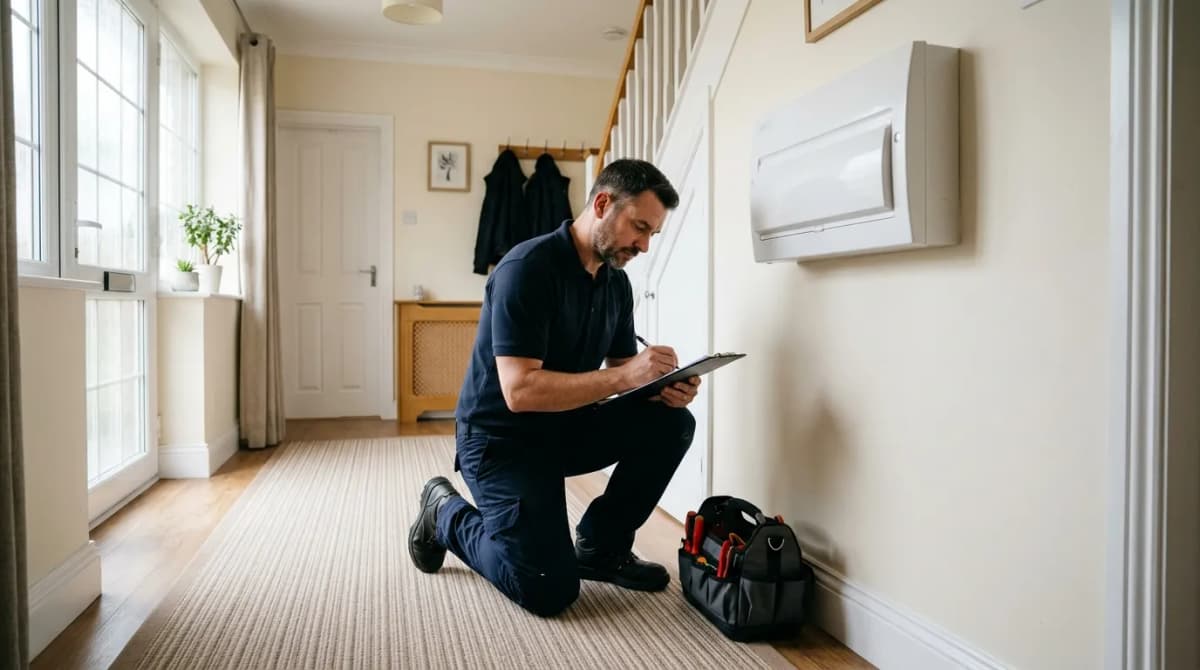
An EICR certificate is a condition report on a property's fixed wiring, consumer unit, sockets, switches, earthing and bonding, checked against the UK wiring regulations (BS 7671). A standard inspection costs £120 to £400 depending on property size, and the report stays valid for up to five years in rented property.
This page is for builders, electricians and landlords who need to know what the inspection covers, what each observation code means, and what a failed report costs to put right: usually the consumer unit upgrade or the rewire it leads to.
What an EICR actually checks
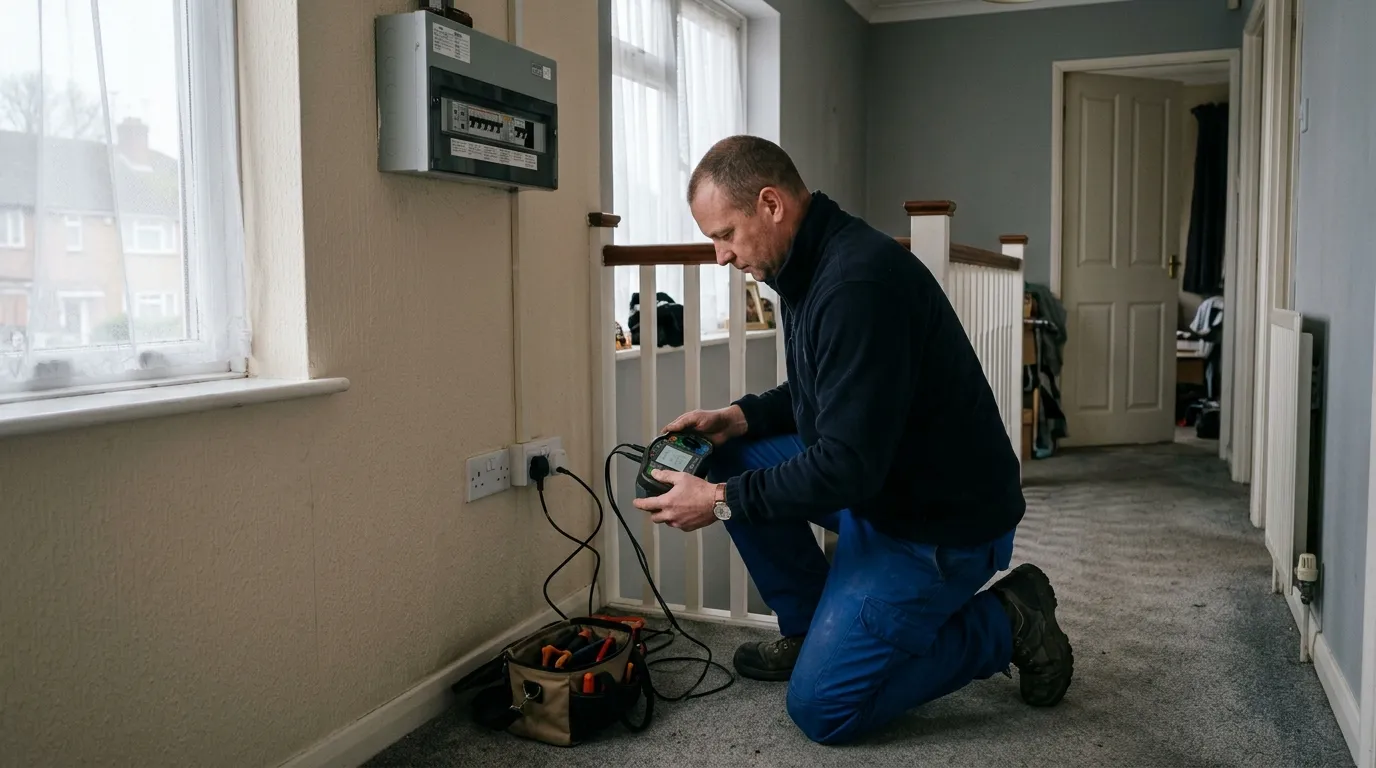
An inspector works through the installation against BS 7671, the current wiring regulations, in two stages. With the power isolated, they run dead tests on every circuit: continuity of protective conductors, insulation resistance, and polarity. With the supply back on, they run live tests: RCD trip times and earth fault loop impedance at the consumer unit and at sockets around the property. Alongside the testing, they visually inspect every accessible part of the installation, the consumer unit, sockets, switches and light fittings, for damage, overheating, incorrect connections or signs of age.
Anything the electrician cannot see, wiring buried in a wall, under a floor or above a ceiling, falls outside the inspection. The report notes these as limitations rather than passing or failing them, so an EICR is only ever a judgement on what was accessible on the day.
The observation codes and what they mean
Every issue the electrician finds is logged against one of four codes:
| Code | Meaning | Makes the report unsatisfactory |
|---|---|---|
| C1 | Danger present, risk of injury, immediate action required | Yes |
| C2 | Potentially dangerous, urgent action required | Yes |
| FI | Further investigation required without delay | Yes |
| C3 | Improvement recommended, not a fault | No |
A single C1, C2 or FI anywhere in the report makes the whole EICR come back unsatisfactory. A C3 on its own does not fail the report, it is a recommendation for when work is next carried out, so a property can still get a satisfactory EICR with C3 observations listed.
EICR, EIC and Minor Works Certificate: not the same document
An EICR is a health check on wiring that already exists. It is not the same as an Electrical Installation Certificate (EIC), which an electrician issues after installing new work such as a consumer unit or a full rewire, confirming that new installation meets the regulations. A Minor Works Certificate covers smaller jobs on an existing circuit, adding a socket or a light point, rather than new circuits from the consumer unit. A builder closing out remedial work after a failed EICR should expect an EIC or Minor Works Certificate for the new work itself, and then a fresh EICR, or the original report reissued as satisfactory, to confirm the property as a whole now passes.
How long an EICR certificate lasts
An EICR for rented property in England has a legal maximum of five years before it has to be renewed, set by the Electrical Safety Standards in the Private Rented Sector (England) Regulations 2020. The inspector can set a shorter interval on the report itself, for an older installation or one with several C3 observations, and that earlier date then overrides the usual five years. For an owner-occupied home, there is no legal deadline, but the standard industry recommendation is an EICR every ten years, or sooner on an older or altered installation. A change of tenant does not reset the clock: a report still inside its validity period can be reused for a new tenancy rather than redone.
Landlord duties in England
Under the Electrical Safety Standards in the Private Rented Sector (England) Regulations 2020, a landlord must hold a valid EICR certificate before a new tenancy starts and renew it at least every five years after that. A copy goes to existing tenants within 28 days of the inspection, to a new tenant before they move in, and to the local authority within seven days if it asks for one.
Where the report comes back unsatisfactory, the landlord must have the remedial work carried out within 28 days, or sooner if the report sets an earlier deadline, and give written confirmation that the work is done. A council that finds a landlord in breach can require the work itself and impose a financial penalty of up to £30,000. Section 21 "no fault" notices were abolished for private tenancies in England on 1 May 2026 under the Renters' Rights Act 2025, so possession now runs through Section 8 grounds; the electrical safety duties and the penalties behind them are unchanged.
Scotland, Wales and Northern Ireland run their own private rented electrical safety rules with different timings, so a landlord with property in more than one nation should check the rules that apply in each.
Selling a house without an EICR certificate
There is no legal requirement for an owner-occupier to hold an EICR certificate before selling. In practice, a mortgage lender, a buyer's solicitor or a surveyor often asks for one on an older property, particularly where the wiring looks dated or has never been inspected, and a sale can stall while that is arranged. A builder advising a client in this position should recommend getting the EICR done early in the sale process, not after a buyer's survey raises it as a condition.
Who can carry out and sign an EICR
An EICR must be carried out and signed by a competent, registered electrician: someone registered with a recognised competent person scheme such as NICEIC, NAPIT or ELECSA, holding current BS 7671 wiring regulations qualifications and a recognised inspection and testing qualification. The report itself must name the electrician and their registration number; a report that does not is not worth relying on.
EICR cost by property size
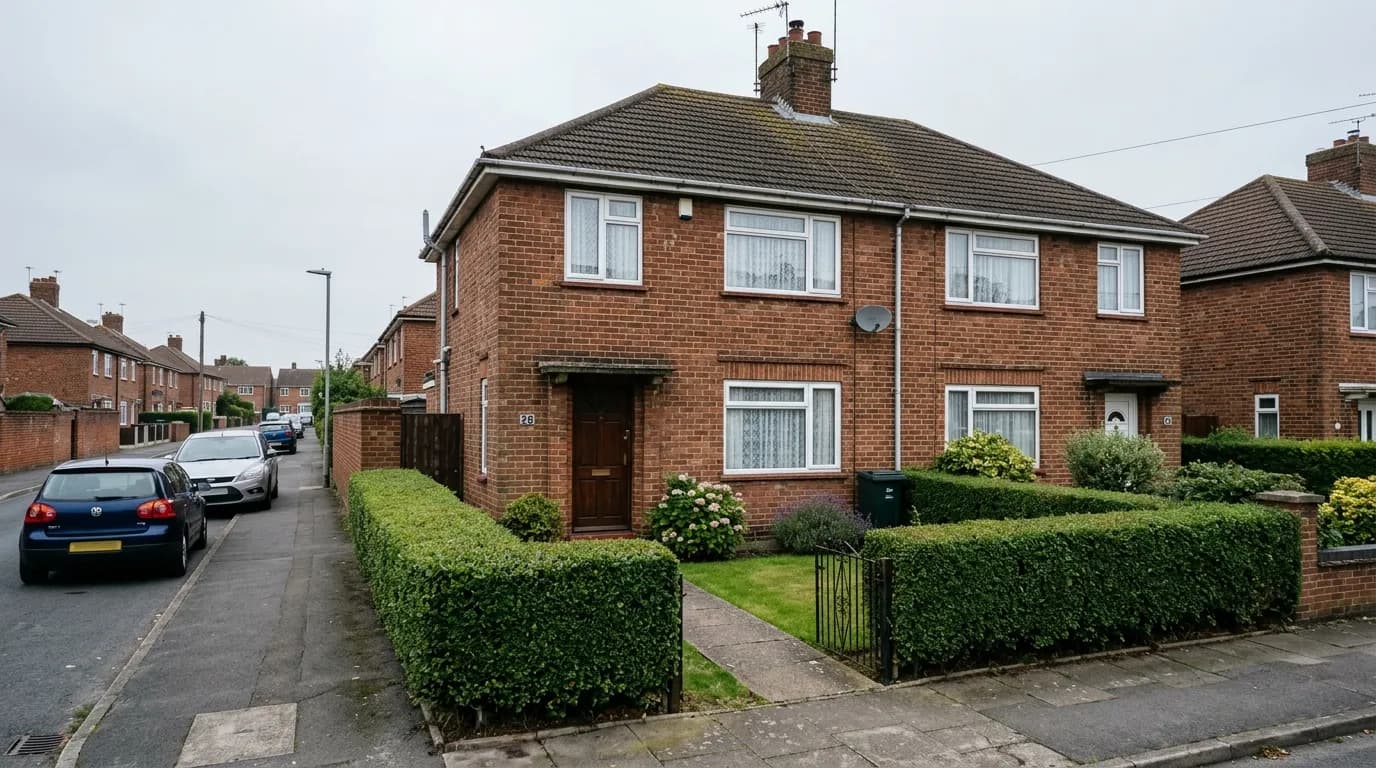
Builder Expert does not carry out EICR inspections itself, so the figures below are current UK market averages drawn from electrician and comparison sites such as Checkatrade, not our own price book. The cost of an EICR certificate mainly tracks the number of circuits at the consumer unit, which follows property size, plus location.
| Property size | Typical UK cost | London and South East |
|---|---|---|
| Studio or 1-bed flat | £120–£150 | £150–£200 |
| 2 to 3-bed house | £150–£225 | £200–£300 |
| 4-bed house | £200–£275 | £250–£350 |
| 5+ bed house or HMO | £275–£400 | £350–£450+ |
Most homeowners pay around £200 for a standard house, with London and the South East typically running at least 20% higher than the rest of the UK. An HMO usually costs £300 to £500, because of the extra circuits and the higher occupancy the inspector has to account for.
EICR certificate cost calculator
- Typical EICR cost
- £135
Current UK market averages for the inspection and report only. Builder Expert does not carry out EICR inspections; these figures are a market guide, not our price book.
What the fee covers, and what it does not
The EICR fee covers the electrician's visit, the testing, and the written report with its certificate. It does not include any repairs the report recommends: remedial work is quoted and charged separately, and a re-test to confirm the remedial work has fixed the problem is usually a separate fee too, since it means the electrician returning and re-checking the circuits that failed.
The faults that most often fail an EICR
A handful of issues account for most C1 and C2 observations on a domestic inspection:
- No RCD protection on socket circuits, required on any installation wired or altered in the last twenty years or so.
- An old rewireable fuse board rather than a modern consumer unit with circuit breakers.
- Missing or undersized main earthing and bonding to gas, water and oil pipework.
- Worn or damaged insulation on older rubber or VIR cable, common in houses with wiring from before the 1970s.
- Alterations and additions made over the years without proper certification, so the installation no longer matches any record of it.
- Loose or burnt terminations at sockets, switches or the consumer unit itself, from heat and age rather than a single fault.
Seeing which of these sit behind a failed EICR tells a builder straight away whether the job is a consumer unit swap, a full rewire or just the single circuit that was altered without being signed off.
When a failed EICR leads to rewire or consumer unit work
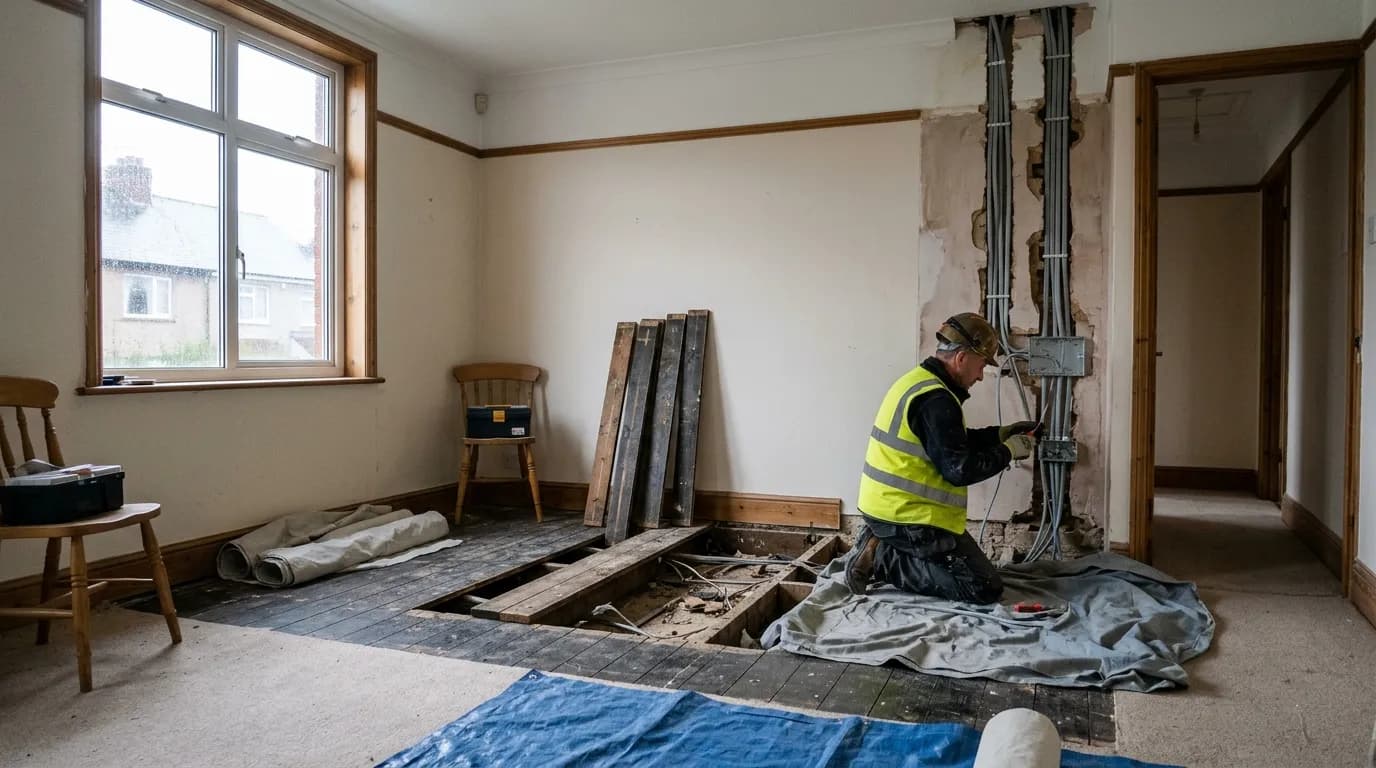
Once a report comes back unsatisfactory, the landlord or owner has to have the remedial work carried out, then commission a follow-up inspection so a satisfactory EICR can be issued. Small defects, a damaged socket, a missing cover, are a quick fix. A consumer unit flagged as a fire risk, or wiring failing across several circuits, usually means one of two bigger jobs: a new consumer unit, or a full rewire.
The figures below are Builder Expert's own rates, current as at this export rather than a quotation. They are London and South East prices and usually lower elsewhere, and they already include labour, materials, our margin and 20% VAT: nothing is added on top, and there is no contingency built in.
Consumer unit replacement, priced as a standalone job
A consumer unit swap called out on its own, rather than inside a larger refurbishment, still carries its own site visit, making good around the cupboard, and the paperwork. Built from our own rates, for a typical domestic consumer unit with an existing supply position:
- A new consumer unit for a whole house or flat, fitted and connected: around £2,000 to £2,500. This covers the unit, the final connection by a qualified electrician, the certificate the work needs, and a small allowance for the site visit and patching around the meter cupboard.
A smaller board fitted alongside the existing one, for a single extension or loft conversion rather than a full replacement, costs less: expect it to sit at the lower end of that range or below.
Full rewire of a house, priced as a standalone job
A full rewire disturbs most rooms in the house: cables are chased into walls and lifted under floors, every socket, switch and light fitting is replaced, and the consumer unit is renewed. Priced as its own job, start to finish, for a typical three-bed semi-detached house with around 35 to 40 points:
- Full rewire, fully certified and made good: around £14,500 to £17,000.
In build order, that covers preliminaries and protection, the new consumer unit and supply connection, every point (sockets, switches, lighting, interlinked smoke and heat alarms, bathroom and kitchen extractor fans, TV and data points), the test certificate, then patch plastering and redecorating the walls and ceilings the electrician had to chase into. It assumes a single consumer unit and standard alarm coverage, not a full repaint of every room. A smaller flat with fewer circuits costs less; a larger house, or full redecoration throughout, costs more.
Inside a wider refurbishment, the same rewire costs less, because the site set-up, skip, protection and welfare are already shared with the rest of the job, and the plastering and decorating sit inside the project's own phases rather than being priced on their own. A builder pricing a rewire as part of a bigger job should treat it as a set of electrical tasks within that project, not as the standalone price above.
Single room rewire, priced as a standalone job
An EICR sometimes flags only one circuit or one room, usually where it was added or altered outside the rest of the system, for example a kitchen extension or a loft room wired years after the house. Rewiring a single room still carries a minimum site visit, so it is never simply a fraction of the whole-house price. For a typical bedroom or home office with around eight sockets and switches and two or three light points, plus full redecoration once the chasing is made good:
- Single room rewire, fully certified and redecorated: around £2,500 to £3,500.
A kitchen or bathroom costs more at the same end of that range, because extractor fans, appliance outlets and, in a bathroom, the extra regulations around zones and IP ratings all add points and inspection time.
Fees that sit outside our figures
A few costs around this work are market fees we don't price, and should be budgeted separately:
- EICR re-test after remedial work. Typically £100 to £150 for a straightforward domestic property, since it means the electrician returning to re-check only the circuits that previously failed.
- Building control for notifiable work. In England and Wales, a full rewire or new consumer unit is notifiable under Part P of the Building Regulations. An electrician registered with a competent person scheme such as NICEIC or NAPIT can self-certify the work for around £50 to £100 added to their invoice. Without that registration, the work has to go through full building control notification, which typically costs £200 to £400 depending on the local authority.
Provisional sums: fittings the client chooses
Items like decorative light fittings, premium switch plates, sockets and smart lighting controls are not priced by us: they are a budget the client sets, and our margin and VAT are applied on top of whatever they spend. A client who sets a £800 allowance for upgraded switches and light fittings should expect that to cost around £1,150 once margin and VAT are added, not £800. Spelling this out before the job starts avoids a client assuming the fittings budget is the final bill.
Frequently asked questions
Can I do the remedial work myself after a failed EICR? No. Electrical work notifiable under Part P has to be carried out, or checked and certified, by a competent registered electrician; DIY work will not get the EICR reissued as satisfactory.
Does a new consumer unit automatically pass an EICR? Not on its own. A new consumer unit removes one common cause of a C1 or C2, but the inspector still tests every circuit behind it; old wiring or missing earthing elsewhere in the property can still fail.
Is an EICR the same as a PAT test? No. A PAT test checks portable appliances plugged into the sockets; an EICR checks the fixed wiring and consumer unit behind those sockets.
What happens when an EICR has expired? An expired EICR is simply out of date, it does not mean the installation has failed. For rented property, an expired certificate means the landlord is already in breach of their legal duty and needs a new inspection booked immediately. For an owner-occupied home past the usual ten-year guideline, it is worth treating like any overdue safety check: book one before relying on the old report.
Is a very cheap EICR worth taking? Be cautious of a price well below the ranges above. A rushed inspection that skips circuits or does not test live can miss a genuine C1 or C2, which leaves the property no safer and the report worthless if challenged later.
How can I verify an EICR certificate is genuine? Check that the report names the electrician and their registration number, then look that number up on the relevant competent person scheme's online register, NICEIC, NAPIT or ELECSA. There is no single national database of EICR certificates, so the scheme register is the only independent check available.
Getting the price right
A builder quoting remedial work after a failed EICR certificate should set the quote out in three clear parts: the electrical work itself, the making good (plastering, redecoration), and the certification, so the client can see what each part costs rather than one lump figure.
Builder Expert's estimating service prices electrical work this way as part of a full tender, detailed or basic estimate, so the figures a builder quotes match what the finished job actually costs. For a builder who wants to price jobs like this directly, Builder Expert's estimating software builds the same logic into a priced estimate in minutes, from the consumer unit through to the final certificate. If a landlord is weighing up quotes from more than one electrician for the same remedial work, our guide to comparing and checking a builder's quote covers what a fair, complete quote should include before any money changes hands.