
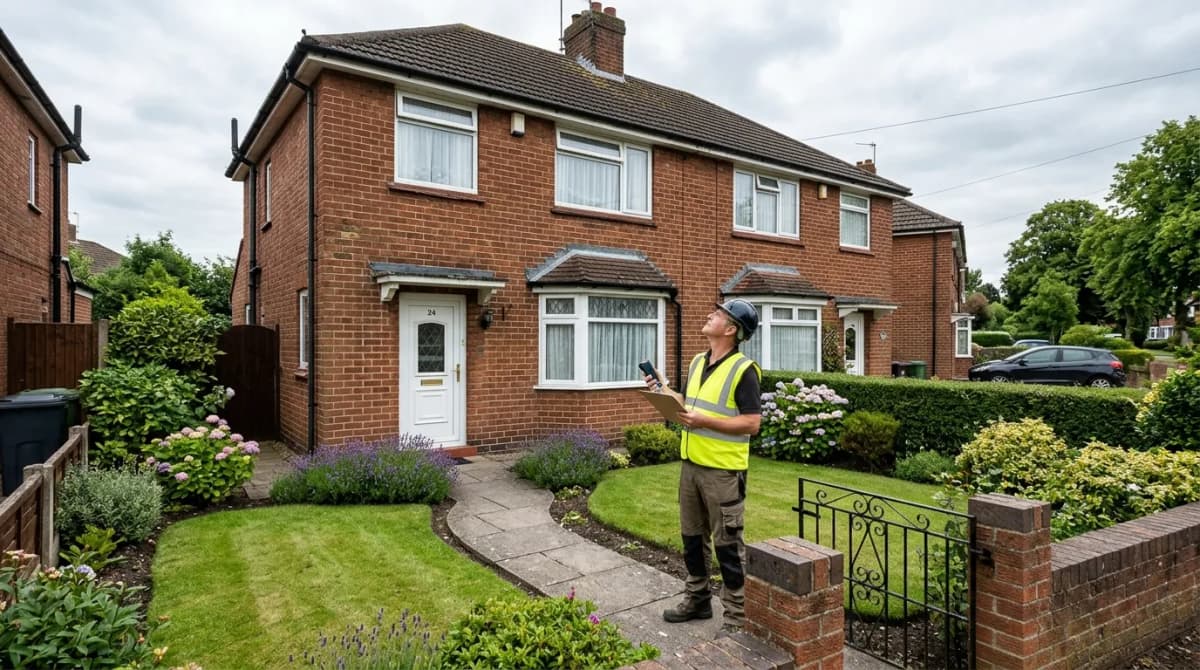
An EPC certificate cost in the UK is typically £60 to £120 for a domestic property, and £150 to £400 or more for commercial units and larger buildings. Those are indicative market prices, not fixed fees: assessors set their own. This page is for builders, contractors and surveyors who have to carry an EPC as a fee line in a job price, alongside planning, building control and engineer's fees.
What an EPC is and when it is legally required
An Energy Performance Certificate rates a building from A (most efficient) to G (least efficient) and lists recommended improvements. It is produced by an accredited Domestic Energy Assessor (DEA) for homes, or a Non-Domestic Energy Assessor (NDEA) for commercial buildings, after a site visit that records construction, insulation, heating, glazing and lighting.
In practice, bands A and B are rare outside new builds, and most existing housing stock sits in bands D and E; a C or above is generally taken as a good rating, since it is the level now expected for new tenancies and the government's long-term target for the housing stock, while anything below E can restrict a sale or letting outright. A valid EPC is required when a building is sold, let or newly built, and it lasts 10 years. Scotland runs its own regime under Scottish building standards, but the validity is the same 10 years; the certificate there must also be displayed in the property.
Some buildings are exempt: places of worship, temporary buildings in use for two years or less, stand-alone buildings under 50 m², buildings due for demolition where consent is in place, and listed buildings where compliance with the recommendations would unacceptably alter their character. Listed status is not an automatic exemption, which catches out plenty of clients on conversion work.
EPC certificate cost by property type
The table below sets out a typical EPC certificate cost by property size and type, so you can slot the right figure into a job price.
| Property type (example) | Typical assessor's fee |
|---|---|
| 1-2 bed flat or studio | £55 to £90 |
| 3 bed terrace or semi | £70 to £110 |
| 4-5 bed detached | £90 to £140 |
| Large or period house (6+ beds) | £130 to £200 |
| HMO (per certificate) | £100 to £200 |
| Small commercial unit (Level 3 NDEA) | £150 to £350 |
| Larger or complex commercial (Level 4) | £350 to £800+ |
These are examples of current market pricing, not a tariff. Prices vary by region, by assessor and by how far they travel. A same-day or next-day visit usually carries a £20 to £40 premium over a booking made a week ahead, and a bulk instruction across several flats in one block is often quoted at £40 to £60 per unit.
EPC certificate cost estimator
- Estimated EPC fee
- £72
Typical current UK market prices for an EPC assessment, not Builder Expert rates. The actual fee depends on the assessor, the region and the property's size and complexity.
Why "EPC cost" means two different things
Searchers use the phrase for two separate numbers, and on a job they are nowhere near each other:
- The assessor's fee for producing the certificate: the £60 to £120 range above on a normal house.
- The cost of the works needed to lift the rating, which is building work priced job by job. A typical D to C package (loft insulation topped up, cavity fill, a heating control upgrade, low energy lighting, some draughtproofing) commonly lands between £1,500 and £6,000 as an example, while a solid wall property needing internal or external insulation runs into five figures.
When a client asks what the EPC costs, pin down which one they mean before you quote.
Is VAT included
Assessors' fees are quoted both ways. Many sole trader DEAs are below the VAT registration threshold and quote a flat fee with no VAT; a larger practice adds VAT at 20%. The ranges on this page are the fee you pay, so check the assessor's invoice before you put it in the estimate.
If you are VAT registered and you instruct the assessor yourself, the VAT on that invoice is input tax you reclaim, so the net fee is what belongs in the estimate and you charge the client on in the normal way. Statutory planning and building control fees charged by a local authority are outside the scope of VAT, so there is no VAT to reclaim on those. The domestic reverse charge does not apply to any of these: an energy assessment, a planning fee or an engineer's fee is not a CIS construction service.
Who pays, and who commissions it
The seller or landlord is responsible for having a valid EPC in place before the property is marketed. On a refurbishment, the client usually commissions it; on a new build, the developer pays for it as part of the handover pack. A builder working on a rental or a flip should flag the EPC in the estimate either way, so nobody is caught out at completion.

Before paying for a new one, check the EPC register by postcode: a certificate less than 10 years old is still valid and no new one is needed unless the work has changed the building's performance. The same register lists accredited assessors, and every genuine assessor sits on a scheme such as Elmhurst, Stroma or Quidos. An electrician cannot issue an EPC, whatever a client has been told: only an accredited domestic or non-domestic assessor can lodge one.
The MEES rule and why landlords commission upgrade work
Privately rented homes in England and Wales must currently reach EPC band E before they can be let, with F and G unlawful unless an exemption is registered. The government has proposed raising the minimum standard to EPC C for new tenancies, with a later deadline for existing tenancies, though the exact timetable and cost cap should be confirmed against the current government guidance before being quoted to a client, since this policy has moved before. Scotland is running its own timetable.
For the builder, this is where the work comes from. A landlord client sitting at D or E will ask for a package priced to reach C: insulation, heating and controls, glazing and lighting. Price it as a mini project, start to finish, including protection, making good, decorating and cleaning, and allow for a fresh EPC after the works so the new rating is lodged. The assessor's recommendation report is a useful starting point for the scope, but it is not a specification; take your own measurements.
What the assessor checks on site
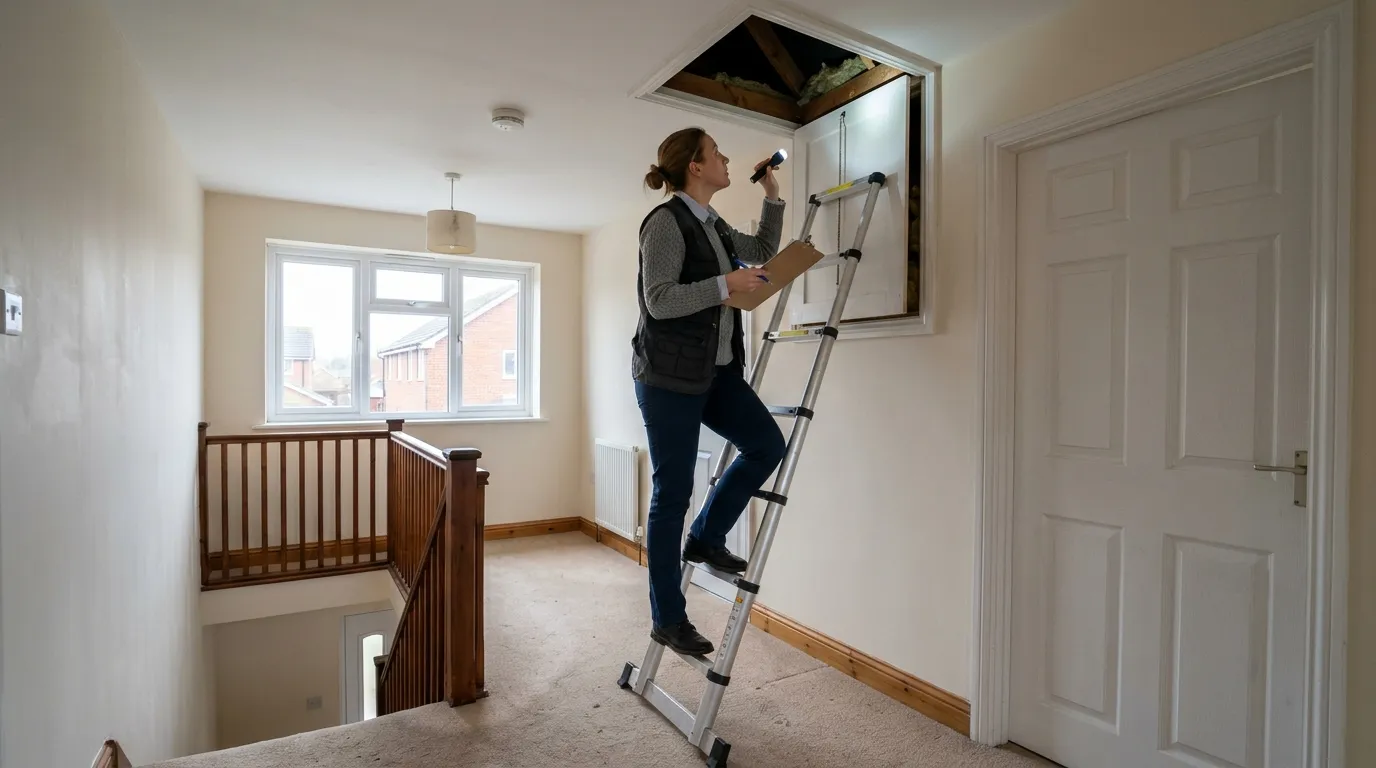
A domestic visit takes 30 to 60 minutes on a normal house, longer on something large or awkward. The assessor records wall construction and insulation, loft and cavity insulation, floor type, glazing and its age, the heating system, controls and hot water, and the lighting, then photographs evidence of each. Tell the client to clear access to the loft hatch, the boiler, the meter and any service cupboard, and to have the boiler and window paperwork to hand; missing evidence means the assessor has to assume the worst case, and the rating drops for no good reason.
On-construction EPCs for new builds and conversions
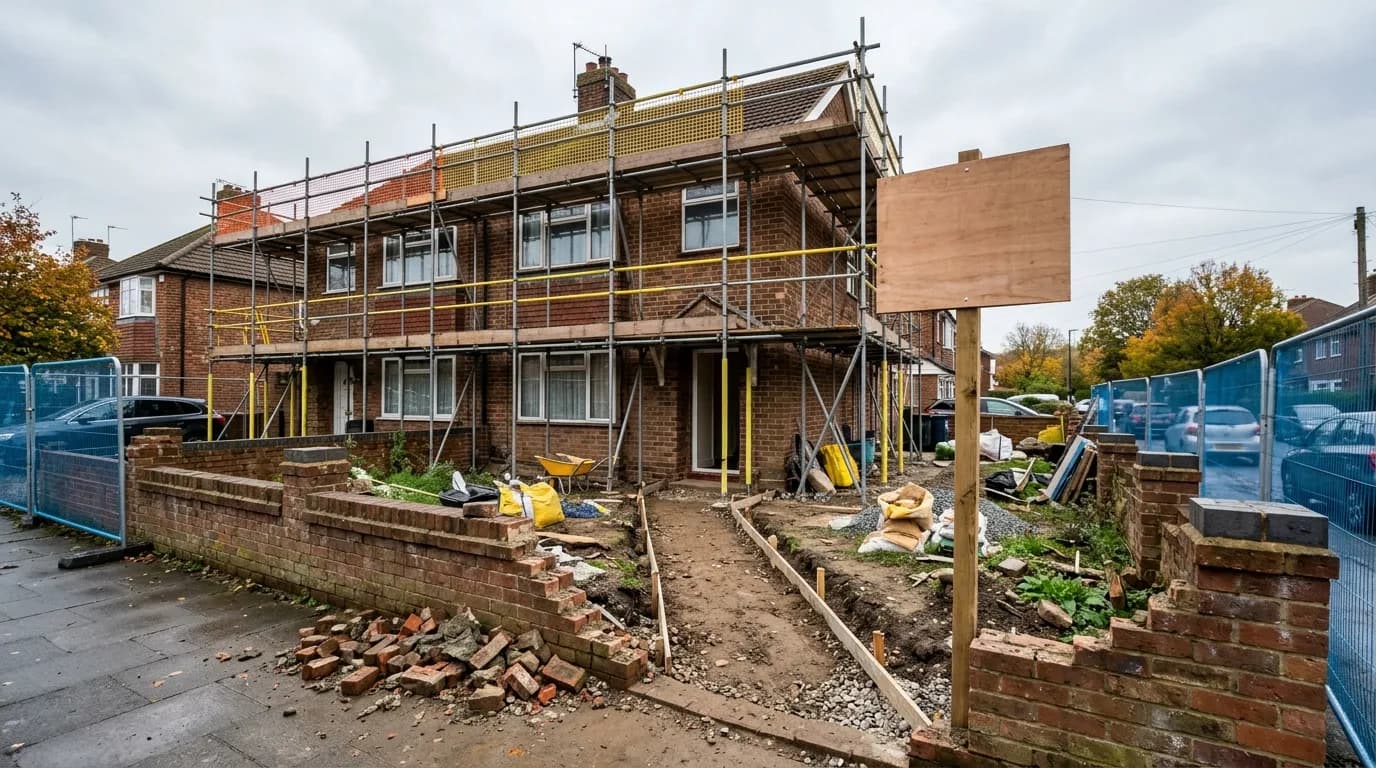
A new dwelling does not get the standard visit based assessment. It is a two stage process: a design-stage SAP calculation from the drawings and specification, used to show Part L compliance before work starts, and an as-built SAP with the on-construction EPC lodged at completion, reflecting what was actually installed. Expect £150 to £350 per plot as an example for both stages on a single dwelling, less per plot on a repeat house type across a site, and more where the design needs reworking to pass.
Conversions creating new dwellings and some change of use projects need the same treatment. An extension on its own does not need a new EPC, though it must still meet the relevant parts of the building regulations.
Planning, building control and the other statutory fees
| Fee | Typical amount | When it is triggered |
|---|---|---|
| Householder planning application (England) | £528 | Extension, loft, outbuilding needing permission |
| Lawful development certificate (proposed) | £264 | Proving permitted development |
| Pre-application advice | £100 to £500 | Optional, borderline or contentious schemes |
| Building control, local authority or approved inspector | £400 to £1,500 | Almost all structural, drainage or energy work |
| Structural engineer | £400 to £1,500 | Beams, openings, foundations, underpinning |
| Party wall surveyor | £900 to £2,000 per surveyor | Work on or near a shared wall or boundary |
Planning fees in England are set nationally; the householder fee is £528, current since 1 April 2025. Wales, Scotland and Northern Ireland set their own figures. Always confirm the current fee on the planning application fees guidance and the building control charge with the specific authority or inspector before you price, because neither is yours to guess at.
Building control charges are set by each authority or approved inspector, normally as a plan check plus a set number of inspections (foundations, drainage, structure, completion). Extra visits, or a job that drags on past the quoted period, can attract a further charge.
How these fees go into an estimate
None of these are measured work, so they never get buried in trade rates and they do not belong in preliminaries either, since preliminaries cover the site's own running costs, not statutory fees paid to a third party. They sit as separate fee lines (disbursements) outside the measured work, at cost, and they are not marked up as trade work unless you have told the client you are charging a stated handling fee for placing and managing them. This is the same principle that governs what a construction estimate should include: measured work, preliminaries, and statutory fees kept apart so the client can see what each pound is paying for.
Example fee schedule for a single-storey rear extension in England, as an illustration:
| Fee line | Example amount |
|---|---|
| Householder planning application | £528 |
| Building control, full plans | £850 |
| Structural engineer, beam calculations | £650 |
| Party wall surveyor (one surveyor acting) | £1,200 |
| EPC on completion (if being sold or let) | £95 |
| Total statutory and professional fees | £3,323 |
On that job the fees alone are over £3,300 before a single brick is laid, which is why a detailed construction estimate lists them as their own lines. A basic or tender estimate covering construction tasks only should still state that these fees are additional, so the client is not surprised later. If you want the extension's build cost alongside them, see our single-storey extension cost guide.
Regional differences in EPC quotes
London and the South East sit at the top of the ranges above, typically £20 to £40 more than the Midlands, the North or Wales for the same size of property, because assessors are covering higher overheads, parking and longer travel between jobs. Rural areas can be dearer again for the opposite reason: fewer assessors, more miles per visit. Flats in a managed block are usually the cheapest of all, since several can be done in one trip.
Pricing a job with its fees included
Builder Expert's detailed estimate prices the measured work trade by trade and lists the EPC, planning, building control, engineer and party wall fees as their own lines, so the client sees exactly what is construction and what is statutory and the true EPC certificate cost never gets lost inside a trade rate. It is one of the services within our construction estimating services, built for builders who need every fee accounted for, not just the brickwork and labour. Send us the drawings and we will price the job the way it will actually be paid for, from the application fees through to a finished, EPC-ready building.