
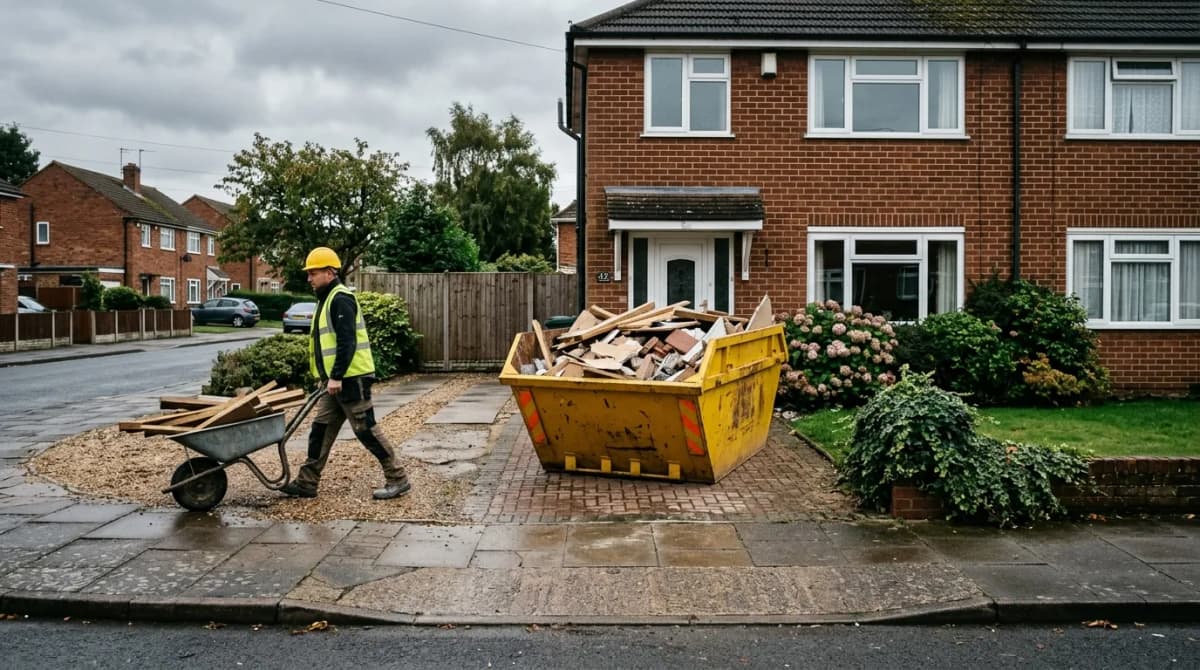
A 4 yard skip (the midi skip) holds roughly 40 to 45 standard bin bags of waste. Typical UK hire prices run from about £180 to £380 for a week, depending on region and supplier.
That range moves with your local landfill distance, the waste type and whether the skip sits on a private driveway or needs a council permit for the road. It is the size most builders reach for on a single room strip-out or a small renovation.
This guide covers every common UK skip size, what drives the price, permits, waste rules, and how to put a realistic waste disposal line into a priced construction estimate rather than guessing at it.
What a 4 yard skip costs and what it holds
A 4 yard skip measures roughly 1.8m long by 1.2m wide by 1m high (about 6ft x 4ft x 3ft). It takes around 40 to 45 bin bags of general waste, but only about 1.5 to 2 tonnes by weight, so a load of rubble reaches the limit when the skip still looks half empty.
For a bathroom strip-out, a small kitchen rip-out, a single room of plaster and old furniture, or a modest garden clearance, a 4 yard skip is usually enough. Expect to pay in the region of £180 to £380 for a standard week's hire, with London and the South East at the top of that range and the Midlands, North and Scotland generally cheaper.
UK skip sizes, dimensions and weight limits compared
Skip sizes are sold in cubic yards. The table below covers every size you are likely to be quoted, from a small mini skip to a large roll-on roll-off (RoRo) container.
| Size | Dimensions (L x W x H) | Bin bag equivalent | Typical weight limit | Typical price range |
|---|---|---|---|---|
| 2 yard mini | 1.5m x 1.1m x 0.8m (5ft x 3.5ft x 2.5ft) | 20 to 25 bags | around 1 tonne | £120 to £220 |
| 4 yard midi | 1.8m x 1.3m x 1m (6ft x 4.3ft x 3.3ft) | 40 to 45 bags | 1.5 to 2 tonnes | £180 to £380 |
| 6 yard builders | 2.6m x 1.5m x 1.2m (8.5ft x 5ft x 4ft) | 60 to 70 bags | 2 to 4 tonnes (the usual limit for rubble) | £220 to £450 |
| 8 yard builders | 3.7m x 1.7m x 1.2m (12ft x 5.5ft x 4ft) | 80 to 90 bags | 3 to 5 tonnes, less for heavy waste | £270 to £520 |
| 12 yard | 3.7m x 1.8m x 1.7m (12ft x 6ft x 5.5ft) | 100 to 120 bags | light waste only, most operators refuse rubble | £350 to £600 |
| 14/16 yard | 4.3m x 1.8m x 2m (14ft x 6ft x 6.5ft) | 140 to 160 bags | light, bulky waste only | £420 to £700 |
| 20/40 yard RoRo | 6m x 2.4m x 1.5m to 2.4m (20ft x 8ft x 5 to 8ft) | 200 to 400 bags | typically 8 to 12 tonnes on a 20 yard | £550 to £1,200 |
These are example ranges collected from typical supplier quotes across the UK and will vary by local landfill distance, supplier and waste type. Weight limits come from what the lorry can legally lift, not from the size of the container, which is why a 12 yard skip carries no more weight than an 8 yard.
Skip hire prices by size and region
Prices vary more by region than by supplier. The table below gives indicative ranges for the three sizes builders hire most, across several UK areas.
| Region | 4 yard | 6 yard | 8 yard |
|---|---|---|---|
| London | £280 to £380 | £330 to £450 | £380 to £520 |
| South East | £230 to £330 | £280 to £400 | £330 to £460 |
| Midlands | £190 to £290 | £240 to £350 | £290 to £410 |
| North of England | £180 to £270 | £230 to £330 | £280 to £390 |
| Scotland | £190 to £290 | £240 to £350 | £290 to £410 |
| Wales | £180 to £270 | £230 to £330 | £280 to £390 |
Treat these as example ranges, not fixed quotes: always get a local supplier price before building a line into an estimate, since landfill distance and local authority costs shift the figure.
What the price includes and what costs extra
A quoted skip price normally includes delivery to site, collection, a standard hire period and a weight allowance for disposal. The usual hire period is 7 to 14 days, after which most suppliers charge a daily or weekly extension fee if you need it longer.
Extra charges are triggered by:
- Overweight loads, charged per tonne over the included allowance
- Extended hire beyond the agreed period
- A failed collection, for example if the skip is blocked by a parked car or is overloaded above the sides
- A wasted journey if the skip cannot be collected as arranged
Is skip hire charged per day? No. Skip hire is priced per hire period, not per day. You pay one price for the agreed period (commonly a week to a fortnight), and only pay extra if you go beyond it, rather than being billed daily from the start.
Skip permits for the public highway
If the skip sits on a public road or verge, you need a council skip permit (sometimes called a skip licence). The skip company usually arranges this for you as part of the booking, but it is worth confirming before delivery.
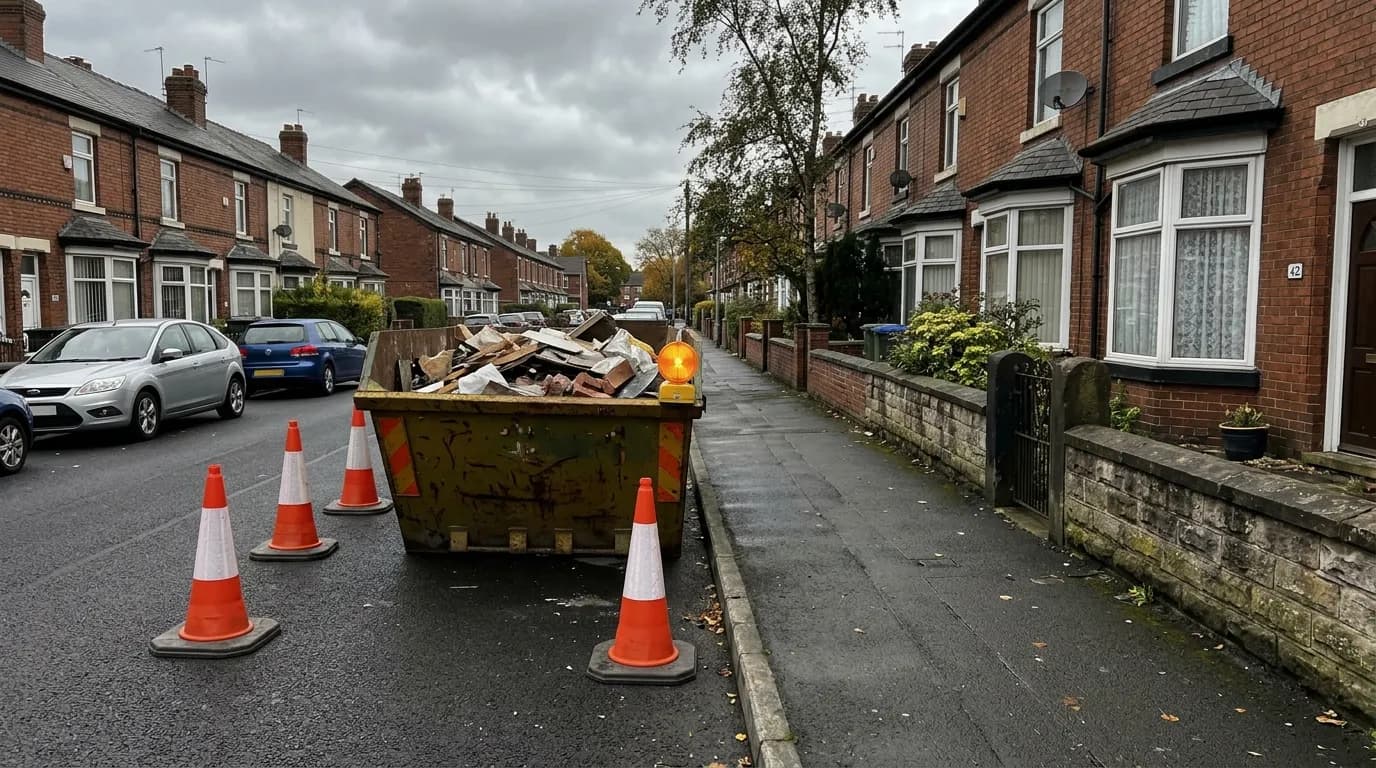
Permits are issued under the Highways Act 1980, and you can find the right council through the gov.uk skip permit service. Fees and durations vary significantly by council: expect anywhere from around £30 to £60 for a week or two in much of the country, and £150 or more in some London boroughs. Check the current fee with the local council, since it is set locally and reviewed each year.
A permitted skip on the road must carry reflective markings, and the council typically requires cones and lights around it overnight. No permit is needed if the skip sits entirely on a private driveway or within your own boundary.
What you can and cannot put in a skip
Most general building waste is accepted, but hazardous and specialist items are not. Check with your supplier before loading anything you are unsure of.
| Usually allowed | Usually prohibited |
|---|---|
| Wood, timber offcuts | Asbestos (any form) |
| Rubble, bricks, concrete | Plasterboard (often a separate segregated skip or a surcharge) |
| Soil and garden waste | Fridges and freezers |
| Metal and scrap | Tyres |
| General household and builders' waste | Paint and other liquids |
| Furniture | Gas bottles |
| Cardboard and packaging | Batteries |
| Electrical items (WEEE) | |
| Medical and hazardous waste |
Food waste is generally not accepted in a builders skip. It needs separate household collection, since mixed food and construction waste cannot go through the same processing route.
Heavy waste: soil, rubble and plasterboard pricing
Soil, rubble, concrete and hardcore are priced differently to general mixed waste because they are heavy, not bulky: a skip that looks half full of rubble can already be at its weight limit. For this reason, suppliers set lower fill limits on heavy waste, and many charge a mixed-waste surcharge if rubble is combined with timber, plasterboard or general rubbish in the same skip.
Most operators cap heavy waste at a 4 or 6 yard skip and will refuse soil or rubble in a 12 yard or larger container outright. It is cheaper to hire two smaller skips rated for heavy waste than to overload a large one, since an overloaded skip cannot legally be transported and will be charged again once it is reloaded correctly. Plasterboard specifically is usually kept in its own segregated skip, because it reacts with other waste in landfill and most sites charge a premium to process it separately.
What drives skip prices: landfill tax and weight
The single biggest factor in skip pricing is landfill tax, the government charge applied per tonne of waste sent to landfill, split between a standard rate for active waste and a much lower rate for inert material like rubble and soil. Both rates rise every April, so check the current landfill tax rates on gov.uk rather than rely on a figure quoted here, since both change year to year (Scotland and Wales run their own equivalents at similar levels).
On top of landfill tax, the operator pays a gate fee at the processing site, and that combined cost is what sets the weight allowance and price for each skip size. A heavier load, such as soil, rubble or concrete, pushes more tonnes through that per-tonne charge for the same size of skip, which is why a 4 yard skip of rubble generally costs more to dispose of than a 4 yard skip of timber and cardboard, even though they are the same physical size.
Landfill tax and gate fees are both charged per tonne, not per skip, so the weight of what goes in matters more than how full it looks. Landfill tax has a standard rate for general active waste and a much lower rate for inert material like soil, rubble and concrete, and both figures change every April, so check the current standard and lower rates on gov.uk before you rely on one.
The gate fee is a separate charge the processing site adds on top, set by that site rather than the government. Together they mean a skip full of heavy rubble can cost more to empty than the same size skip full of light, bulky waste, even when both are charged at the same weight limit.
Choosing the right skip size for the job
Match the skip to the job, not the job to whatever skip is cheapest. The table below gives a starting point for common domestic and light commercial jobs.
| Job | Suggested skip size | Typical number of skips |
|---|---|---|
| Single bathroom strip-out | 4 yard | 1 |
| Kitchen refit | 6 yard | 1 |
| One room of plaster | 4 yard | 1 |
| Garage clearance | 6 to 8 yard | 1 |
| Garage conversion | 8 yard | 1 to 2 |
| Loft conversion | 8 to 12 yard | 1 to 2 |
| Single storey extension muck away | 12 to 20 yard RoRo | 1 to 3 |
| Full house refurbishment | 8 to 12 yard | 2 to 4 |
A garage conversion typically produces more waste than its floor area suggests, since the stud walls, old doors and insulation all come out before the new structure goes in, which is why it usually needs a larger skip than a single room strip-out of the same size.
Pricing skip hire into a construction estimate
Skip hire rarely stands alone in a real job. On most projects it sits inside the preliminaries phase, priced alongside site protection, access and waste management, rather than as a one-off cost bolted on at the end.
Take a kitchen refurbishment as an example. The worked line in a priced estimate might look like this: one 6 yard skip for the strip-out, delivered to the driveway (no permit needed), plus a second smaller skip if the units and worktops generate more waste than expected. The skip and permit (if required) sit as their own preliminaries line, while the plastering, decorating and final clean are priced separately in their own phases of the same project, since skip hire covers removal of waste, not making good the room afterwards. Our guide to kitchen renovation cost shows how this fits into the whole job.
Demolition and strip-out quantities are what actually drive the number of skips a job needs, so an accurate takeoff from the drawings matters more than guessing a figure on site. See our construction estimate tasks breakdown for where waste disposal sits among the other priced tasks in a full estimate.
The figures in this guide are example ranges and generally exclude VAT where quoted to a trade customer. A VAT-registered builder reclaims the VAT on skip hire, so it is not a real cost to carry in the estimate. A non-VAT-registered builder must include the VAT, since they cannot reclaim it. Skip hire from a waste company is standard-rated in the normal way: the CIS domestic reverse charge does not apply to it.
Alternatives to a skip and when they are cheaper
A skip is not always the cheapest option. The table below compares the main alternatives.
| Option | Typical cost | Best for |
|---|---|---|
| Skip (4 to 8 yard) | £180 to £520 | Ongoing waste over several days, mixed materials |
| Skip bag | £90 to £180 | Small jobs, tight driveways, no room for a skip |
| Man and van clearance | £150 to £350 | Furniture, household clearance, no heavy rubble |
| Grab lorry | £250 to £450 per load | Soil, rubble and hardcore in bulk |
| Muck away by tipper | priced per tonne, varies by site | Large volumes of excavation spoil |
| Household recycling centre (own van) | free to low cost for small loads | Small domestic loads, no skip needed |
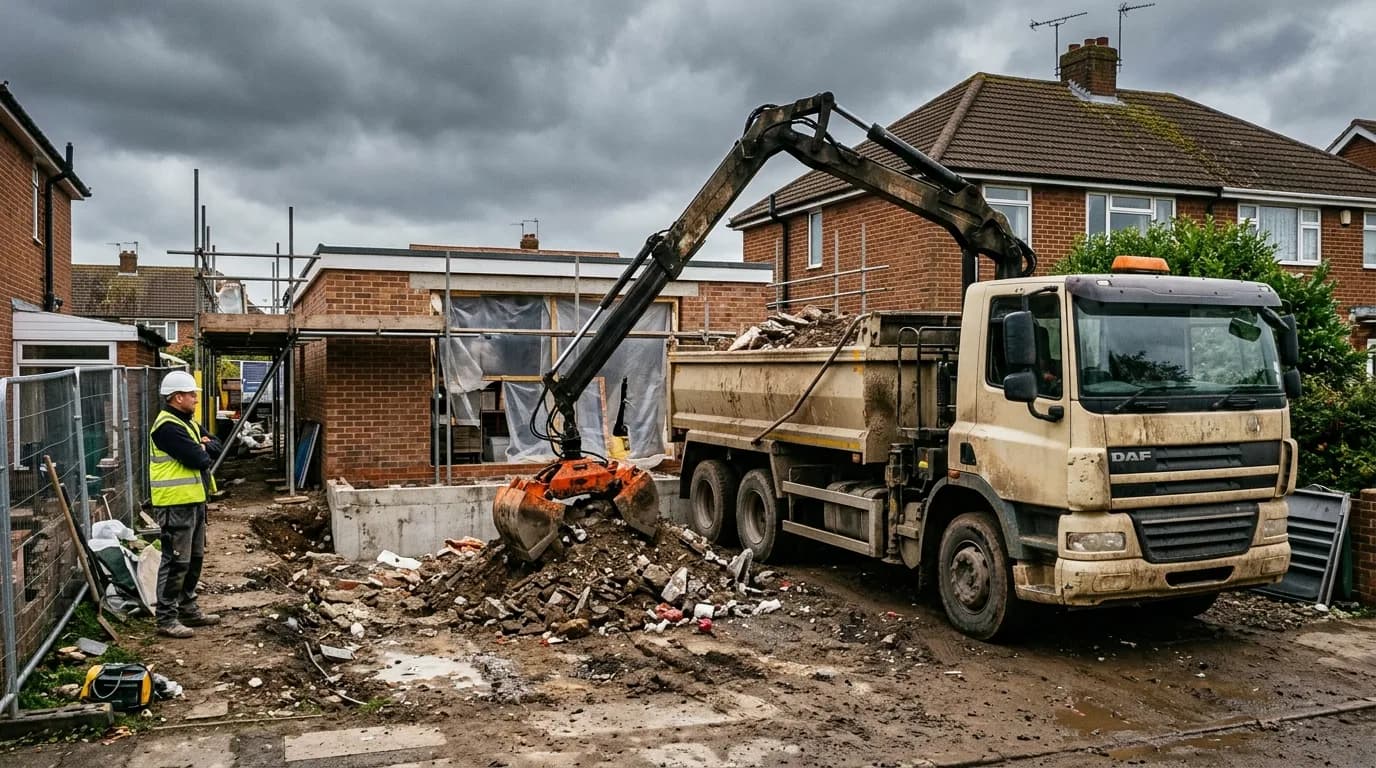
A grab lorry is usually cheaper than a skip for soil and rubble in bulk, since it takes around 12 to 16 tonnes in one visit rather than being left on site for a week. Muck away for excavation spoil is normally priced per tonne or per load and suits larger groundworks jobs. Taking waste to a household recycling centre yourself can work for small domestic loads, but trade waste is normally chargeable there, and some councils refuse van loads entirely without a trade waste permit.
Loading, access and site practicalities
Load a skip level, never above the sides. An overfilled skip is illegal to transport on the road, and the driver will refuse to collect it until it is reduced. Ask for a drop door skip if you need wheelbarrow access for rubble or heavy material, since a standard skip has no ramp.
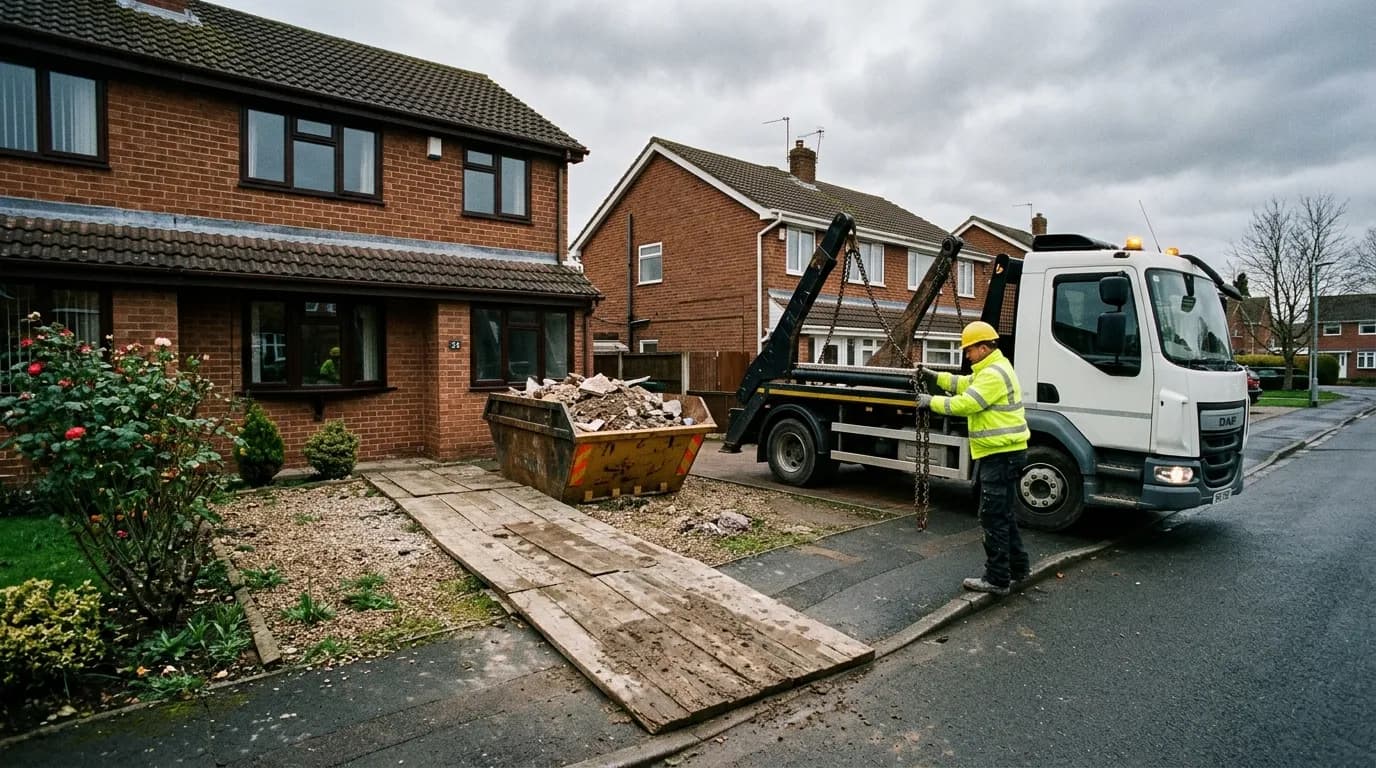
Protect the driveway with boards before delivery, since a loaded skip is heavy and can crack weaker surfaces. Check access and headroom before booking: the delivery lorry needs a clear run and enough overhead clearance for its arm, and most suppliers ask for at least a day or two's notice to book delivery.
Skip hire FAQs
How much fits in a 4 yard skip? Around 40 to 45 bin bags of general waste, or roughly 1.5 to 2 tonnes by weight, which is far less rubble than the space suggests.
Is skip hire charged per day? No, it is priced per hire period (commonly a week to a fortnight), not per day, with extra charges only if you keep it longer.
Can food waste go in a skip? Generally no. Builders skips are not licensed for food waste, which needs separate household collection.
Do I need a permit? Only if the skip is on a public road or verge. No permit is needed on a private driveway.
Can I put plasterboard in a skip? Usually only in a separate, segregated skip or with a surcharge, since it is processed differently to general waste.
How long can I keep a skip? The standard hire period is commonly 7 to 14 days, after which most suppliers charge for an extension.
What happens if a skip is overloaded? The collection lorry will refuse to take it until the load is reduced to below the sides, and a wasted journey charge may apply.
Getting your waste lines priced properly
Guessing at skip numbers is one of the easiest ways to blow a budget on a refurbishment or extension. If you want waste disposal, permits and every other task priced accurately from your drawings, our construction estimating services builds it into a full estimate alongside every other trade. If you price jobs yourself and want to work out your own waste lines in minutes, our construction estimating software does the same job on your own numbers.