
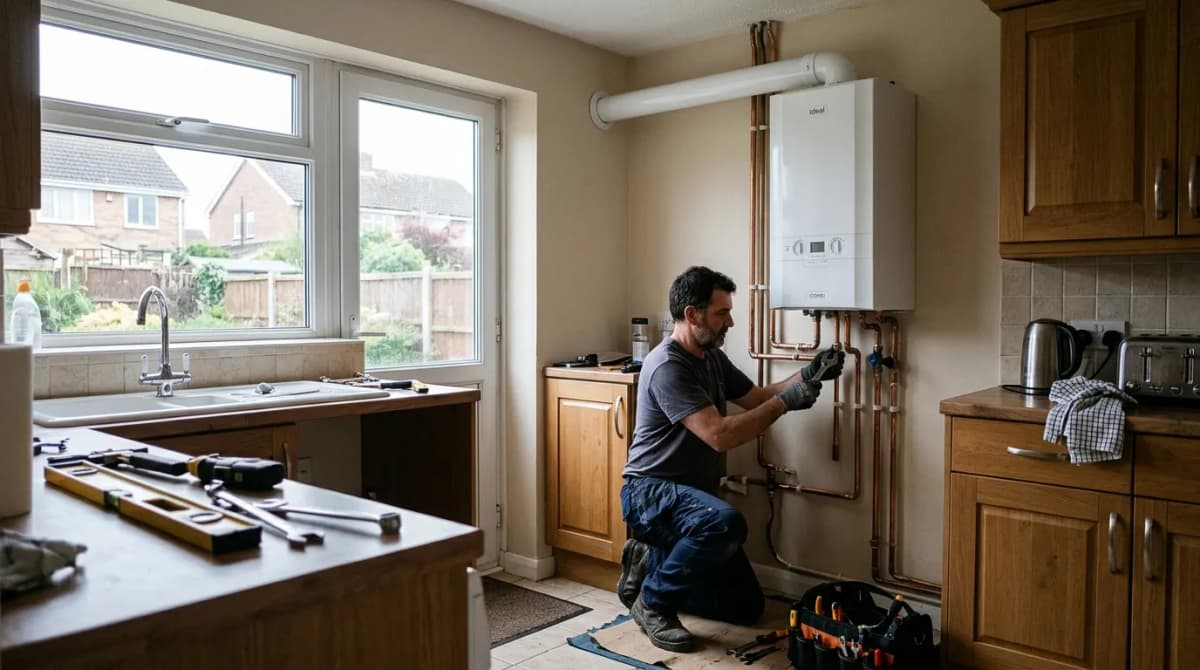
A new boiler in the UK is typically installed for £2,400 to £4,500 as a like-for-like swap, and £8,000 to £12,500 for a full heating installation with a cylinder or a new set of radiators in a small to medium home. This page is written for builders and heating contractors pricing boiler work for their own clients, with the homeowner as the client, and it sets out both the current market prices and Builder Expert's own estimating rates so you can see where a real quote lands and why.
Every figure below is indicative and current as at October 2026, not a quotation. A client should always be given a priced estimate built from a survey of the actual property, because flue route, gas pipe size and the state of the existing system move the price more than the appliance does.
What determines the cost of a new boiler
Four things move the price more than anything else.
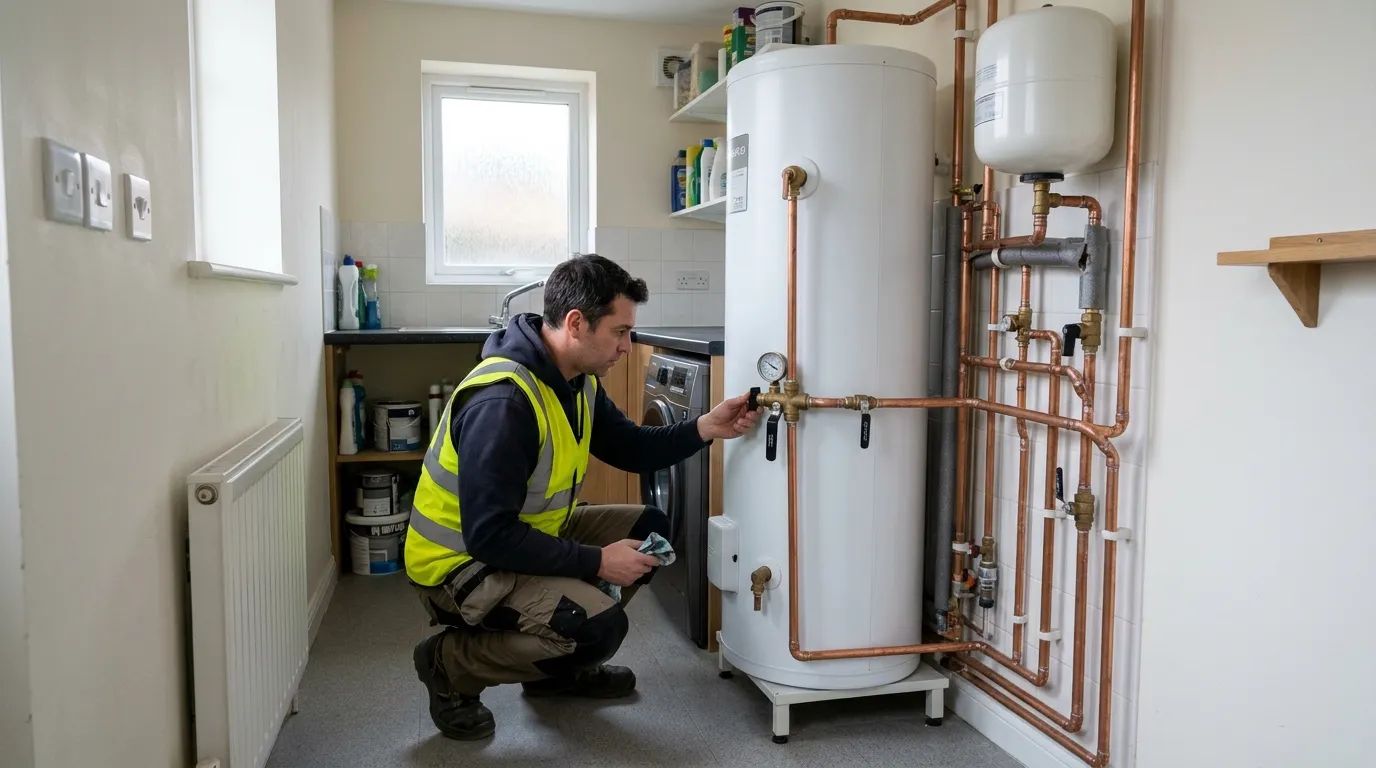
- The type of boiler. A combi heats water on demand and needs no cylinder. A system or regular (heat only) boiler needs a hot water cylinder, which is a substantial separate task.
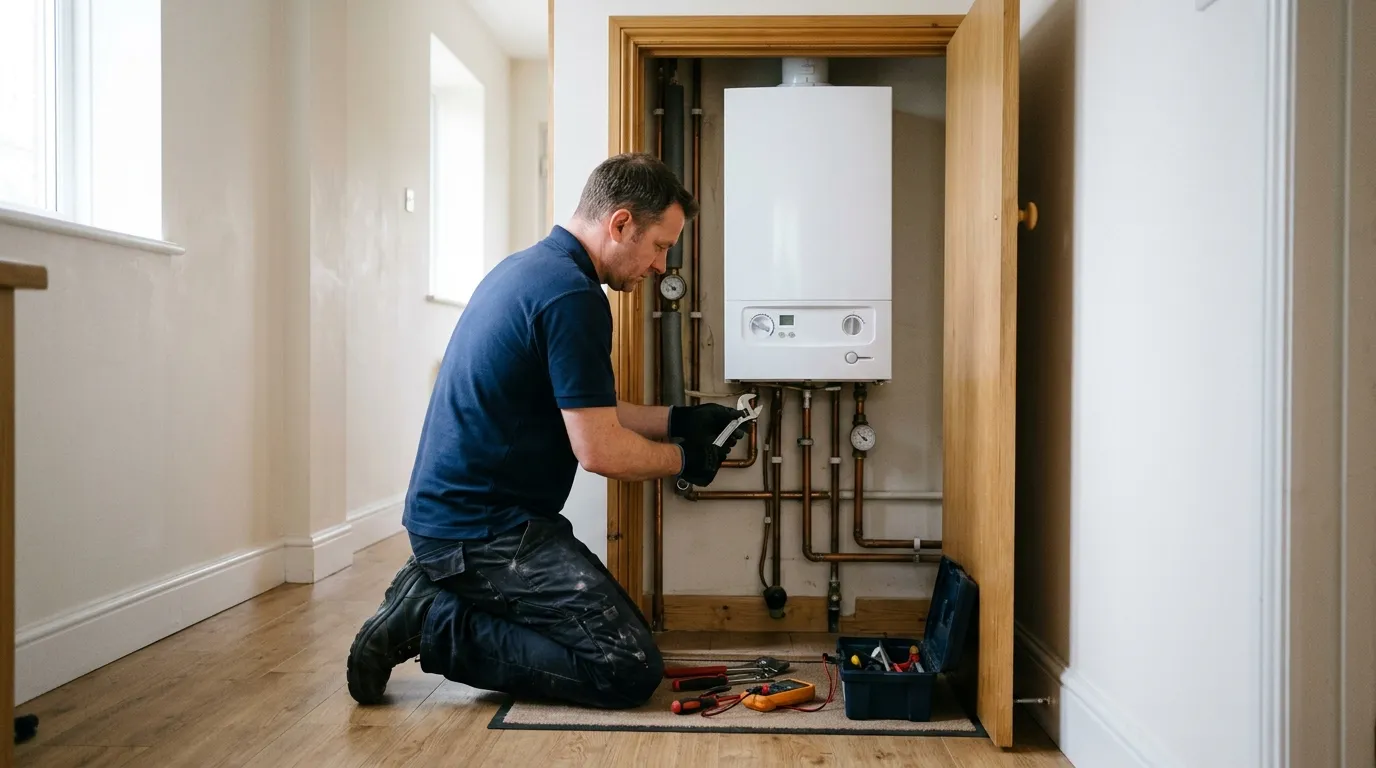
- Where it goes. A new boiler in the same spot, on the existing gas and flue run, is the cheapest job there is. Moving it means pipework, a longer flue, a new condensate route and making good in two rooms.
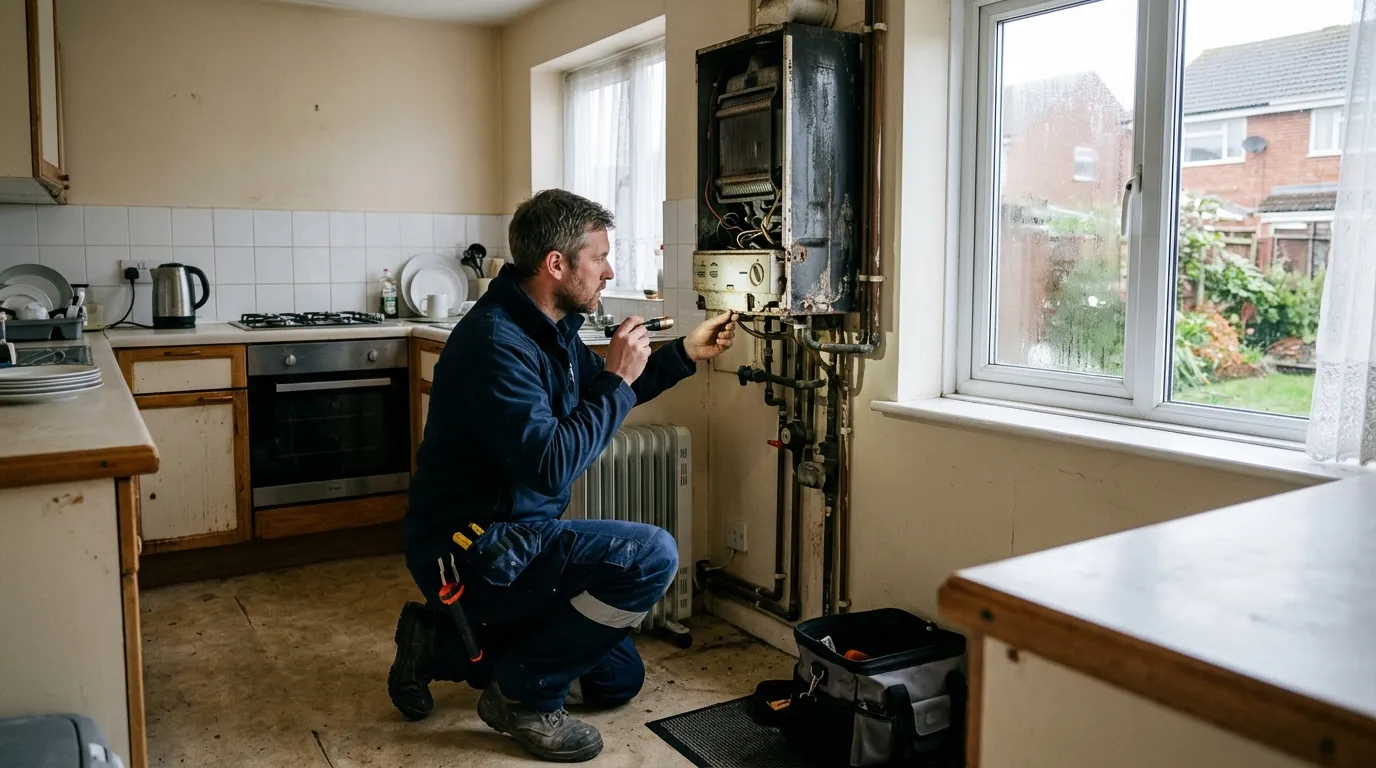
- What has to come out. Removing a cylinder, tanks and old pipework when converting to a combi turns a one day swap into a three day job with a plasterer and decorator behind it.
- Certification. Every gas boiler needs a Gas Safe registered engineer, commissioning and a certificate. It is never optional and it is inside every price here.
Boiler supply prices: the appliance alone
The appliance is a separate cost from fitting it, and it is the part a client can change their mind about. These are current UK market averages for the unit only, not Builder Expert figures, and they are what a merchant or online supplier charges before a builder's margin and VAT.
| Boiler type | Typical supply price (market, unit only) | Best suited to |
|---|---|---|
| Combi | £700 to £2,300 | Flats and houses with one bathroom, no cylinder |
| System | £700 to £2,500 | Two or more bathrooms, run with an unvented cylinder |
| Regular (heat only) | £700 to £2,500 | Older open vented systems replaced like for like |
These figures are for the boiler only: the flue kit, magnetic filter, room stat or controls and fittings all come on top, so a budget combi comes to about £1,500 in parts once those are added, and a mid-range or more complex combi nearer £2,500.
By output, a 24kW to 28kW combi suits a two or three bed house with one bathroom and sits at the lower end of those ranges. A 30kW to 35kW combi, for a larger house or a second shower, usually adds £150 to £400 to the unit. System and regular boilers of 15kW to 24kW cover most three and four bed houses.
Where the client picks the appliance, treat it the way an estimator treats any provisional sum: it is a budget the client sets, not your price. Your margin and VAT still apply on top, so a £1,500 boiler allowance costs the client roughly £2,160 by the time it is on the invoice. The same applies to smart controls and designer radiators, which clients routinely choose late and expect to cost what they saw online.
Installed cost by job type
These are current UK installed price ranges for a boiler job booked directly with a Gas Safe heating engineer, covering the plumbing and gas work only: the appliance, fitting, flue, controls, flush and certification. Boxing in pipework, making good, plastering, decorating and any scaffold tower are separate trades, priced on top and not included in these ranges. They are for a small to medium home, one to three bedrooms; a larger house, with more radiators and longer pipe runs, costs more.
| Job | What drives it | Installed cost range (market) |
|---|---|---|
| Like for like combi swap | Same position, existing flue and gas run | £2,400 to £4,500 |
| System boiler replacement | Same position, existing cylinder kept | £2,400 to £4,500 |
| Regular to combi conversion | Cylinder, tanks and pipework out, making good | £3,500 to £5,500 |
| Full new central heating system (small to medium home) | Boiler, cylinder, radiators, full pipework | £8,000 to £12,500 |
When the boiler is part of a larger job, such as an extension or a full refurbishment, the builder prices it as a subcontracted line within that project rather than quoting it as a standalone call-out. That line usually costs more than a homeowner would pay a heating engineer directly, because it carries the main contractor's coordination and margin on top of the heating engineer's own price. See our basic construction estimate guide for how that works across a whole job.
Builder Expert's own estimating rates reflect that project pricing: they are customer prices with labour, materials, the builder's margin and VAT already inside them, built for London and South East projects. Elsewhere in the UK the same heating work as a subcontracted line usually comes in 10% to 20% lower.
This is also why our figures sit above the direct market prices quoted elsewhere on this page. We price for builders running larger projects, where the boiler is usually being moved and part of the heating reworked as one piece of a bigger build, and the main contractor pays a heating subcontractor much as a homeowner would, then adds his own margin on top. A homeowner ringing a plumber for a new boiler is nearly always after a straight swap into the same spot, which is the cheaper job these market ranges describe.
What sits inside an installed price, and what does not
Inside, the heating engineer's own price: the appliance, flue kit and terminal, the thermostat or programmer, a magnetic filter, the system flush or chemical clean, isolation and gas safety work, the condensate run, and commissioning and the Gas Safe certificate.
Outside, and priced as separate trades: structural work or forming a new flue opening through a wall or roof, asbestos found in an old flue or airing cupboard, upgrading an undersized gas supply pipe back to the meter, new radiators, a new cylinder, electrical work beyond the boiler's own spur, boxing in pipework, making good, plastering and redecorating any area the work affects, and a scaffold tower for high level flue access. A structural engineer is not normally involved in boiler work; where one is needed for an opening, allow the current UK market fee of £500 to £900 for a simple inspection and calculation.
Worked example: standalone combi swap in a three-bed house
Assume a three bed semi, the boiler staying in the kitchen on the existing flue and gas run, a mid-range appliance, and the house occupied. Built in build order from our own rates: isolate and make safe the gas, water and electrics, protect the kitchen, strip out the old boiler, fit the new boiler with standard flue and thermostat, flush the system, remake the gas and water connections, commission and certificate, box in the exposed pipework, skim the patch behind the old unit, and prepare and repaint the affected wall.
That comes to around £3,000 to £4,000, sitting within the like for like swap range above, booked direct with a Gas Safe heating engineer. The heating engineer's own work, the appliance, flue, controls, flush and certificate, accounts for the bulk of it. Boxing in the exposed pipework, skimming the patch behind the old unit and redecorating the wall are separate trades, priced on top, and together with the job's own minimum visit charge add a few hundred pounds on a one-off call-out.
Where this same boiler sits inside a larger refurbishment, a builder prices it as a subcontracted line within that project instead, and it usually costs more once the main contractor's coordination and margin are added, even though the shared protection, skip and welfare on a bigger site reduce some of the standalone overhead.
Worked example: boiler, cylinder and seven radiators
Assume a four bed house, a system boiler replacing a tired regular boiler, a new 250 litre unvented cylinder in the airing cupboard, seven new radiators each with up to 3 metres of pipework, and a full system flush. Making good and decorating the cupboard and the affected walls is a separate trade, priced on top and not part of the heating engineer's figure below.
Booked direct with a heating engineer, that scope lands at around £9,000 to £12,000, towards the top of the full new central heating system range above. The cylinder and its installation typically account for £2,000 to £2,800 of it, and the seven radiators for a further £2,800 to £3,500, with the boiler and flush making up the rest. Making good and decorating are additional, charged by the plasterer and decorator rather than the heating engineer.
Where the same scope is run as a subcontracted line inside a larger refurbishment or extension, expect it to cost more once the main contractor's coordination and margin sit on top; see our basic construction estimate guide for how whole-project pricing works.
Moving the boiler
Relocation is the most commonly underpriced part of heating work, and how far the boiler moves changes the price far more than the appliance does.
Moving it within the same room, to a different position on the same or the next wall, adds roughly £900 to £1,500 to a like for like swap. That covers a short flue extension, a few extra metres of gas and water pipework, boxing in, and making good the old and new spots.
Moving it to a different room, for example out of a bathroom and into the loft or a kitchen, can easily double the price of a straight swap. At that point it is a different job rather than an add-on: the main flow and return pipework serving the whole house is redone rather than extended, and the gas supply and water feed are run in fresh.
A new flue route and terminal is formed with the right clearances, with an allowance built from our flue extension rate for the length needed, and a condensate route to a drain or pump is built. That is the heating engineer's own work; plastering and decorating the old and new positions is a separate trade, priced on top. A boiler moved into a loft or onto a high external wall can also need a scaffold tower for flue access, an allowance of a few hundred pounds built from our scaffold tower rate. Scaffolding is a separate hire and erection charge, not part of the heating engineer's price.
Does a new boiler need other work
- No gas supply nearby. A new underground gas run, including trench, bedding and yellow MDPE pipe, plus the final connection by a Gas Safe engineer, is priced from our rates per metre run plus the connection charge; for a typical short run this adds a few hundred pounds to the job.
- Electrics. A boiler needs a fused spur and often a new wiring centre. Where the rest of the wiring is old, price it against our house rewires and EICR cost guide rather than in isolation.
- Kitchen or bathroom work. A swap inside a kitchen refit, or a cylinder going in during a bathroom job, is best priced as one estimate: see our kitchen renovation cost guide and bathroom renovation cost guide.
When a swap becomes a system job
A boiler replacement turns into a heating project the moment the system changes shape. The triggers are predictable: taking out a cylinder and the cold water and feed and expansion tanks in the loft, boarding and insulating where they stood, upgrading 15mm pipework or an undersized gas supply, adding radiators, and mains pressure or flow rate too low to run a combi (below roughly 1.5 bar and 12 litres a minute, a combi will disappoint and a system boiler with a cylinder is the right call).
That is also the point at which other trades appear in your price: a joiner to deal with the cupboard and loft openings, a plasterer for the walls and ceiling, and a decorator for two or three rooms. Pricing a conversion as if it were a swap, and leaving those trades out, is how a heating job loses its margin. Each new radiator added to the system, complete with its own pipework, is priced as a separate allowance on our rates rather than folded into the boiler price.
Why two quotes for the same boiler differ by thousands
Clients bring you a cheaper quote and ask why. The honest answers are all in the scope:
- flue type and route (standard horizontal, vertical through the roof, or a long run with extensions);
- gas supply pipe size and the run back to the meter, which often has to be upgraded;
- condensate disposal, especially where there is no drain within reach;
- the condition of the system and whether it gets a chemical clean or a full power flush;
- access, including a scaffold tower for a high flue;
- the controls specified, from a basic programmer to a smart thermostat and zoning;
- warranty length, which depends on the installer's accreditation and registration;
- whether making good and decorating are included or left for someone else.
A fixed online price is usually genuine for what it covers, which is a standard swap with a budget appliance in the same position. The extras are quoted on the day, and that is where the difference lands.
Labour only, where the client supplies the boiler
Our rates are all inclusive, so we do not publish a labour-only line. In practice, where the client buys the appliance, the installation element is roughly 60% to 70% of the installed price once the appliance allowance comes out. The current UK market range for labour on a straightforward swap is £600 to £1,900.
Be clear about what the installer still carries on a supply-by-client job: the flue kit and terminal, sundries, filter, valves and fittings, the flush, commissioning, the Gas Safe certificate and notification, and warranty registration. The manufacturer's warranty depends on registered installation and an annual service, so the installer carries that risk even though they did not supply the boiler.
VAT, grants and compliance
VAT. Domestic boiler replacement is standard rated at 20%, and that is what the client sees on the invoice. The reduced 5% rate applies in specific cases: a qualifying conversion, a dwelling empty for two years or more, and certain grant funded heating installations for eligible households. A VAT registered builder reclaims the VAT on materials, so the VAT on the invoice is the client's cost, not money the builder absorbs. Between VAT and CIS registered businesses the domestic reverse charge applies to the subcontract; work billed direct to a homeowner as end user is always charged with VAT in the normal way.
Grants. As at October 2026, gas boiler replacement is not grant funded. The Boiler Upgrade Scheme pays towards heat pumps and biomass, not gas boilers, with £7,500 towards an air source or ground source heat pump in England and Wales and a temporary £9,000 for eligible off gas grid homes replacing oil or LPG. ECO4 can fund a replacement boiler for a household on qualifying benefits with an inefficient existing system, but it is means tested and routed through the energy suppliers, not something to build a quote around.
Compliance. The work must be done by a Gas Safe registered engineer, who notifies it under the Building Regulations (Part J for the flue and combustion, Part L for efficiency and controls) and issues the Building Regulations compliance certificate. There is no separate building control fee for a standard replacement. The Benchmark commissioning record is completed and left with the client, the warranty is registered, and the appliance is serviced annually. Skip any of it and the warranty falls away, the client's home insurance can be challenged on a sale, and unregistered gas work is a criminal offence.
Preliminaries a one-off boiler job carries
Inside a full refurbishment these disappear into the project. On a one-off call-out they are real money: floor and worktop protection, site health and safety, parking or permits, the skip or waste removal for the old boiler and cylinder, a final clean, a minimum visit charge, and a scaffold tower where the flue is high. That is the honest reason the same work costs more as a standalone job than as a line in a full build, and it is worth saying to a client in one sentence before they compare your price with a bare swap.
How long it takes on site
A like for like combi swap in the same position is one day. A relocation, or a system boiler with an existing cylinder, is two to three days. A regular to combi conversion with the cylinder and tanks out is three days, plus a plasterer and decorator behind it. A full system with a new cylinder and seven or more radiators is four to five days. Programme the making good and decorating separately: the heating engineer is off site before that work starts.
New boiler installation cost calculator
Use this to build a rough price for a specific job on our rates.
New boiler installation cost calculator
- Estimated installed price
- £2,400
- If priced as a subcontracted line inside a larger project
- £2,760
Covers the plumbing and gas work only. Boxing in, making good, plastering, decorating and any scaffold tower are separate trades, priced on top and not included here; built from the figures on this page and our own rates, a guide, not a quotation.
Common questions
How long does a combi boiler last? Ten to fifteen years with annual servicing. Past twelve years parts availability starts to drive the replacement decision more than efficiency does.
Is a fixed online boiler price genuine? For the job it describes, yes: a standard swap, same position, budget to mid-range appliance, no making good. Anything outside that, a flue extension, a gas pipe upgrade, a condensate pump, is priced separately on the day.
Power flush or chemical clean? A chemical clean with a magnetic filter suits a reasonably clean system and is part of a normal installation. A full power flush is for a sludged system with cold spots and takes most of a day, priced on our rates as a day's allowance for flushing the central heating system. Most manufacturers require one or the other for the warranty.
Should radiators be replaced at the same time? Price it as an option. Each new radiator with up to 3 metres of pipework is priced on our rates as its own allowance, and doing them while the system is drained avoids a second visit.
What size boiler does a typical house need? A two or three bed house with one bathroom is usually a 24kW to 28kW combi. A four bed house with two bathrooms is 30kW to 35kW combi, or a 18kW to 24kW system boiler with a cylinder where two showers run together.
Pricing boiler work into a full estimate
The figures here are indicative and current as at October 2026, not a quotation. For a client, the right answer is a priced estimate from the drawings or a survey, with the appliance allowance, the flue route, the making good and the preliminaries all visible.
Builder Expert's estimating service prices heating work inside the whole project, so the boiler, radiators, pipework, plastering and decorating all sit in the same estimate on the rates used here. If you would rather build it yourself, our self-estimating software gives you the same rates and a priced estimate in minutes.