
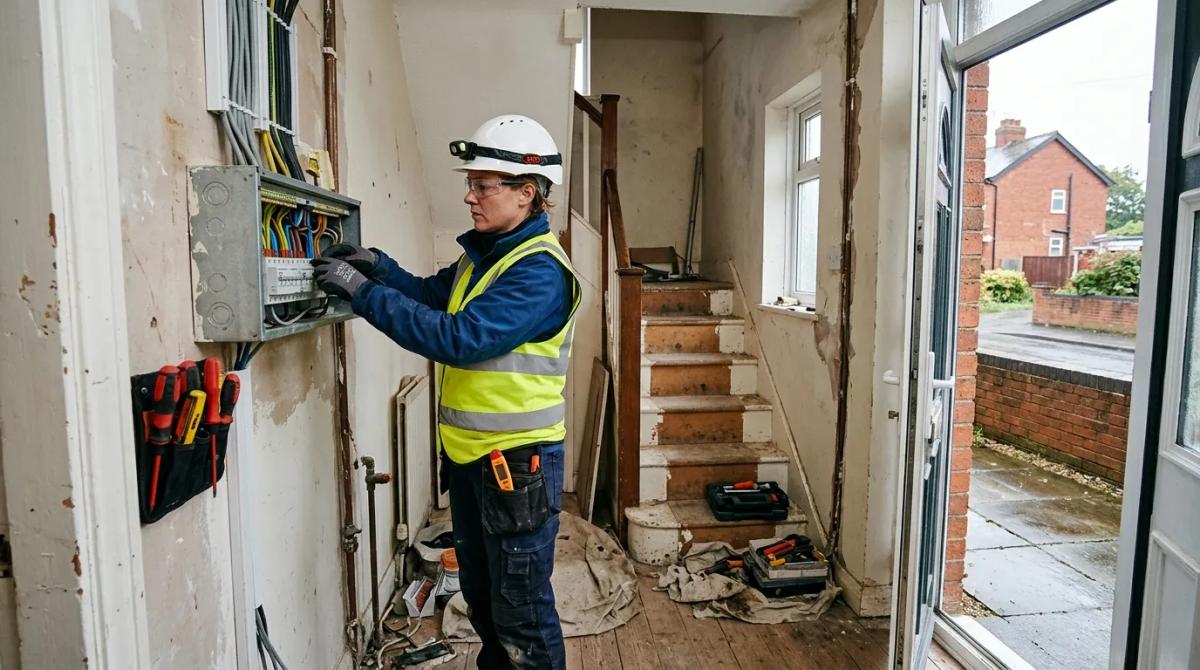
A qualified electrician in the UK charges roughly £250 to £400 a day in 2026, or about £40 to £65 an hour, with London and the South East running to £350 to £500 a day and £60 to £90 an hour. This page sets out the electrician day rate UK builders are paying now, region by region, alongside the other trades on a mixed crew, and shows how those rates turn into a priced job.
It is written for builders and contractors booking trades, for subcontractors pricing their own work, and for the self-employed electrician working out what to charge. Figures are current UK market ranges including VAT where the price is what a client pays, and labour-only rates between a contractor and a subcontractor are shown as the rate charged, which is where VAT is added by a VAT-registered trade.
Electrician day rate by region 2026
Rates follow the local market, not the work. The same consumer unit change is the same morning's work in Newcastle and in Wandsworth, and the price differs by half as much again.
| Region | Hourly rate | Day rate (8 hours) |
|---|---|---|
| London | £60–£90 | £350–£500 |
| South East | £50–£75 | £320–£450 |
| South West | £45–£65 | £280–£400 |
| Midlands | £40–£60 | £260–£380 |
| North West | £40–£58 | £260–£380 |
| North East | £38–£55 | £240–£350 |
| Yorkshire | £38–£55 | £250–£360 |
| Wales | £35–£55 | £240–£340 |
| Scotland | £40–£58 | £250–£380 |
| Northern Ireland | £35–£50 | £220–£320 |
A commercial or industrial day, three phase work, testing on a live building or anything needing a permit, sits at the top of each row or above it. Specialist work (EV charging, solar and battery, fire alarm systems) is commonly £350 to £500 a day anywhere in the country.
What a day rate actually covers
A standard day is eight hours on site, usually 8am to 4pm or 4.30pm with half an hour for lunch. Anything past that is overtime at time and a quarter or time and a half, agreed before it happens.
The quoted day rate is labour only. Materials, test certificates, parking, congestion and ULEZ charges and VAT are on top unless the quote says otherwise, and on a London job those extras are real money: a van in the congestion zone and ULEZ is £30 a day before a bay is paid for. A sensible booking states four things in one line: the hours in the day, who pays for parking, who buys the materials, and whether the certificate is included.
Travel is the one most often fudged. Inside a normal patch it is in the rate; outside it, an hour each way is an hour nobody is paying for, and most trades either charge a mileage rate or add an hour to the day.
Plumber, bricklayer and labourer day rates
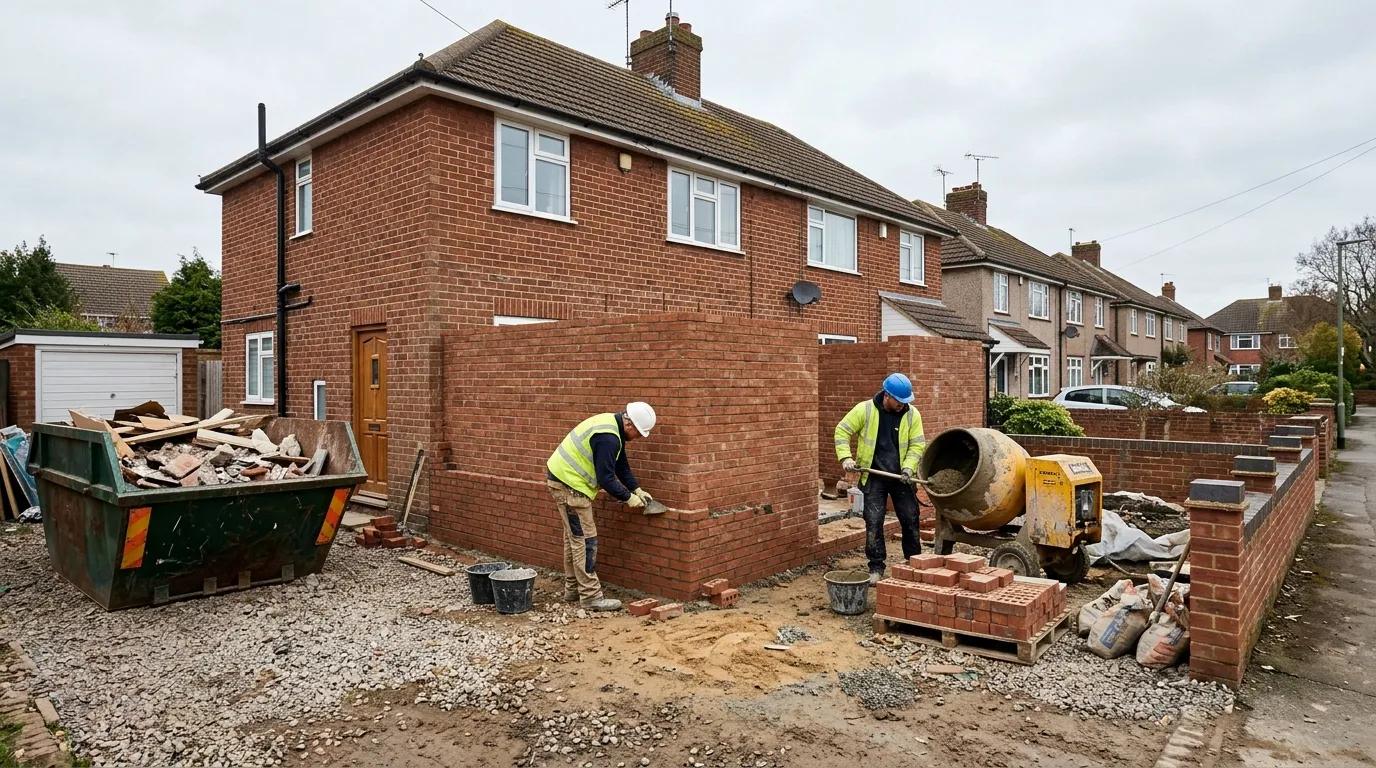
The electrician is one line in a crew. These are the rates a builder is paying the rest of the trades in 2026, as a UK-wide range, with London and the South East at the top of each one.
| Trade | Hourly rate | Day rate (8 hours) |
|---|---|---|
| Electrician | £40–£90 | £250–£500 |
| Plumber | £40–£80 | £250–£450 |
| Bricklayer | £28–£45 | £220–£350 |
| Carpenter | £30–£50 | £220–£380 |
| Plasterer | £28–£45 | £220–£350 |
| Electrician's mate or improver | £18–£28 | £140–£220 |
| General labourer | £16–£25 | £120–£200 |
Bricklayers on a bigger job are usually on a price rather than a day rate, paid per thousand bricks or per m² of blockwork, and plasterers often work the same way. Day rates for plastering, tiling and decorating are set out on our plastering, tiling and decorating rates page.
Half days, minimum charges and out of hours
These are single-visit prices and they are not comparable with a project day rate. A trade who turns out for one socket carries the same travel, the same van and the same hour of paperwork as he would for a week's work, spread over forty minutes on site.
| Visit type | Typical 2026 price |
|---|---|
| Minimum charge or first hour, working hours | £70–£120 |
| Half day (up to 4 hours) | £150–£260 |
| Evening or Saturday, per hour | £70–£120 |
| Sunday, bank holiday or emergency, first hour | £120–£250 |
| Emergency, subsequent hours | £80–£150 |
Putting a £120 call-out next to a £280 day rate and calling the call-out expensive is comparing the wrong things. The day rate assumes eight hours of booked work and no wasted journey.
What an electrician is paid and what he is charged out at
Employed electricians working at member firms are paid against agreed industry wage grades, which run from apprentice rates up to qualified technician level, with London rates running higher than the rest of the country. Current published grades are on the JIB website, and our JIB and CIJC wage rates guide goes through the grades in depth.
That wage is not a price. On top of it an employer carries employer's National Insurance, holiday pay, pension, sick pay, training, the van and the test gear, which is why the same electrician is charged out at £250 to £400 a day. A self-employed spark charging a day rate is covering all of that himself out of one figure.
Typical durations for common electrical jobs
Multiply the days by the day rate in your region to get the labour, then add materials and certification. These are working durations for an average two or three bedroom house, one electrician unless stated.
| Job | Typical duration |
|---|---|
| Consumer unit change (with testing and certificate) | 1 day |
| Additional socket on an existing circuit | 2–4 hours |
| New socket circuit back to the board | 1 day |
| Full rewire, 2–3 bed house | 5–10 days (usually two people) |
| EICR on a 2–3 bed house | 3–5 hours |
| EV charger installation | half a day to 1 day |
| Outdoor lighting and a garden socket | 1–2 days |
Finished prices for those jobs are a different question from the labour days, and they are covered on the pages that own them. A full rewire of a three bed house runs about £4,000 to £7,500 finished, an EICR £150 to £300, a consumer unit change £550 to £1,000 and an EV charger £900 to £1,500 supplied and installed: see our rewire, consumer unit and EICR cost page for the detail. Heating work is priced the same way on our new boiler cost page.
Worked example: a kitchen rewire
An example, with every figure taken from the tables above and nothing added on top.
A Midlands kitchen strip-out and rewire: new ring final, two dedicated circuits for the oven and hob, eight new sockets, lighting and an extractor. First fix takes an electrician two days with a mate, second fix after plastering takes one day, and testing and the certificate take half a day.
Electrician 3.5 days at £300 a day is £1,050. Mate 2 days at £160 a day is £320. Materials, cable, accessories, board alterations and fixings, around £450. Certification and notification, around £120. The labour and materials come to about £1,940, and the quoted price to the client is typically £2,000 to £2,400 once the contractor's own time and the making good sit in the project's own phases.
Trade labour cost calculator
- Estimated job cost
- £1,940
Typical current UK day rates. Preliminaries, making good and the other trades are priced separately.
When a day rate is the wrong way to price
Day rate suits fault finding, snagging, alterations in an old house and anything where nobody can say what is behind the wall. The client pays for the time because the time genuinely cannot be known.
Repeat work is the opposite. A rewire, a new build plot or a block of flats is priced per point or per m², because the output is known: a spark who knows his own crew does twelve points a day prices eighty points in a week and makes money, where the same job on a day rate rewards whoever is slowest. Our guide to labour productivity on site goes into how to measure it.
What the low end of these ranges leaves out
A £240 day is the bare minimum, and it is bare for a reason. At that end there is usually no certificate and no test results issued, no chasing or making good, no materials, no allowance for an old or borrowed-neutral installation that will not test clean, and travel or parking that turns up as an extra later.
A quote line reading "first fix" can be two completely different jobs: cable pulled in loosely and clipped where it lands, or cable run on proper drops, chased in, capped and set out so the second fix lands where the kitchen designer drew it. The second one takes a day longer and both lines read the same on paper. The same goes for a moved light fitting: to a client, moving it two inches after the wall is finished is nothing, and to the electrician it is the ceiling open, the cable moved, making good and repainting, a day nobody priced.
Setting your own day rate as a self-employed electrician
Start from chargeable days, not from the calendar. Out of 260 working days, take off holiday, bank holidays, a week of illness, and the days spent quoting, collecting materials, invoicing and chasing payment: most one-man businesses bill 190 to 210 days a year, and the ones who are busy on paper often bill fewer.
Then the costs that come out of the rate: the van and fuel, public liability and tools insurance, test equipment and its annual calibration, competent person scheme registration and the annual assessment, 18th Edition updates and CPD, accountancy, phone and software. Divide the yearly total by your chargeable days and that is the floor your day rate has to clear before you have earned anything. VAT you charge and reclaim is not a cost to a VAT-registered business, and CIS deducted by a contractor is not a cost either: it is tax paid in advance against your bill, set off when you file.
Common questions
Is becoming an electrician worth it in 2026?
Yes, on the numbers. A qualified electrician on industry wage grades earns roughly £36,000 to £44,000 employed, and a self-employed spark with steady work and his own clients typically clears £45,000 to £70,000. The trade qualifies, certifies and signs off its own work, which keeps the floor under the rate.
Do plumbers or electricians earn more?
They are close, and the gap is the work, not the trade. Electrician day rates run £250 to £400 and plumbers £250 to £450, but a gas safe heating engineer doing boiler swaps and an electrician doing EV chargers and boards both sit at the top end, while a plumber doing bathroom second fix on a builder's job sits in the middle.
How do I price a job as an electrician?
Count the points and the circuits, work out the days from what you actually get done in a day, add the materials with a sensible margin, add the testing and certification time, and add a day for the returns nobody counts (second fix after plastering, snagging, the client's last change). Price per point once you know your output, and keep the day rate for unknown work.
What does a day rate come to in a year?
Days worked multiplied by the day rate. At £280 a day and 200 chargeable days that is £56,000 turnover; at £400 and 210 days it is £84,000. Both are turnover, not profit: the van, insurance, scheme fees and materials still come out.
Pricing the whole job, not just the day rate
A day rate is one line in a much bigger price. Every job also carries preliminaries (protection, skip, parking, welfare), the trades either side, and making good once the electrician has gone, all in the right order so nothing is missed and nothing is counted twice. Our estimate tasks breakdown hub explains how those lines fit together, and the CIS guide covers the 20% and 30% deductions a contractor makes from a subcontractor's labour, with the rules on gov.uk.
Plumber, bricklayer and labourer rates on this page are the headline figures for pricing a crew; each of those trades has its own pricing habits (price work for brickwork, labour-only rates for plumbing second fix) and those sit on their own pages as we publish them.
If you would rather not build it line by line, our detailed construction estimate prices the whole job from your drawings, trade by trade and phase by phase, with the labour days already in it. For a builder pricing his own work, our estimating software does the same calculation in minutes, so a day rate becomes a job price while the client is still in the kitchen.
Last reviewed: November 2026.